
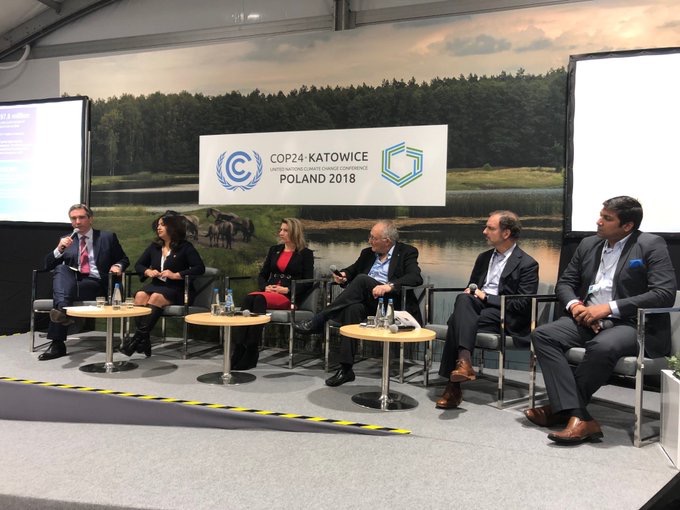
The World Travel & Tourism Council (WTTC) and UN Climate Change today showcased how the travel and tourism sector can take steps towards carbon neutrality by 2050.
In April, WTTC, which represents the global private sector of travel and tourism, announced the agreement of a common agenda with UN Climate Change, an international treaty which aims for the stabilisation of greenhouse gas concentrations in the atmosphere, paving the way for Travel & Tourism to engage more effectively in the delivery of global goals around climate change.
Today at the UN Climate Conference (COP24) in Katowice, Poland, during the first Travel & Tourism event ever held at the annual COP, both organisations addressed the links between Travel & Tourism and climate change and presented a pathway for the sector to achieve carbon neutrality by 2050.
Speaking ahead of the event at COP24, Gloria Guevara, President and CEO, WTTC, said: “Travel and tourism has an important role to play around the world in economic development, presently accounting for 10.4% of global GDP and supporting 1 in 10 of all jobs, which is more than comparative sectors, such as automotive, chemicals manufacturing, banking and financial services.
“Given our sector’s contribution to social and economic development, it is important that Travel & Tourism plays its part in the drive towards climate neutrality, under the auspices of the UN Climate Change body,” said Ms. Guevara.

“Today, we are announcing that we will continue to work with UN Climate Change to highlight to consumers the positive contribution Travel & Tourism can make to building climate resilience; the establishment of an industry recognition scheme; and the creation of an annual “State of the Climate” event and report to evaluate, monitor and share progress towards climate neutrality. As a major world sector, Travel & Tourism stands ready to play its part in this bright future.”
UN Climate Change Executive Secretary Patricia Espinosa encourages the Travel & Tourism sector to find new, innovative and sustainable ways to reduce its carbon footprint. “On a basic level, doing so is simply a question of survival,” said Ms. Espinosa. “But on another level, it’s about capturing opportunity. It’s about transforming your businesses to be part of a global economic shift—one marked by sustainable growth and powered by renewable energy.”
“We are already experiencing the impacts of climate change in Fiji and in the rest of our Pacific Island countries,” said High-Level Climate Champion H.E. Inia Seruiratu, Fiji’s Minister for Defence and National Security.
“The Travel & Tourism sector is a major revenue earner for our country. Unfortunately, the attractions that drive this sector – our reefs, sandy beaches, clear seas, and forest biodiversity – are under threat from the impacts of climate change. Innovative financing where the Travel & Tourism sector can support our small island economies to respond to these threats is needed and I am very encouraged that the sector is eager to engage in such initiatives and strengthen public-private partnerships in the fight against climate change.”