


The African Union on Saturday cautioned countries across the world against imposing quick travel bans on travellers from the continent, in the wake of a new variant of the Covid-19 virus said to be more infectious.
Dr John Nkengasong, the Director of the Africa Centres for Disease Control and Prevention (Africa CDC) said the history of the pandemic had indicated travel bans served little purpose in managing the spread of the virus.
Instead, the continental body was encouraging more surveillance and data sharing between countries, in addition to increased vaccination of the “high-risk” populations.
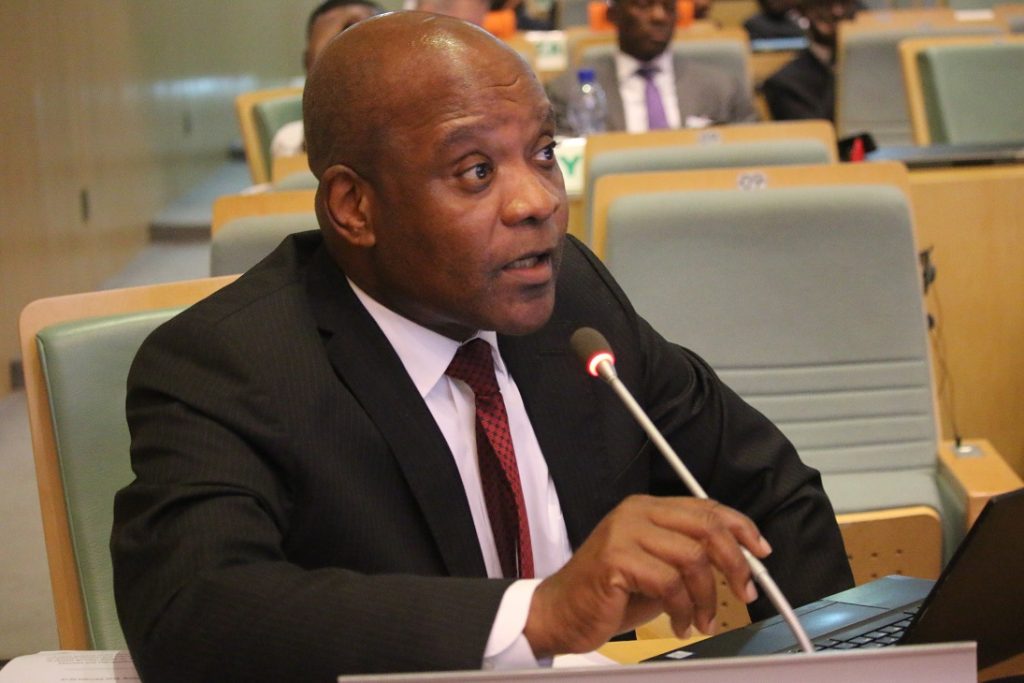
“Africa CDC strongly discourages the imposition of travel ban for people originating from countries that have reported this variant. In fact, over the duration of this pandemic, we have observed that imposing bans on travellers from countries where a new variant is reported has not yielded a meaningful outcome,” Nkengasong said in a statement.
“Rather implementing PHSM should be prioritised.” PHSM refers to public health and social measures such as face mask wearing, physical distancing, sanitising hands and adequate ventilation which the African body said had proven more effective alongside vaccination in taming the pandemic.
New variant
The Africa CDC’s stance came two days after South Africa’s National Institute for Communicable Diseases (NICD) announced it had detected a new variant, seen as a superbug version of the SARS-COV-2, the virus that causes Covid-19. It was officially labelled as B.1.1.529 and the World Health Organisation christened it the Omicron variant.
But hours after its detection, Western countries including UK, Germany and the US imposed flight bans on South Africa and six of its neighbours where the variant had been detected. Canada, Morocco, Russia and several others also imposed bans on the southern African countries.
On Saturday, South Africa warned the quick bans could discourage further information sharing on scientific findings about the virus, making it difficult for the world to recover.
“While we respect the right of all countries to take the necessary precautionary measures to protect their citizens, we need to remember that this pandemic requires collaboration and sharing of expertise,” said Naledi Pandor, South Africa’s Minister for International Relations and Cooperation.
Genomic sequencing
According to her, the ban amounted to punishing the country’s scientific community for discovering the variants and the country’s advanced genomic sequencing technology that allowed the scientists to discover the variant.
“Excellent science should be applauded and not punished… Each of those cases have had no recent links with Southern Africa, but the reaction to those countries is starkly different to cases in Southern Africa,” she said in a statement, warning the abrupt decisions were first going to hurt local economies that were only beginning to recover.
The World Health Organization (WHO) declared the new Covid-19 variant one of concern, but did not recommend lockdowns. Instead, it recommended more field investigations, enhanced vaccinations and full adherence to public health guidelines.
More mutations
“Countries are asked to enhance surveillance and sequencing efforts to better understand circulating SARS-CoV-2 variants… . submit complete genome sequences and associated metadata to a publicly available database,” the WHO said on Friday.
The Omicron variant is said to have more mutations, or changes in structure which could help it to dodge immune responses of the body and make it more infectious. It had been detected among several people in South Africa Gauteng province where the capital Pretoria and commercial capital Johannesburg are situated.
But even the countries imposing restrictions on South Africa had themselves reported rising cases of Covid-19, leading critics to accuse the countries of looking away from the real problem.
“We know what we know (about Omicron) because South Africa has invested in advanced genomic sequencing,” said Ingrid Katz, HIV Researcher and Associate Professor at the Harvard Medical School.
“We owe them a debt of gratitude – not punishment. Transparency is critical in a global pandemic. We need to support these efforts collaboratively.”
Story by: Aggrey Mutambo The East African