
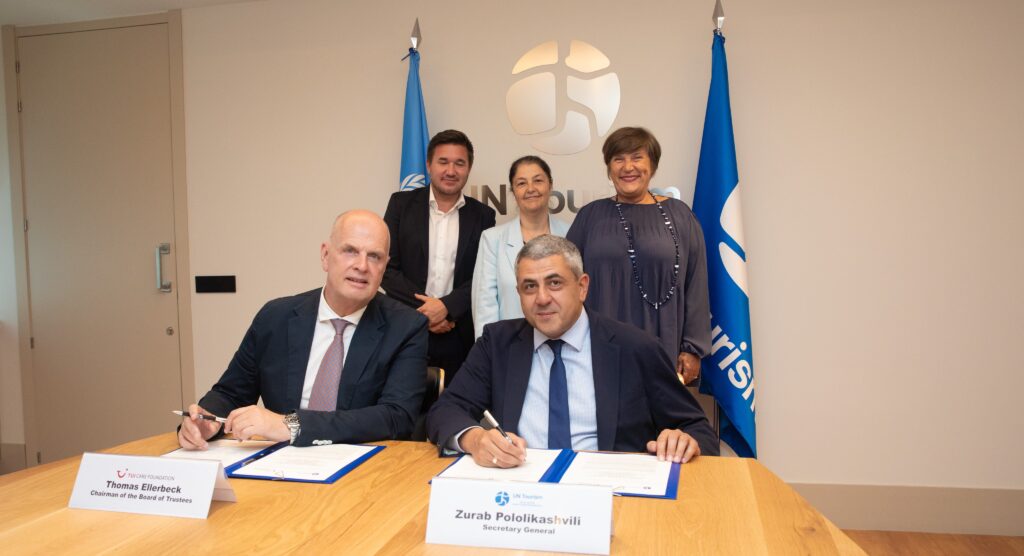
UN Tourism and TUI Care Foundation have solidified their ongoing partnership by signing an agreement at the UN Tourism headquarters in Madrid. The agreement focuses on empowering artists and artisans, particularly women and youth, in rural tourism destinations in Africa. With this new agreement, TUI Care Foundation becomes the first partner to support the pilot phase of the Tourism for Rural Development Small Grants Programme by UN Tourism.
With this collaboration, UN Tourism and TUI Care Foundation will launch ‘Colourful Cultures’ Call for Proposals to empower artists and artisans in rural destinations in Gambia, Morocco, Mozambique, Namibia, Rwanda, Senegal, South Africa, Tanzania, Tunisia, Zambia.
The call will allow non-profit organisations in these countries to develop innovative initiatives that benefit artisanal and artist communities to boost income opportunities, protect intangible cultural heritage, and promote rural tourism.
UN Tourism and TUI Care Foundation have been collaborating to promote sustainable development through tourism. In 2023, both organisations launched the Tourism for Development Fund with EUR 10 million to support sustainable development in destinations in Least Developed Countries (LDCs).
Empowering Rural Communities Through Tourism
Speaking at the signing ceremony of the agreement, Zurab Pololikashvili, Secretary-General of UN Tourism said: “Tourism has the power to transform lives and communities, especially in rural areas. By supporting artists and artisans, we are not only preserving cultural heritage but also creating sustainable income opportunities. This collaboration with TUI Care Foundation exemplifies our commitment to inclusive and sustainable tourism for rural development.”
Thomas Ellerbeck, Chairman of the TUI Care Foundation, echoed this sentiment, stating, “By supporting artists and artisans, we are preserving cultural heritage and promoting economic growth and social well-being in some of the world’s most vulnerable tourism destinations. This change-making collaboration with UN Tourism, inspired by our global TUI Colourful Cultures programme, is an important cornerstone of our Foundation’s strategy.”
Driving Sustainable Tourism Development in rural communities in Africa
Tourism serves as a lifeline for many rural communities and has a unique capacity to create new job opportunities, promote territorial cohesion, and protect natural and cultural resources. It also empowers women and youth.
Rural areas face increasing challenges, such as depopulation, aging populations, lower income levels, and gaps in infrastructure, health, and financial services. Despite significant improvements in recent decades, disparities between urban and rural areas persist. This call for proposals aims to:
Increase the capacity of artists and artisans to engage in the tourism economy and enhance their income
Increase the visibility of artists and artisans in rural tourism destinations
Increase the availability of support services for artists and artisans in rural tourism
The call is expected to open for applications in September.
Contact: mpaul@unwto.org