
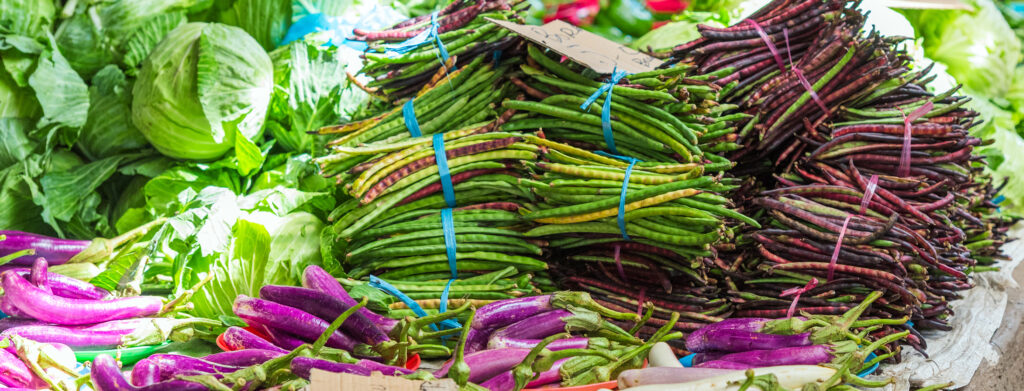
In the Pacific Small Island Developing States (SIDS), agriculture remains central to rural livelihoods, offering critical economic opportunities and employment for local communities. Here, agrifood systems extend far beyond food production: they play a crucial role in preserving and promoting cultural heritage and traditional knowledge while supporting biodiversity conservation and sustainable resource management. Similar to remote mountain areas, these island communities rely on integrated food systems rooted in traditional practices and rich ecological diversity.
The initiative is being implemented in seven Pacific SIDS: Cook Islands, Fiji, Samoa, Tonga, Vanuatu, Solomon Islands, and Palau (through a dedicated project). Its ultimate goal is to develop Gastronomy Tourism Itineraries that feature authentic experiences—such as visits to organic farms and culinary workshops—tailored to each destination’s cultural and environmental identity.
Despite their essential role, smallholder farmers face persistent challenges. Many rely on secondary income sources due to structural issues like population decline, ageing demographics, limited economic opportunities, and the gradual erosion of traditional practices. These challenges echo those faced by smallholder producers in mountain regions, where isolation, climate vulnerabilities, and limited market access create similar development barriers.
Sustainable gastronomy tourism offers a promising opportunity; by integrating agriculture into the tourism value chain, it creates alternative income streams for small-scale producers while enhancing and diversifying the tourism offer in the islands building inclusion and sustainability.
By integrating local agrifood systems into tourism, Pacific SIDS can drive inclusive economic growth and support smallholder farmers while safeguarding both cultural heritage and fragile ecosystems.
The project, Development of Sustainable Gastronomy Tourism Itineraries and Value Chains in the Pacific SIDS, aims to build tourism experiences rooted in agrifood systems—connecting visitors with organic farms, local food producers, and traditional culinary practices. In doing so, farmers become not only providers but also cultural ambassadors and stewards of fragile ecosystems and of their communities.
Achieving this vision requires strong collaboration between the agriculture and tourism sectors. Active involvement from both public and private stakeholders is essential to ensure inclusive growth and foster regional knowledge exchange, enhancing the strategic value of Gastronomy Tourism Itineraries.
Capacity-Building Workshop to Advance Sustainable Gastronomy Tourism
A key component of the project is the Regional Workshop on Sustainable Gastronomy Tourism, taking place from 30 June to 2 July 2025 in Nadi, Fiji. The event will bring together small-scale producers, tourism operators and other industry stakeholders, tourism and agriculture associations, experts, and institutional stakeholders from across the Pacific to strengthen technical skills; share best practices on linking agrifood systems with tourism; and explore collaborative strategies for building resilient supply chains and tourism products.
Participants will gain practical tools to transform local ingredients into authentic tourism experiences, improve market access and engage meaningfully with visitors. The workshop will create space for regional collaboration, cross-sector dialogue, and community-based networks.
Harnessing the Transformative Power of Integrating Agrifood Systems
By advancing sustainable gastronomy tourism across the Pacific region, the initiative directly supports the Sustainable Development Goals (SDGs). It contributes to SDG 1 – No Poverty by building capacity and providing technical support to small-scale farmers; advances SDG 5 – Gender Equality and SDG 12 – Responsible Consumption and Production by empowering communities, preserving traditional knowledge, and promoting sustainable organic agriculture; and reinforces SDG 14 – Life Below Water and SDG 15 – Life on Land by raising awareness among visitors about the impact of their choices on fragile ecosystems.
The project is supported by the Italian Cooperation through the FAO Mountain Partnership.
Listen to VA Tourism Podcast here