
A turning point for Africa’s skies
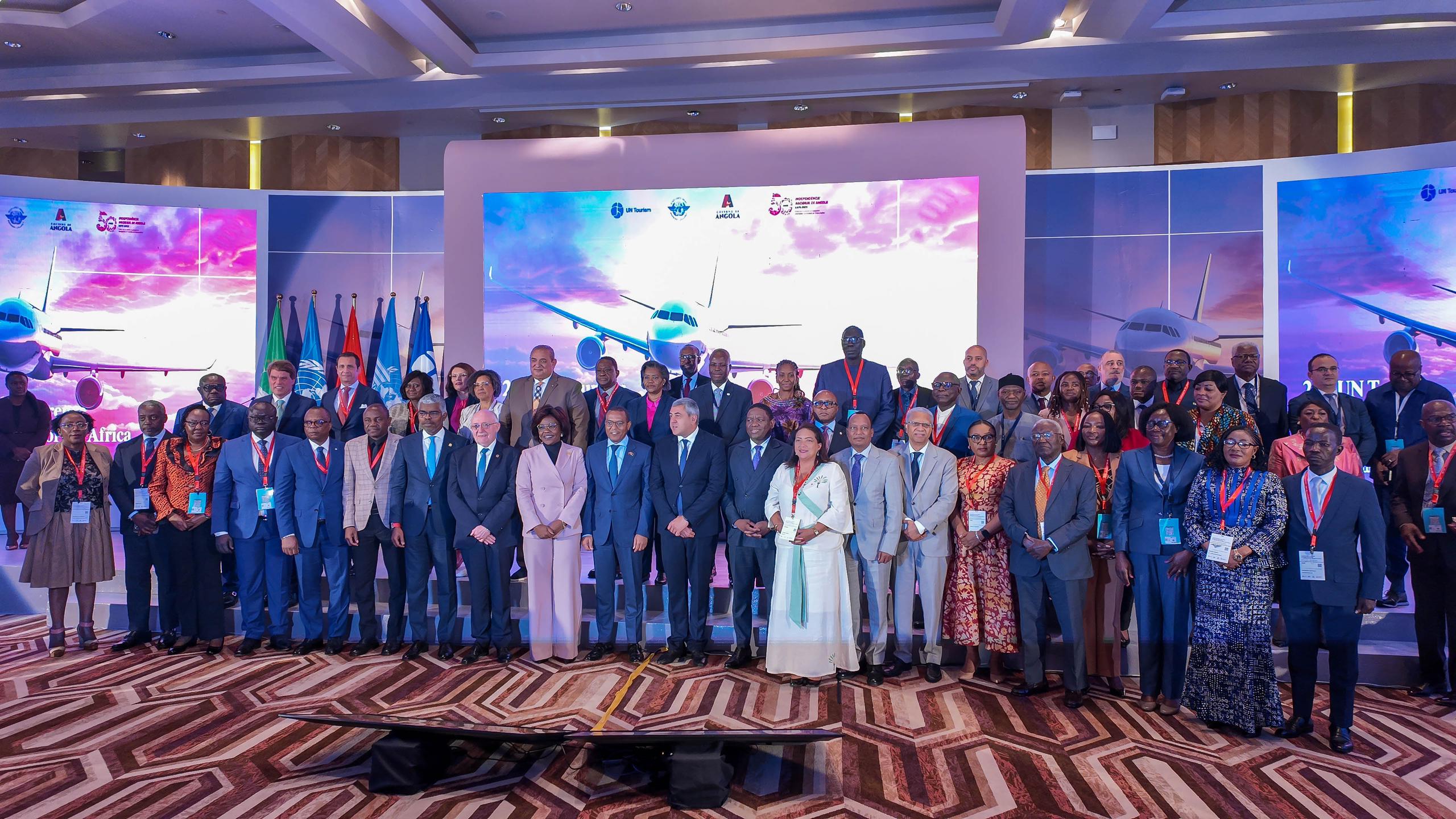
Luanda was more than a host city for the 2nd UN Tourism & ICAO Ministerial Conference on Tourism and Air Transport. It became the stage for a bold, unfiltered conversation about Africa’s future in the skies.
The message was unmistakably clear: Africa cannot unlock its tourism potential without fixing its air connectivity, and aviation will never reach its full stride without tourism to power it. The two are not separate industries – they are conjoined twins, and together they can transform the continent’s competitiveness, create jobs, and fuel inclusive growth.
Luanda delivers a unified call
The conference produced more than speeches – it set a new tone for collaboration:
- The Luanda Ministerial Statement: Ministers committed to align aviation and tourism policy, accelerate the Single African Air Transport Market (SAATM), and harmonise visa regimes.
- Technology and innovation: AI, biometrics, and e-visa systems were positioned as essential for seamless travel and improved service delivery.
- Regional marketing over competition – ‘Sell Africa as one’ became a rallying cry.
- Aviation as infrastructure – not a cost centre, but an investment critical to economic transformation.
As Angola’s Minister of Tourism, Hon Marcio de Jesus Lopes Daniel said: “The time for competition is over. It is time to work together.” Sierra Leone’s Tourism & Cultural Affairs Minister Mrs. Nabeela Farida Tunis echoed: “We must make a conscious effort to visit each other’s nations.”
The TAAG transformation: ambition in action
If the conference gave us vision, TAAG Angola Airlines gave us a blueprint. The carrier’s recent acquisition of its third Airbus A220-300 is more than a fleet expansion, it’s a strategic leap.
The A220-300’s fuel efficiency, range, and right-sized capacity make it perfect for unlocking “thin” regional routes profitably; exactly the type of connections Africa needs to grow intra-continental tourism.
But let’s be clear: aircraft alone will not transform TAAG’s fortunes. Modern planes must be matched with service excellence, operational reliability, punctuality, and treating every passenger with dignity and respect. Only when fleet investment is combined with an uncompromising customer-first culture will Angola’s aviation ambitions take flight in a way that keeps travellers returning.
Travelling from Johannesburg to Luanda for the conference, I was fortunate to experience TAAG’s business class offering onboard the brand-new A220-300. I was super impressed – from the warm welcome and attentive service, to the beautifully presented and delicious meal, and most importantly, the fact that the flight departed and arrived right on time. This level of reliability is exactly what will win the loyalty of business and leisure travellers alike.
Under its 2024–2029 plan, TAAG is:
- Expanding intra-African routes: Johannesburg, Cape Town, Nairobi, Lagos, Maputo, Brazzaville, São Tomé.
- Positioning Luanda as a gateway linking Lusophone, Anglophone, and Francophone Africa.
- Modernising its fleet to reduce emissions and improve efficiency.
Luanda’s New Gateway: A Game Changer for Angola
Complementing TAAG’s fleet expansion is the impressive new Dr António Agostinho Neto International Airport. This is a world-class facility designed to position Luanda as a major aviation hub for Africa. With capacity to handle 15 million passengers annually and state-of-the-art runways capable of welcoming the largest aircraft, the airport is a symbol of Angola’s global ambitions. Its modern terminals, improved cargo handling facilities, and seamless passenger experience will be a magnet for tourism, trade, and investment, enabling Angola to connect efficiently with both regional and intercontinental markets. For travellers, it means faster connections, better service, and a truly world-class gateway into the heart of Africa.
Airbus data: the case for urgent reform
The Airbus Africa Connectivity Study (2025) underscores why Angola’s play is so important:
- Only 43% of intra-African city pairs have direct flights; in many regions, 70% of routes require non-African hubs.
- African travellers pay 30–50% more per kilometre than the global average, driven by high fuel prices, taxes, and monopoly pricing.
- Fully implementing SAATM could generate $4.2 billion in GDP, create 600,000+ jobs, and cut average fares by 26%.
- Fleet modernization – especially with efficient narrowbody jets like the A220-300 – is central to opening underserved city pairs such as Luanda–Lagos or Kinshasa–Nairobi.
This is why Angola’s fleet investment is not just about capacity – it’s about rewriting Africa’s connectivity map.
The cracks we must close
Despite bright spots, Africa’s air transport reality remains sobering:
- Two-thirds of African trips still route via non-African hubs.
- One-third of the ticket price is tax, making it cheaper to fly to Europe than to a neighbouring country.
- Language barriers and uneven tourism infrastructure limit market reach.
- Protectionist policies keep fares high and competition low.
These are self-inflicted wounds – and every year we delay, we bleed tourism revenue to other continents.
Tourism: the great multiplier
Tourism doesn’t just benefit air transport – It turbocharges it. Every conference booked, safari sold, or beach holiday planned drives airline demand. Every new route, in turn, fuels hospitality, retail, agriculture, and creative industries.
This is the virtuous cycle Africa must unlock.
The non-negotiables for change
If Luanda’s momentum is to reshape Africa’s skies, it is now more than urgent to:
- Slash taxes and liberalise airspace! Make intra-African travel competitive.
- Integrate visa regimes for seamless travel across Africa. The East African Community (EAC) and Economic Community Of West African States (ECOWAS) lead the way with single tourist visas and visa-free entry within their regions. South Africa, Botswana, and Morocco have also eased visa rules to welcome more African visitors. Slow, but there is progress.
- Invest in multilingual capability: signage, guides, and digital content in major African languages plus English and French.
- Market Africa as one – cross-border itineraries as the norm, not the exception.
- Treat aviation as infrastructure essential to development, not a luxury.
Final reflections
The Luanda conference gave us the policy framework. TAAG’s modern fleet gives us a working model. The new Dr António Agostinho Neto International Airport gives us the infrastructure to turn ambition into reality. Airbus’s data gives us the economic case.
Now, the missing piece is political will. Policy makers must live, walk and breathe the talk – turning conference commitments into legislation, investment, and action that make intra-African travel affordable, seamless, and reliable.
Africa’s citizens deserve affordable, efficient, and frequent connections to each other’s cities. They deserve to explore the continent without detouring through Paris or Doha. They deserve to see that our skies can be as open and vibrant as our markets and cultures.
As UN Tourism Secretary-General Zurab Pololikashvili reminded us: “Tourism and air transport are not just engines of growth, they are pathways to empowerment, opportunity, and transformation. Through strategic leadership and innovation, Africa’s potential can become its reality.”
Kudos to the leadership of UN Tourism and ICAO for convening such a timely and impactful conference — one that brought Africa’s aviation and tourism sectors into the same room, forging a shared vision for a connected, competitive, and collaborative continent.
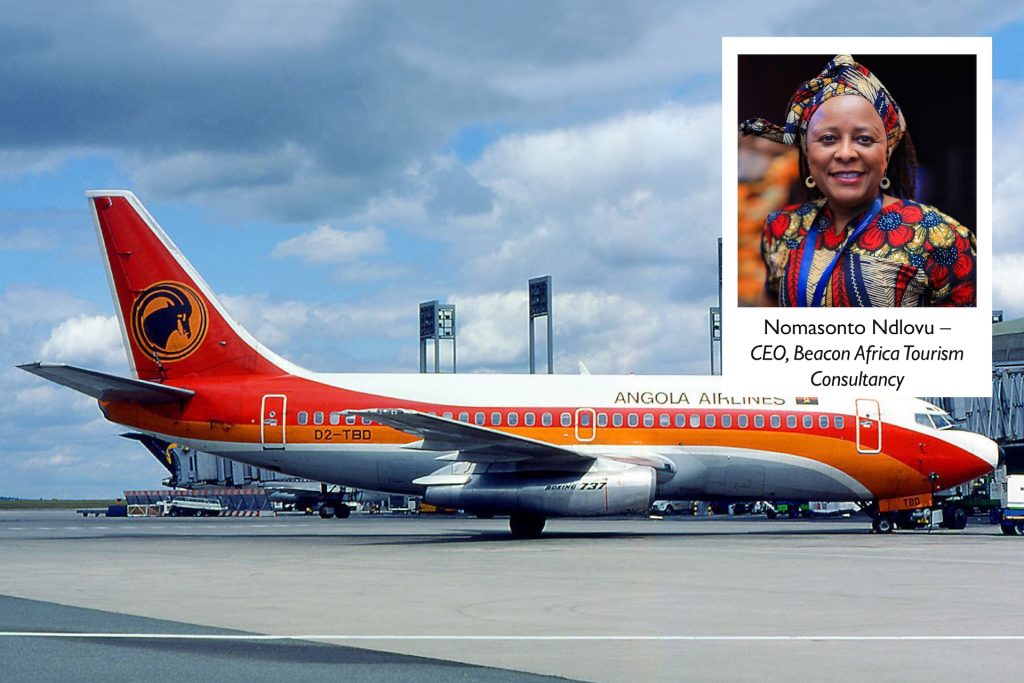
By Nomasonto Ndlovu – CEO, Beacon Africa Tourism Consultancy