
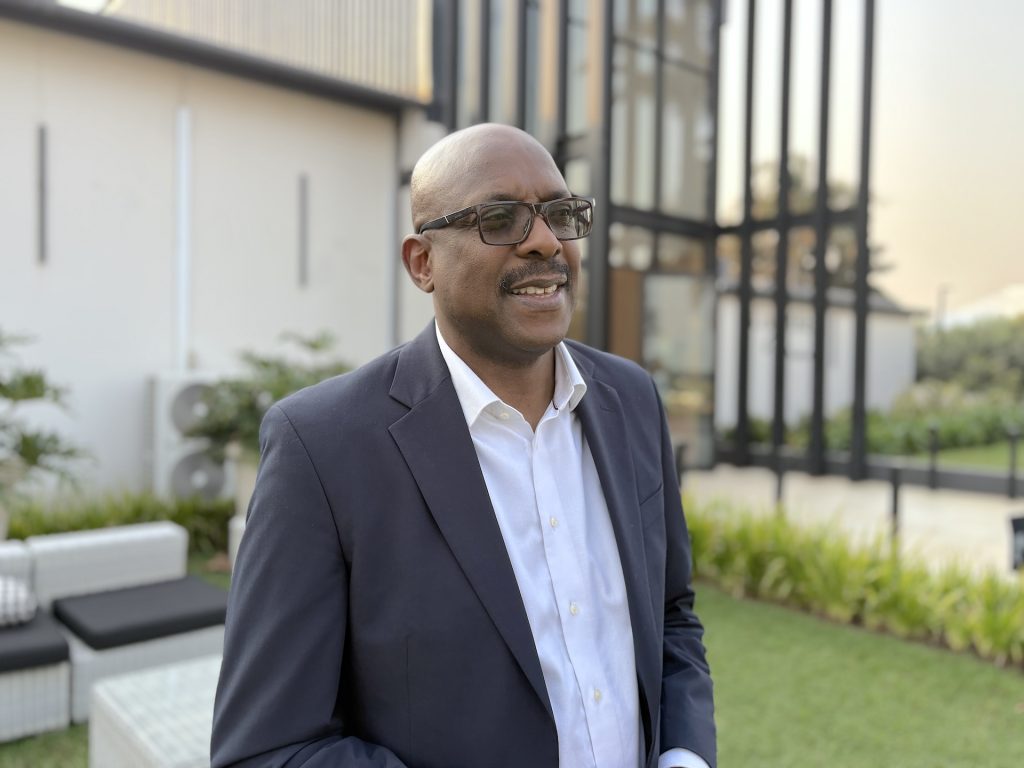
On the final day of the Tourism Investment Forum Africa (TIFA) 2025, Milvest Advisory CEO Miller Matola described the three-day convening as “a success,” citing the strength of participation, the quality of content, and the strategic programme mounted with the City of uMhlathuze, notably the curated site visits that complemented the in-room discussions. “This third edition of TIFA was once again a success,” Matola opined. “Not just in terms of the content, but also from the point of view of the participation and the programme the city put together, including the site visits.”
Matola was explicit that TIFA’s design is intentional: the platform is “a global platform for local action,” engineered to promote development in secondary and tertiary cities and regions where investable opportunities are often overlooked. Host destinations are selected on the basis of depth and diversity of projects not only in tourism but across the broader ecosystem that enables tourism to thrive. “We connect investors with projects that are market-ready and facilitate the engagement. It is then up to the parties to take advantage of the platform,” he said.
Reflecting on the journey from the first edition in the Northern Cape to last year’s Cape Town edition and this year’s Richards Bay gathering, Matola said the team had “gone back to the drawing board” to double down on TIFA’s founding ethos: driving development beyond capital cities. “It’s by design and it’s intentional,” he noted. “We research secondary and tertiary areas which would otherwise not be looked at and identify investment opportunities across the ecosystem.”
Matola offered a candid stocktake of deal momentum since the inaugural forum. The first edition surfaced more than 50 projects spanning energy, transportation, logistics and tourism. He confirmed that several government-led energy projects have advanced and “are out for procurement in 2026.”
By contrast, tourism projects can lag, often for two reasons: true bankability and information gaps. “Some projects might look market-ready, but they are not,” he said. “And sometimes government itself presents a challenge, you don’t get the information you need to advance a project to the next stage. There’s no point promoting projects and then spending months trying to secure basic information when investors ask.”
Where Milvest Advisory has formal mandates for example, MOUs to raise capital or source strategic equity partners, progress is clearer. “We can tell you the progress where we have agreements with project owners,” Matola said. “We cannot always do so on projects that are government-led, where information is hard to secure.”
To close these gaps, Matola outlined three practical shifts:
1. Be party to the agreements. “We need to be party to the discussions or agreements, if at all possible, so we understand deliverables and can help unblock issues.”
2. Proactive tracking. “We will reach out regularly to municipalities and project owners, ask if they are getting what they need, identify bottlenecks, and help unblock them. It’s extra time and resource, but we want to see projects come to fruition.”
3. Earlier project vetting and distribution. “Once we locate a destination, we will request project information early and share it with our investor network. By the time we get to the conference, investors will have a solid grasp of the pipeline, and we will have eliminated projects lacking readiness or documentation.”
Importantly, Matola said TIFA will prioritize bankable, market-ready projects while continuing to surface high-potential opportunities that could progress with feasibility work. “If an investor says, ‘I’d engage if a feasibility study is done,’ that’s an opportunity we would lose if we didn’t show it. We will push harder on bankability and still highlight potential.”
Central to TIFA’s methodology is an ecosystem view of tourism. Matola stressed that the sector’s broad value chain is both impacted by, and impacts other industries. That is why TIFA convenes institutions that may not finance hotels directly but fund the enabling infrastructure that makes tourism investments viable.
He singled out examples such as the Development Bank of Southern Africa (DBSA): “While DBSA might not fund a waterfront hospitality precinct, they might fund the bridge that leads to the waterfront, the road, or the bulk infrastructure that enables a hotel to be developed. We take that ecosystem approach and bring these role-players into the fold.”
Looking ahead, TIFA will be stricter about onboarding destinations and project proponents. Matola acknowledged that bureaucratic hurdles, “being pushed from pillar to post”, can frustrate investors and stall otherwise promising opportunities. “There need to be indices and parameters,” he said. “We will open up to committed partners who cooperate and work with us, but we will also be very strict to avoid the challenges that arise when cooperation fades after the presentation.”
A signature addition this year was the SME Zone, conceived to ensure that TIFA’s global conversations translate into local economic development. “SMEs across sectors face challenges of market access, access to capital, innovation and resilience,” Matola explained. The SME Zone connected entrepreneurs with established businesses in and around Richards Bay, opening supply-chain opportunities and brought banks, development finance institutions and the JSE’s SME division to the table to unpack both financial and non-financial support. “The whole idea was to share actionable information that helps SMEs develop and to create pathways into procurement and partnerships,” he said.
Matola confirmed that TIFA will not go “silent” between annual editions. Expect smaller virtual sessions to capacitate partners and SMEs ahead of the next forum, and regular online seminars to track project readiness and spotlight new developments. “One of the advantages of bringing many experts together is the ideas that emerge,” he said. “We will use that energy to keep momentum through capacitation before the event and through steady tracking of projects in the pipeline.”
TIFA 2025 in Richards Bay underscored a pragmatic playbook for tourism-led development in Africa’s secondary and tertiary cities: curate investable pipelines early, secure mandates to move capital, track relentlessly, finance the enablers, and keep SMEs in the frame. As Matola put it, success depends on intentional design and disciplined follow-through, the very hallmarks TIFA now aims to institutionalize across its future editions.
Listen to the full conversation here