
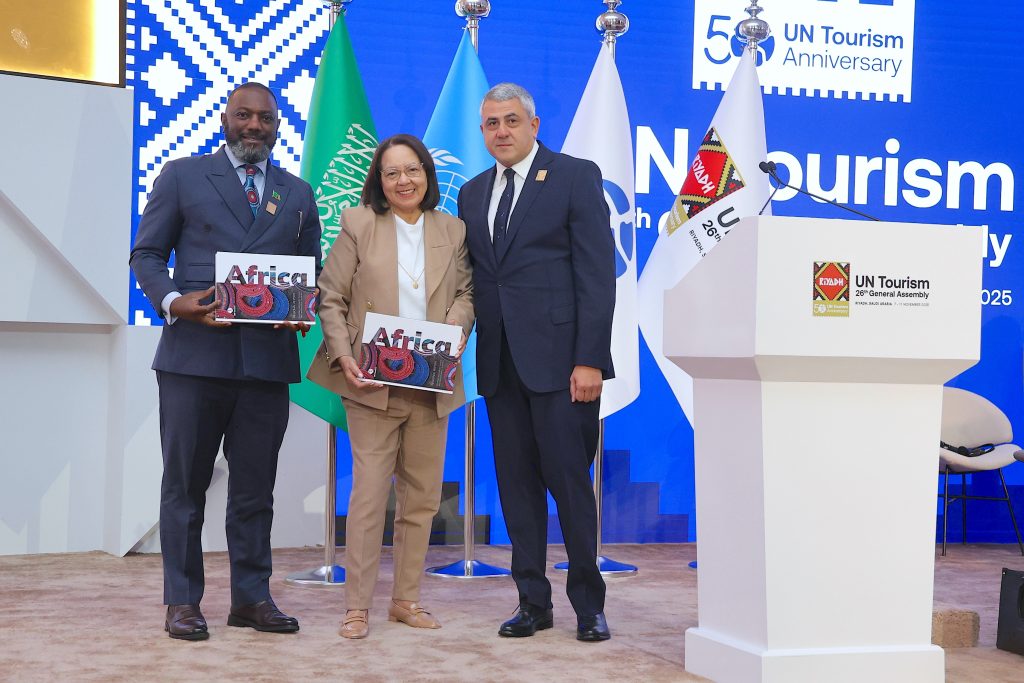
Africa’s tourism prospects received a major boost in Riyadh as UN Tourism unveiled its first-ever Regional Report on Tourism Investment Trends and Opportunities in Africa during the 26th UN Tourism General Assembly—offering the strongest evidence yet that the continent is fast emerging as a transformative frontier for global tourism investment and long-term growth.
The landmark publication presents Africa as a dynamic, fast-evolving marketplace where demographic strength, economic resilience and cultural diversity are converging to create unprecedented opportunities. Home to 1.5 billion people—60% under the age of 25—the continent is positioned to become one of the world’s most influential tourism investment hubs, propelled by steady GDP growth of 3.2% in 2024 and deepening regional integration.
According to the new report, Africa attracted over USD 50 billion in foreign direct investment (FDI) in 2024 alone. Since 2019, the tourism sector has recorded USD 6.6 billion in 105 greenfield investment projects, generating more than 15,100 direct jobs. Tourism now contributes nearly half of all services exports in Africa—the highest share globally—reflecting its rising strategic importance to national and regional economies.
The continent welcomed 74 million international tourists in 2024, earning USD 43 billion in tourism receipts, while tourism contributed 3.5% to Africa’s GDP in 2023. As global travellers seek authentic, sustainable and culturally immersive experiences, Africa’s tourism economy is rapidly diversifying, expanding beyond traditional products into high-growth niches such as MCCI (meetings, congresses, conventions and incentives), gastronomy, wellness, sports tourism, coastal and maritime experiences, and diaspora travel.
The report also underscores the varied but complementary strengths of Africa’s subregions. North Africa is rising as a hub for integrated tourism zones and cultural heritage routes; Southern Africa blends mature safari markets with luxury and adventure experiences; East Africa leads in ecotourism and conservation finance; West Africa is gaining prominence through cultural, creative and diaspora-led tourism; and Central Africa—rich in biodiversity—remains one of the continent’s most untapped frontiers.
However, the report does not overlook the challenges that continue to restrain Africa’s tourism potential. Gaps in infrastructure, regulatory bottlenecks and persistent perceptions of risk remain obstacles to large-scale investment. Nonetheless, the tide is turning through targeted reforms, fiscal and non-fiscal incentives, emerging Tourism Special Economic Zones (TSEZs) and strengthened public–private–community partnerships. These developments, paired with rising investment in digital systems, transport, energy and social infrastructure, are laying the foundation for scalable, future-ready tourism projects.
UN Tourism Secretary-General Zurab Pololikashvili emphasised both the strategic relevance of the report and the collaborative leadership behind it. While presenting the publication, he acknowledged South Africa’s Minister of Tourism, Patricia de Lille, as the original proponent of the idea to develop a continent-wide investment report—an initiative she championed within the Executive Council.
“Bolstering tourism investment and supporting entrepreneurs across Africa has been one of the core priorities I sought to advance during my mandate,” Pololikashvili stated. “To this end, 7 country-specific guidebooks for South Africa, Namibia, Zambia, Morocco, Mozambique, Mauritius and Tanzania have been published, with additional editions underway for Angola, Kenya, Ghana and Cabo Verde. Some were also translated into Chinese to target new market segments and attract investors from across the globe.”
He added: “Building on the success of the UN Tourism Doing Business Guidelines series, we have produced a comprehensive Regional Tourism Investment Report for Africa which brings together the voices of both public and private stakeholders and highlights the immense potential and business opportunities the tourism sector offers in the continent.”
The launch marks a pivotal moment for Africa’s tourism future, offering global investors a detailed roadmap to navigate the continent’s rapidly expanding tourism economy—one brimming with opportunity, shaped by reform and ready for transformative growth.