
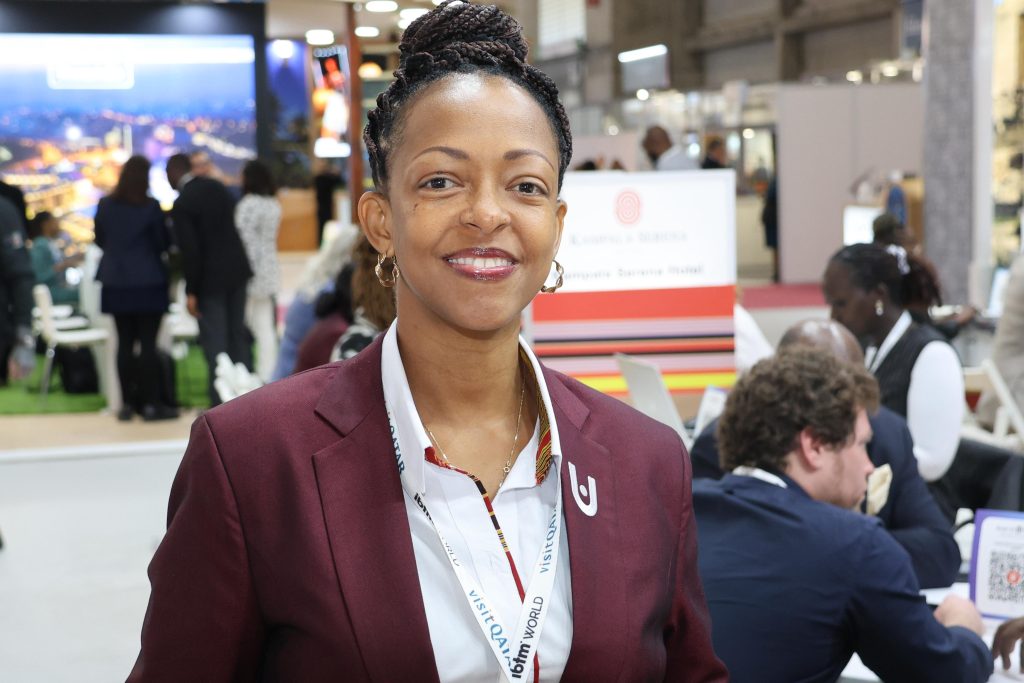
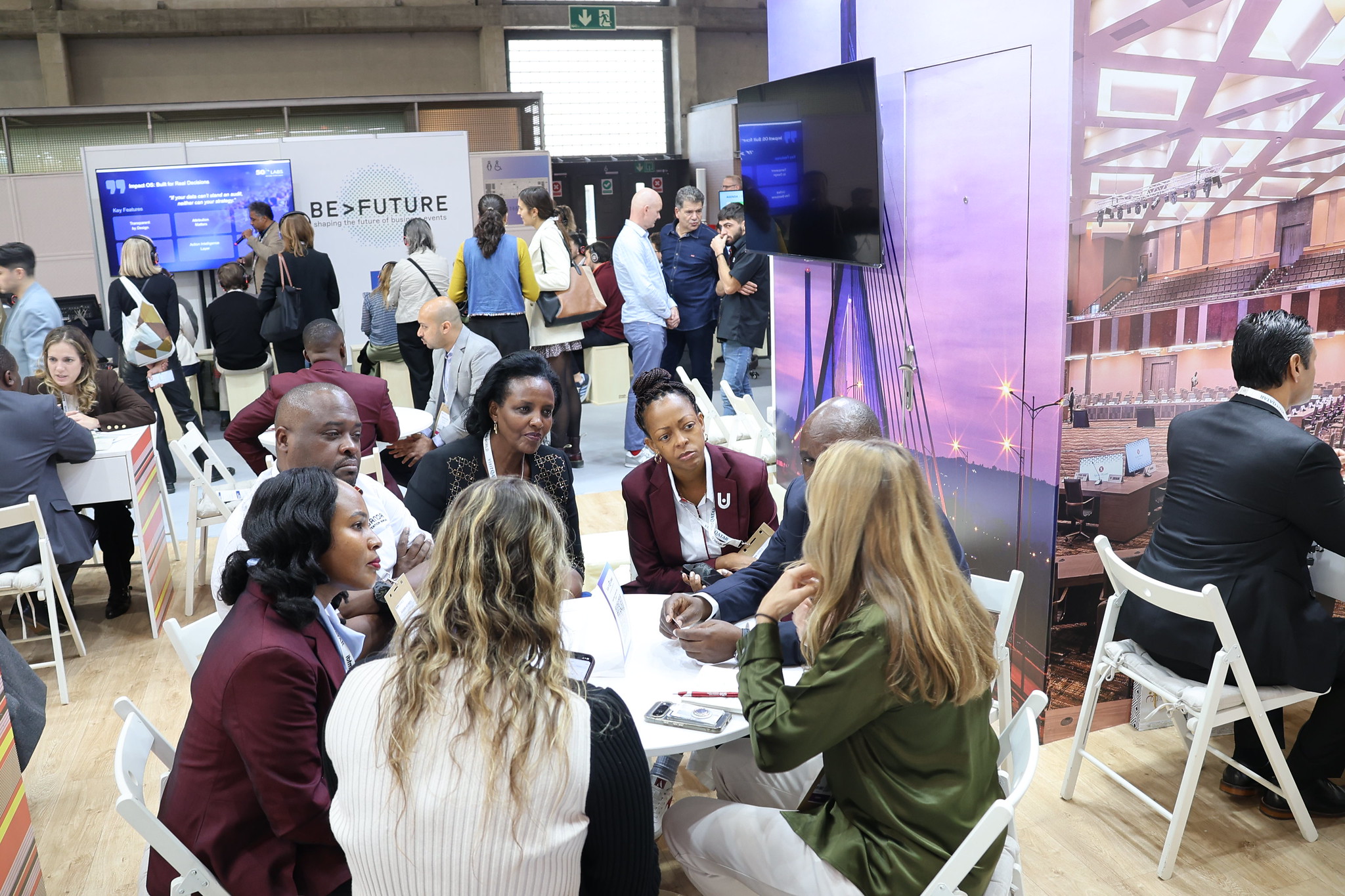
At IBTM World, the flagship global meetings and events showcase in Barcelona, newly appointed CEO of the Uganda Tourism Board (UTB), Juliana Kagwa, led official delegation to bring the East African country’s burgeoning MICE and tourism sector to the world.
Just five months into her role, she says the stars are finally aligning for Uganda’s tourism industry – and she is determined to ride the momentum with a reinvigorated strategy, bold targets and a fresh spirit of public–private partnership.
Speaking on the VA Tourism Podcast with host Kojo Bentum-Williams, Kagwa described her journey into the position as both unexpected and deeply transformative.
“It’s been a roller coaster,” she said. “Tourism is not what you see from the sidelines. Once you’re in it, you start to understand it has so many facets. It is one of the most exciting and fastest-growing sectors in Uganda – possibly in the world.”
Kagwa’s entry into tourism was never part of a masterplan. With a professional background spanning top-tier global brands like GlaxoSmithKline, Diageo, Heineken and East African Breweries, she spent most of her career selling products and shaping consumer experiences.
“My background is marketing and selling,” she explained. “I’ve been selling since I left university.”
Her corporate experience, however, quietly prepared her for tourism – a sector she says is fundamentally about experience delivery, value exchange and customer satisfaction.
“The alcohol beverage industry is all about socialisation, entertainment and service. I’d already started getting a taste for tourism without knowing,” she reflected.
After a stint in agriculture with SeedCo, she was urged by peers – not government officials – to apply for the vacant UTB role.
“They said, ‘Juliana, you have the experience, you have the networks, and you have the energy.’ So, I applied. If I got it, great; if not, I was happy at SeedCo. And here we are today.”
The state of tourism: ‘This is our moment’
Kagwa believes Uganda has entered a golden era of tourism positioning and government prioritisation.
“This is the most exciting time in the history of Uganda to be in tourism,” she affirmed. “Tourism is now topical. Finally, it has the right public sector attention and backing.”
Today, tourism is no longer siloed under the Ministry of Tourism. It has become cross-government priority.
“There is no public sector meeting that doesn’t touch tourism,” she said. “It is now in the Uganda Investment Authority, Ministry of Trade, Ministry of Agriculture. We are even developing agritourism – coffee, the Ankole cow, and many products we never previously viewed as tourism assets.”
The shift is reinforced by Uganda’s new strategic growth plan, which places tourism at the centre of economic expansion.
“We have four strategic pillars – agriculture, tourism, minerals and science and technology. We call them the ATMs – the money churning engines,” Kagwa explained. “Tourism is pegged to grow 25-fold. That means we must invest ahead, and the government is doing exactly that.”
Government investment on the rise
She reveals that last year the tourism sector secured a dramatic increase in state funding.
“We attracted 250% more investment from the consolidated fund,” she said, noting that investment is now flowing into infrastructure, aerodromes, roads serving national parks and marketing campaigns.
One of the biggest transformations Kagwa says she is driving is opening the industry’s growth engine to the private sector – not as supporters, but as co-creators.
“We’re not going at it alone anymore,” she explained. “The public sector has opened the floodgates for the private sector to participate. For every step we take, we are onboarding the private sector for investment, ideation and execution.”
In her view, unlocking the full tourism experience – one that “touches all five senses” – requires commercial expertise.
“The private sector are the experience experts. Nobody does commerce like the private sector,” she said. “Our job is to build the vehicle for participation, to create the frameworks that make investment worthwhile.”
Uganda takes MICE ambitions to Barcelona
At this year’s IBTM World, UTB’s message is clear: Uganda is ready to become a competitive player in the global MICE market.
“Our MICE sector is still raw,” she admitted. “But that is great potential. Every successful destination has already shown us the blueprint.”
Uganda’s strongest selling point, she noted, is its location and natural assets.
“If you come to us, the biggest incentive is our address. We sit on the shores of Lake Victoria. We have 165 lakes, multiple biodomes and a richness of flora and fauna that very few places in the world can match.”
But alongside the pitch is serious groundwork: improving capacity, accessibility and service standards.
“We are ensuring that we are accessible. Uganda Airlines is opening direct routes from London, Johannesburg, Guangzhou, Lagos and Mumbai. One direct flight speaks a million words.”
POATE 2026 – Uganda to deliver the ‘Wanderlust’ experience
Kagwa’s strategic vision will come sharply into focus at the 2026 Pearl of Africa Tourism Expo (POATE), scheduled for 20th of May 2026, the 10th edition of the flagship tourism showcase.
“Our theme is Wanderlust – the irresistible urge to explore, to travel, to adventure,” she said. “We are packaging Uganda as a one-stop-shop immersion experience.”
She promises that POATE will demonstrate Uganda as Africa in one destination:
“You fly to one place and you get dry savannah, wet savannah, rainforest, mountains, snow-capped peaks, crater lakes, culture and heritage. Uganda is a gift that won’t stop giving.”
UTB has set aggressive targets for the next cycle.
“Last year we closed at about 1.3 million arrivals,” she said. “We want to double that to about 3 million. We also want to double GDP earnings from tourism.”
But increasing arrivals alone is not enough – visitor expenditure must rise.
“Currently tourists spend between US$160 and US$180 a day. We want to double that. Within seven days in Uganda, you should spend at least US$2,000 for the sector to make business sense.”
The UTB CEO also acknowledged that strategy alone is not enough – perception must change, and success must be heard.
“We need to tell the story. When there are green shoots, we must report them,” she said. “This moment is ours – and it is time the world knew it.”