
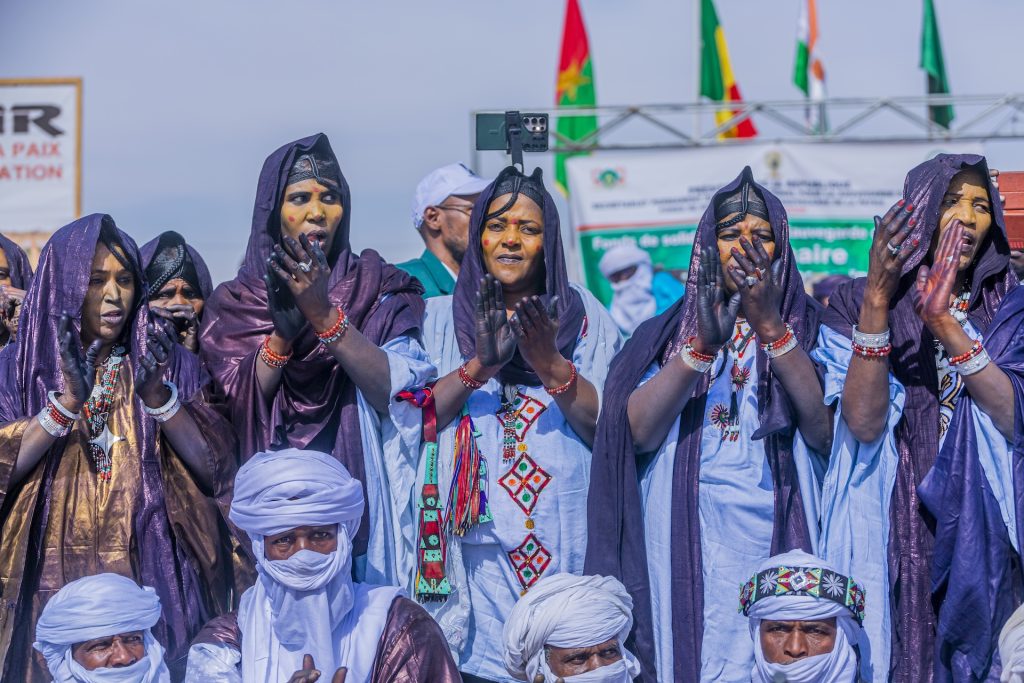
The 17th Festival of the Aïr opened in Iférouane on 5 December, convening thousands of attendees for three days of cultural programming and landscape immersion at the foot of Mount Tamgak. As the 2025 edition officially came to a close today, the festival wrapped up a vibrant programme that highlighted the cultural, economic and touristic importance of the Aïr region.Held under the theme, “Promoting Domestic Tourism and Handicrafts, Pillars of National Sovereignty and Resilient Development,” the edition assembled official delegations from Chad, Burkina Faso and Niger, alongside travellers, culture specialists and local communities to foreground the economic and social role of Tuareg heritage in northern Niger.
An integrated cultural programme transformed Iférouane into a living showcase of nomadic practice and artisanal production. Daily activities included camel parades and the contest for the most beautiful camel, events that underscore animal mastery and longstanding pastoral prestige. Traditional dances and music punctuated the schedule, while tendé performances, ancestral rhythms led by women, served as the festival’s musical hallmark, resonating across dunes and rock outcrops. Beauty contests and parades in traditional attire highlighted Tuareg ornaments and sartorial traditions, and an exhibition and marketplace offered locally made crafts, from Agadezcrosses and silver jewellery to leatherwork and decorative objects.
The festival’s itinerary extended beyond town boundaries to the Chiriet site, where visitors encountered the Aïr’s striking geomorphology, a landscape in which golden dunes meet volcanic massif. Organised excursions to Chiriet provided opportunities for night-time observation under clear desert skies and panoramic views that frame the region’s tourism potential. For regular attendees, and for newcomers seeking a comprehensive desert experience, Chiriet remains integral to the Festival of the Aïr programme.
Alongside cultural performances and craft commerce, the event staged a forum on peace and social cohesion, convened by the High Authority for the Consolidation of Peace. The forum brought together local leaders, experts and community representatives to discuss dialogue and stability as foundations for sustainable tourism and local development. The inclusion of this forum reflects the festival’s dual purpose, cultural and civic, and its role as a platform for policy-oriented exchanges that link heritage preservation with economic resilience.
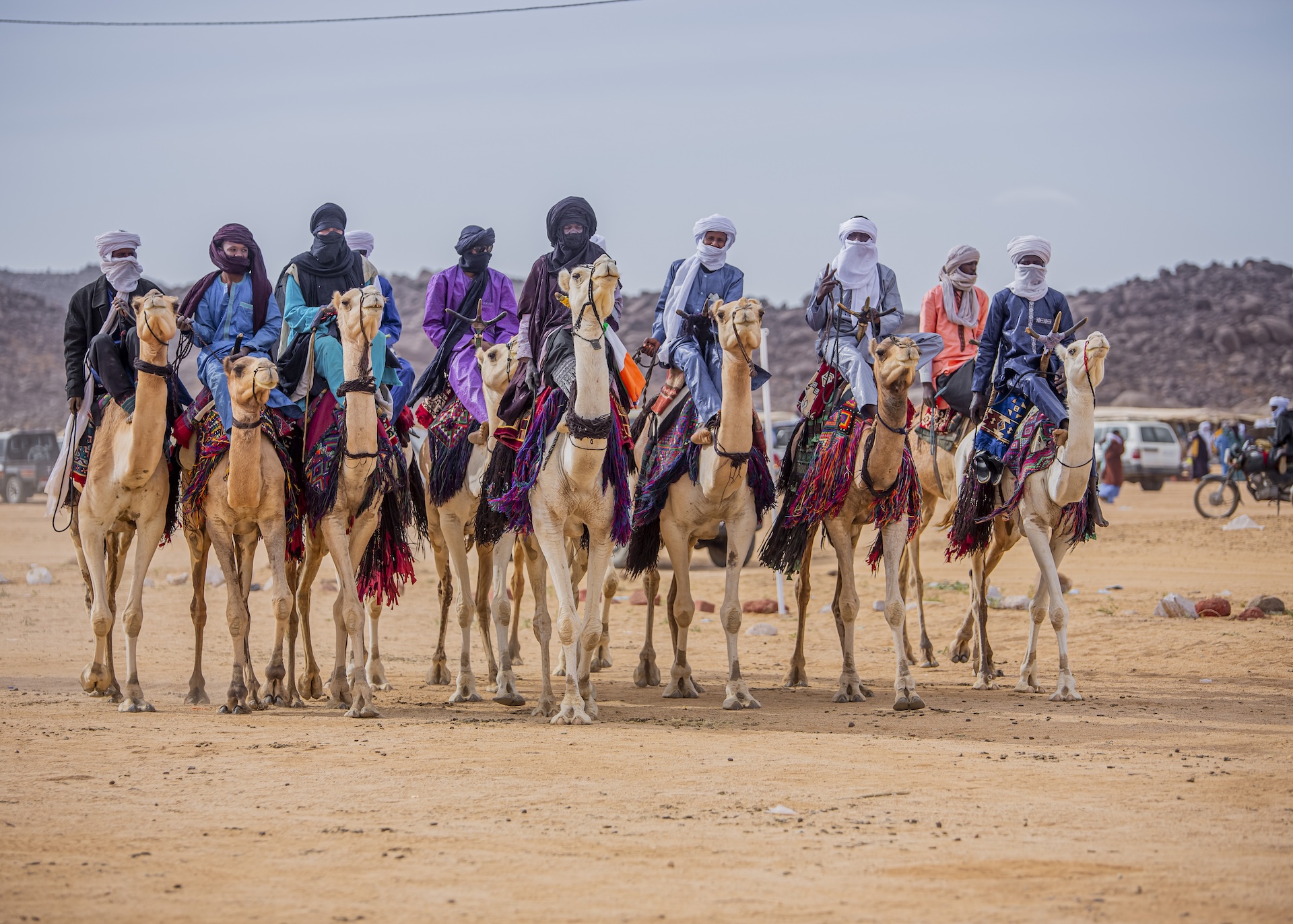
Photo crédit : ComHope/APTN
The festival’s stated theme framed the proceedings in terms of domestic tourism and artisanal industries as strategic assets. Handicraft sales and exhibitions function as immediate income channels for local artisans, while market visibility at a festival of this scale supports longer termvalue chains tied to national sovereignty. By drawing delegations from neighbouring states, the event also reinforced regional cultural diplomacy and cross-border exchange, aspects that organisers identify as important for destination development and for building intra-regional visitor flows.
Operationally, the Festival of the Aïr demonstrated the convergence of cultural programming, local commerce and landscape tourism. Camel-related ceremonies and tendé performances attracted both domestic visitors and international heritage travellers, while the craft marketplace enabled direct engagement between producers and buyers. The festival timetable combined staged events with open-market activity, allowing artisans to translate cultural display into commercial opportunity, and enabling tour operators to package experiential excursions that link the festival to broader Saharan itineraries.
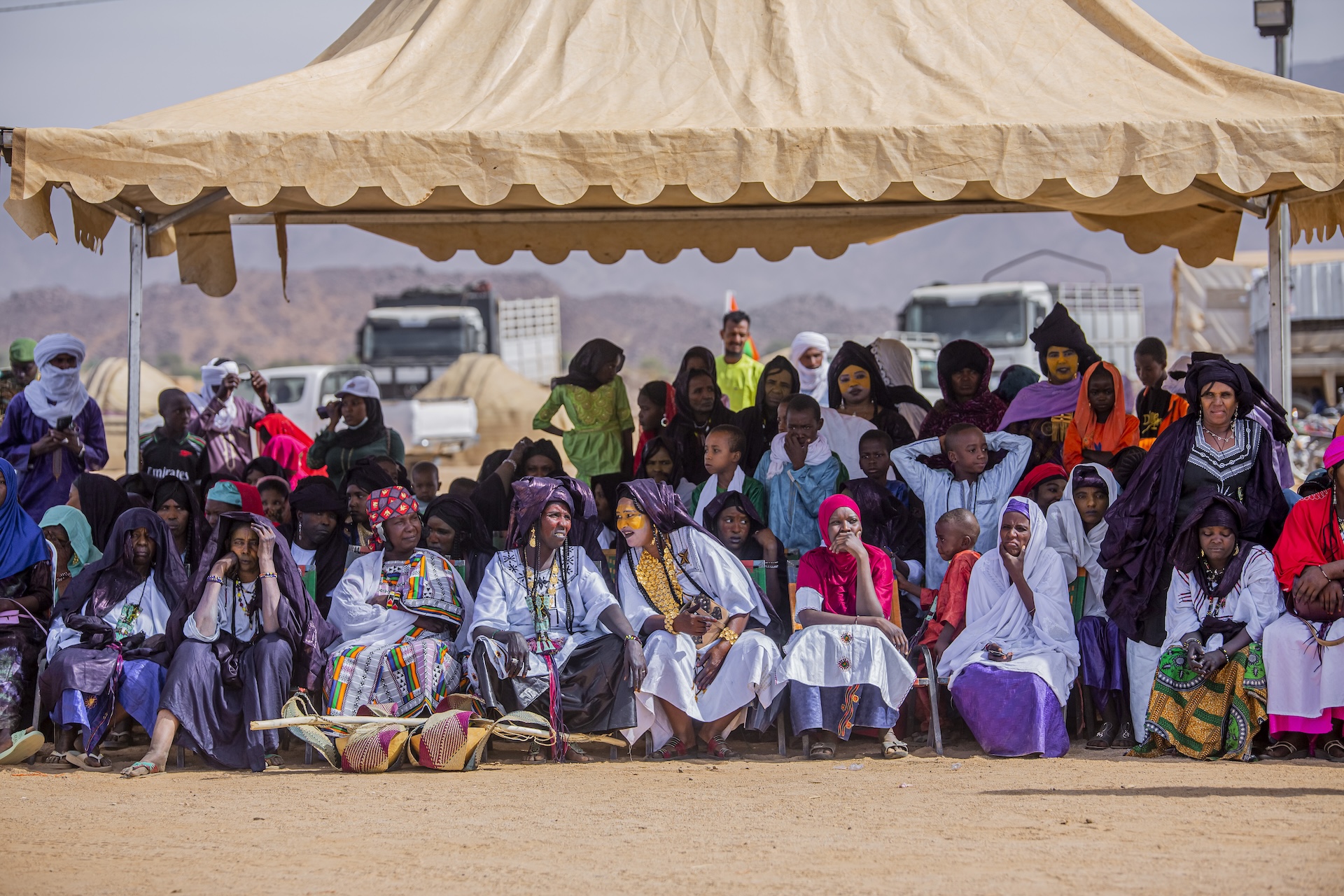
Photo crédit : ComHope/APTN
For northern Niger, the festival serves multiple functions: it is a cultural reaffirmation of Tuaregidentity, an economic occasion for artisans and traders, and a practical testing ground for tourism initiatives that rely on local stewardship and security. The presence of the High Authority for the Consolidation of Peace underlined an institutional recognition that cultural events of this scale require collaborative governance, in which community leadership, public authorities and private stakeholders coordinate to protect heritage, enable safe access and capture economic value for local populations.
The 17th Festival of the Aïr reaffirmed the region’s potential as a distinctive cultural and landscape destination, while stressing the necessity of policy coherence to translate momentary visitation into sustained development.