
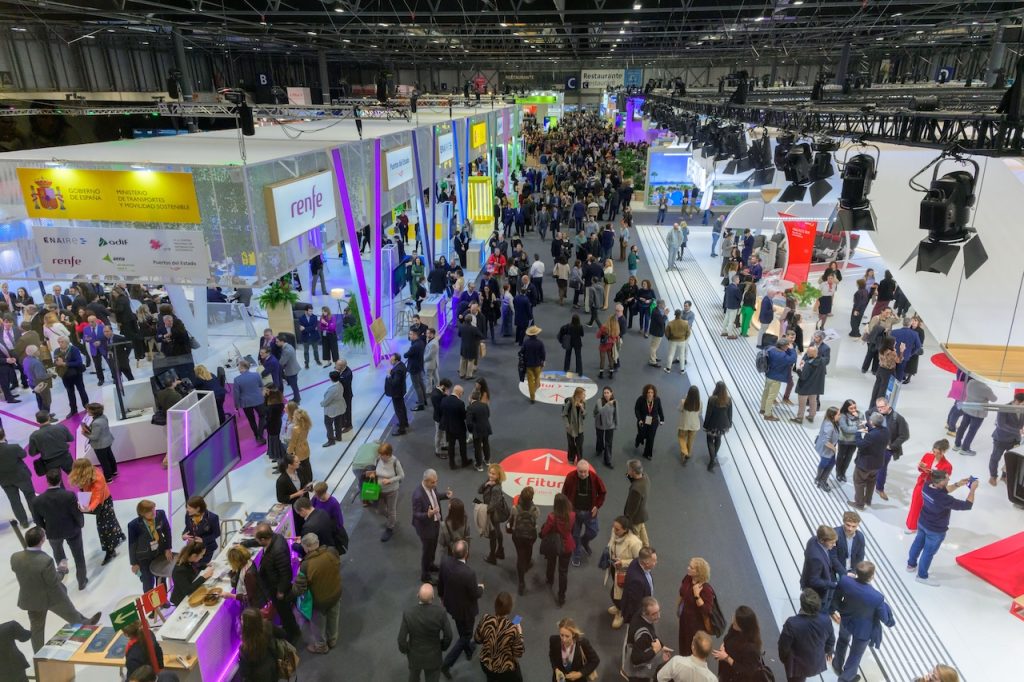
In a context in which sustainability has become a priority for global tourism development, FITUR is playing its role as a benchmark for promoting a responsible transformation of the industry. With Mexico as Partner Country, the International Tourism Trade Fair is once again bringing together the global market from 21 to 25 January 2026 at IFEMA MADRID, boosting business, institutional cooperation and knowledge exchange at a turning point for the industry.
According to UN Tourism, international arrivals increased globally by 5% in the first half of 2025. Same sources pointed that global tourism expenditure is expected to reach USD 2.1 trillion. These figures highlight the strength of a growing industry while highlighting the need to adopt more efficient, resilient practices that deliver lasting social and environmental benefits
Against this scenario, FITUR 2026 wants to strengthen its commitment through the Knowledge Hub, open on the professionals-only days from Wednesday 21 to Friday 23 January. The Hub will showcase approaches that combine economic strength with responsible resource management and support for local communities, offering new ways to transform tourism in both practice and strategy
Sustainable tourism innovation at a FITUR designed for responsible visits
Under the slogan “Where travel begins”, FITUR invites participants and visitors to perceive sustainability as a driver of destination strength and a pillar of the global tourism industry. Thus, in its 46th edition, the FITUR will incorporate for the first time GENAQ atmospheric water generators, which will feed part of the water supply during the event and will significantly reduce the use of single-use plastic bottles. Eight drinking fountains will be installed at different points of FITUR. The point is reducing the carbon footprint associated with the transport and distribution of bottled water and employing a renewable and local energy source: air humidity.
FITUR also fosters the adoption of environmental criteria among its exhibitors through the Sustainable Stand Award, which recognises organisations that integrate responsible practices in the design, construction and operation of their stand spaces. The award evaluates aspects such as the use of recyclable materials, energy efficiency, waste management and accessibility of the stands.
Beyond promoting conscious participation and visits, FITUR positions itself as an international platform for the identification and dissemination of high-impact sustainable solutions. The FITURNEXT Sustainability Observatory leads this work by identifying replicable initiatives in destinations around the world. For 2026, the observatory has focused its FITURNEXT Challenge on the efficient and responsible management of water, one of the most vulnerable resources in many tourism environments. After assessing more than 250 projects, the jury decided on the winning proposals of: Fundación Visit València (Spain), Barceló Regen (Spain)and Plastic Cup (Hungary).
FITUR’s growing specialisation through its sections —FITUR 4all, FITUR Cruises, FITUR Lingua, FITUR LGTB+, FITUR Screen, FITUR Talent, FITUR Sports and FITUR Woman —contributes to diversifying the tourism offer and promoting a more inclusive, accessible and decentralised industry in both seasonal and geographical terms. This sectoral structure broadens FITUR’s scale and emphasizes its contribution to a more balanced and sustainable tourism.
Finally, FITUR 2026 will deepen its environmental commitment through the comprehensive measurement of its carbon footprint, both direct emissions (Scope 1 and 2) and indirect emissions (Scope 3). This approach will help build a more responsible event model and provide key insights for improving future trade fairs.
With this edition, FITUR reaffirms its role as a catalyst for the changes shaping the future of global tourism and positions itself as a meeting point where institutions, companies, destinations and professionals find inspiration, knowledge and strategic partnerships to drive a more resilient, inclusive industry aligned with major international challenges.