
When American streamer and YouTube creator Darren Watkins Jr., globally known as IShowSpeed, embarked on his African tour titled Speed Does Africa, few could have predicted its resonance beyond viral moments and social media metrics. Yet as the tour unfolded across multiple regions, it quietly became one of the most consequential pieces of destination storytelling Africa has experienced in recent years – not through policy, advertising or diplomacy, but through lived, unfiltered experience.
At a time when Africa’s tourism sector is regaining momentum with renewed confidence, Speed’s journey offered something the continent has long needed – a continental narrative told in real time, consumed primarily by young people, and rooted not in aspiration alone but in authenticity.
Africa’s Tourism Moment in 2025
The timing of Speed’s tour was no coincidence in impact, even if it was unplanned.
Africa’s tourism recovery did not merely continue in 2025 – it accelerated. According to UN Tourism data, international tourist arrivals across the continent rose by around 10 percent between January and September 2025, the highest growth rate of any global region during that period. North Africa recorded growth of approximately 11 percent, while Sub-Saharan Africa grew by about 10 percent, comfortably outperforming the global average growth of around 5 percent.
This performance is particularly notable given the global context. Inflationary pressures, higher airfares, geopolitical conflicts and economic uncertainty have slowed travel demand in several traditional markets. Yet Africa’s appeal proved resilient, driven by cultural tourism, diasporatravel, festivals, business events and renewed interest in experiential journeys.
The momentum builds on solid foundations. As of 2024, Africa welcomed an estimated 74 million international visitors, representing a 7 percent increase over pre-pandemic 2019 levelsand 12 percent growth compared to 2023. While final UN Tourism figures for the full year 2025 are expected later this month, the trajectory suggests continued expansion not only in arrivals, but also in visitor spending and business travel.
Tourism’s economic importance is growing accordingly. Industry estimates indicate that tourism could contribute over 10 percent of Africa’s GDP by 2030, while creating millions of jobs, particularly for young people and women. Against this backdrop, Speed’s tour functioned less as an outlier and more as a powerful amplifier of a sector already gaining confidence and global attention.
Africa Through a Gen Z Lens
IShowSpeed’s core audience is overwhelmingly young. More than two-thirds of his global following falls within the Gen Z and early millennial demographic. This is the generation that will shape global travel demand for the next two decades, and it is a demographic that traditional tourism marketing has often struggled to engage.
Throughout the African tour, Speed’s livestreams regularly attracted between 8 million and 16 million viewers per destination. Ethiopia’s streams reportedly peaked at around 11 million views. Morocco’s appearance during the AFCON final exceeded 16 million. Kenya, Nigeria and Algeria recorded figures close to or above 10 million.
These numbers matter. They represent attention at scale, and attention is the first currency of tourism. While livestream views do not automatically translate into arrivals, they influence perception, aspiration and intent. For young audiences encountering Africa through unfiltered experiences rather than headlines or stereotypes, the impact is long-term.
West Africa – Culture as Currency, Identity as Experience
West Africa’s presence on the tour stood out not for spectacle, but for symbolism. Across Nigeria, Benin, Côte d’Ivoire, Senegal and Ghana, Speed encountered a region whose tourism strength lies in culture, rhythm and lived heritage.
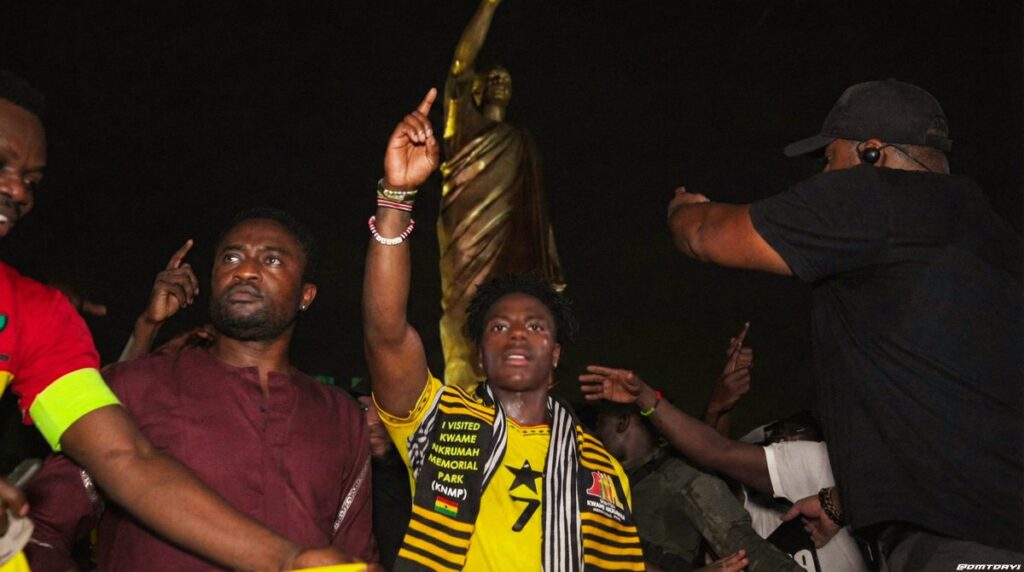
In Ghana, moments at Independence Square and Black Star Square placed national identity at the centre of a global digital conversation. A naming ceremony, interactions with traditional dancers and immersion into everyday street culture reinforced Ghana’s positioning as a cultural tourism gateway – not curated for outsiders, but confidently lived.
Nigeria amplified this narrative through its sheer creative energy. Music, street life, humour and spontaneous interaction underscored the country’s dominance as West Africa’s cultural engine. Senegal and Côte d’Ivoire echoed similar strengths – urban vibrancy blended with deep-rooted tradition – while Benin’s spiritual and historical undertones added depth to the region’s tourism offering.
The lesson from West Africa was unmistakable. Cultural tourism does not require excessive repackaging to resonate globally. It thrives when visitors are invited to participate rather than observe – a trend increasingly favoured by younger travellers seeking meaning over monumentality.
One Continent, Many Experiences
What made the tour particularly impactful was its cumulative effect. Speed moved seamlessly from North Africa to West, East and Southern Africa, showcasing wildlife, food, music, cities, festivals and landscapes within a single narrative arc.
In Kenya, wildlife and conservation took centre stage. In Nigeria, urban creativity, music and street culture dominated. Senegal and Angola highlighted rhythm, history and identity. Namibia provided a dramatic conclusion through adventure tourism and vast landscapes.
For viewers, the takeaway was not comparison between countries, but continental diversity. Africa appeared as a destination where leisure, thrill, gastronomy and culture coexist within reachable distances. This visual narrative aligns with Africa’s growing push towards regional travel integration, visa facilitation and aviation connectivity.
Informality, Influence and Missed Diplomacy
One striking feature of the tour was the absence of formal presidential or head-of-state engagements in most destinations. Speed was welcomed enthusiastically by citizens, artists and local communities, but official tourism diplomacy largely remained in the background.
This reveals both strength and weakness. On one hand, it demonstrates that Africa’s cultural appeal is strong enough to travel without political staging. On the other, it highlights a missed opportunity.
In other regions, high-impact digital creators are increasingly integrated into tourism diplomacy as tools of soft power. Symbolic recognition by national leadership signals that tourism is a strategic economic priority, not merely a marketing afterthought.
For a continent seeking to grow tourism’s contribution to GDP and employment, this is an area that warrants reflection.
Lessons for Tourism Authorities and DMOs
The Speed tour offers clear lessons for African tourism authorities, destination management organisations and governments.
First, youth-centric storytelling is no longer optional. Gen Z travellers discover destinations through creators, not brochures. Tourism boards must invest in long-term partnerships with digital storytellers who can communicate authentically.
Second, attention must be measured and converted. Livestream views should be analysedalongside destination search trends, social engagement and booking data to understand how visibility translates into demand.
Third, cultural experiences must be formalised into tourism products without losing authenticity. Naming ceremonies, street food trails, music immersion and heritage walks should be curated as participatory experiences.
Fourth, community benefit must be prioritised. Tourism visibility should translate into tangible opportunities for artisans, guides, performers and small businesses.
Fifth, regional collaboration is essential. Africa sells better when experienced as a connected whole. Speed’s journey unintentionally illustrated the appeal of multi-country travel across the continent.
Finally, governments must modernise tourism diplomacy. Digital influence is now a form of economic leverage and soft power. Ignoring it risks falling behind.
The Bigger Picture
Africa’s tourism sector enters 2026 with momentum. Arrivals are rising faster than the global average. Youth-driven cultural tourism is reshaping demand. MICE tourism continues to grow in cities such as Kigali, Nairobi, Accra and Cape Town. Aviation connectivity and visa reform remain critical enablers.
IShowSpeed did not set out to be a tourism ambassador. Yet his African tour achieved what many formal campaigns struggle to deliver. It humanised the continent, showcased its diversity and placed Africa firmly within the imagination of a new generation of travellers.
The question now is whether Africa’s tourism institutions can move as quickly as its audiences. The attention has arrived. The opportunity is clear. Strategy must follow.
Africa has the stories. The world is watching. What comes next will define the continent’s tourism future.