
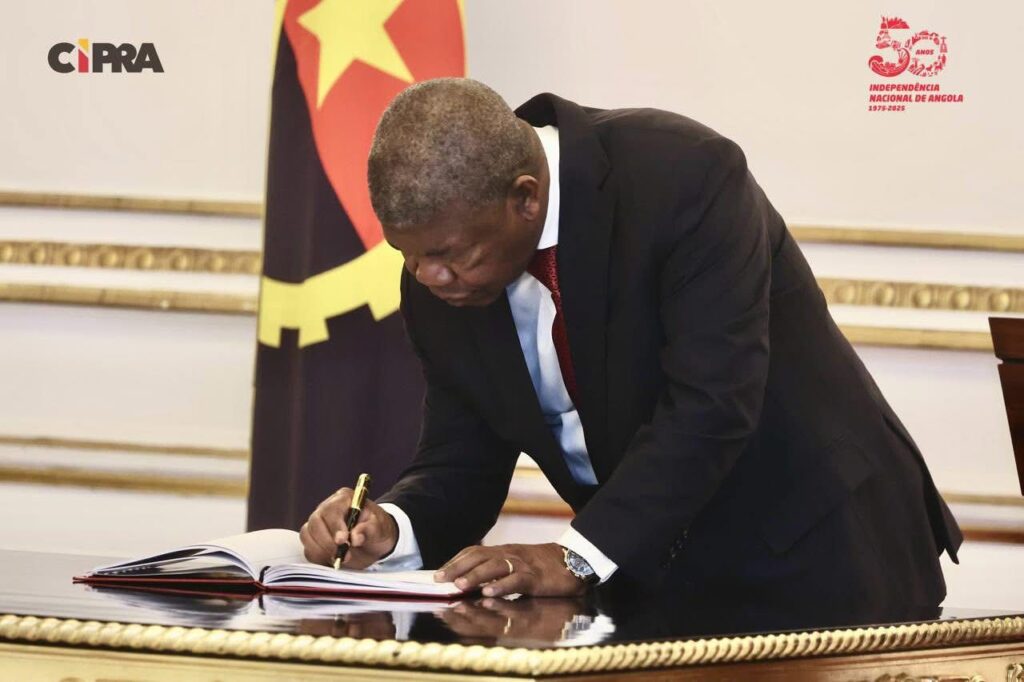
The President of Angola, João Manuel Gonçalves Lourenço, has approved a public investment of €449 million for the development of integrated infrastructure in key tourism areas, including Cabo Ledo, Quicombo and Namibe. The decision reinforces the government’s strategy to promote tourism as a driver for economic diversification.
The investment will support the development of the Cabo Ledo Tourism Development Hub and the country’s coastal tourism corridor, covering areas such as Pipas Bay (Saco Mar), Tômbwa Bay and Três Irmãos Bay in Moçâmedes, as well as Quicombo Bay in Cuanza Sul Province.
The authorization is formalized through Executive Orders No. 32/26 and 33/26, which also establish a simplified procurement process for the design and construction of essential public infrastructure. Planned works include access roads, water supply systems, sanitation, electricity, telecommunications and public lighting.
These initiatives fall under the Planifica Turismo programme, approved last year, which sets out measures for tourism planning and territorial organization. The programme aims to improve accessibility, safety, urban functionality and overall attractiveness in areas with high tourism potential, creating favorable conditions for private investment.
The €449 million investment will be financed through external funding provided by Mitsubishi UFJ Financial Group (MUFG). According to the government, the lack of basic infrastructure has been a major obstacle preventing the effective exploitation of the tourism potential of these regions, despite growing interest from national and international investors.

The Ministry of Tourism has confirmed that several private investors have already expressed interest in developing projects in these areas, but many initiatives have faced delays due to insufficient infrastructure.
By prioritizing public investment in infrastructure, the Executive seeks to reduce entry costs for investors, boost destination competitiveness and foster sustainable tourism development. The initiative is also expected to generate employment, stimulate local economies and improve living conditions for nearby communities.
Angola has been intensifying efforts to position itself as an attractive destination for tourism investment. In 2025, the country was recognized as the Best Tourism Investment Destination by the Global Tourism Forum, an award that reflects ongoing reforms and growing investor confidence.
With this decision, the government reaffirms its commitment to planned and competitive tourism development, the sustainability of Angola’s beaches and bays, and the creation of a strategic coastal corridor for tourism investment.