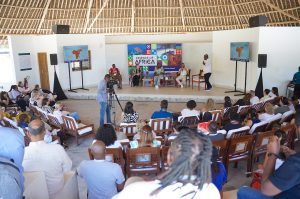

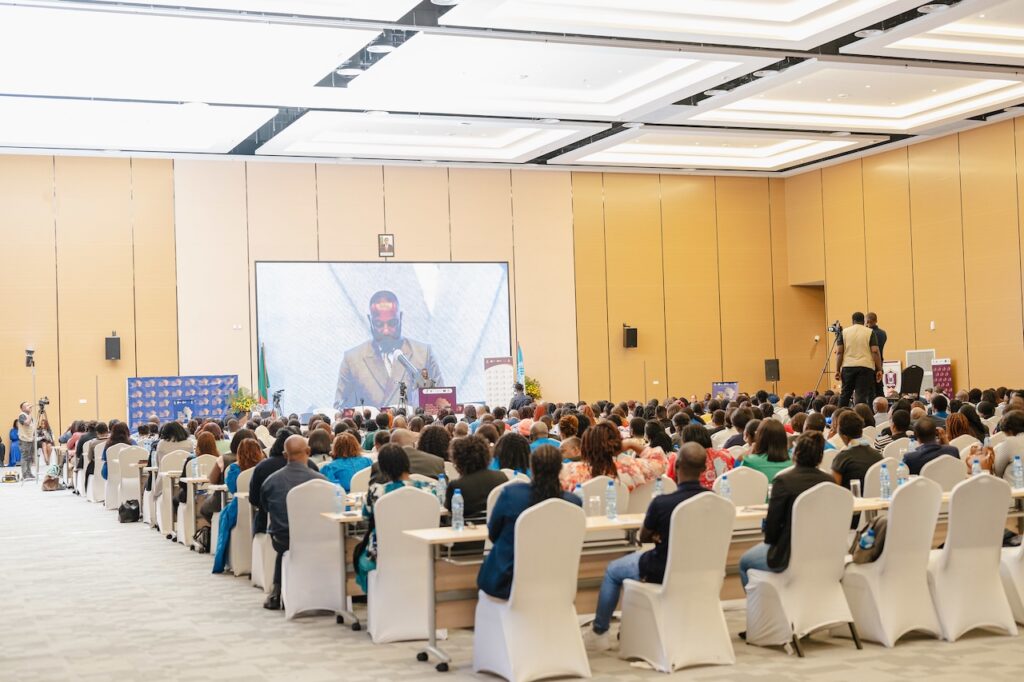
Lusaka will host the Travel, Hospitality and Tourism Education Summit, THTES, from 14 to 16 April 2026 at the Mulungushi International Conference Centre, with a sharpened focus on translating education frameworks into workforce outcomes for Africa’s tourism sector.
Now in its fourth edition, the summit, organized by the Zambia Institute for Tourism and Hospitality Studies, ZITHS, reflects a shift in emphasis from dialogue-driven engagements to structured implementation across policy, academia and industry.
At the centre of this transition is a growing alignment between education systems and labour market demands. Zambia’s Minister of Tourism, Hon. Rodney Malindi Sikumba, iterates this direction, noting that the 2026 edition represents “a shift from dialogue to coordinated action, strengthening alignment between education systems, industry needs, and public policy.”
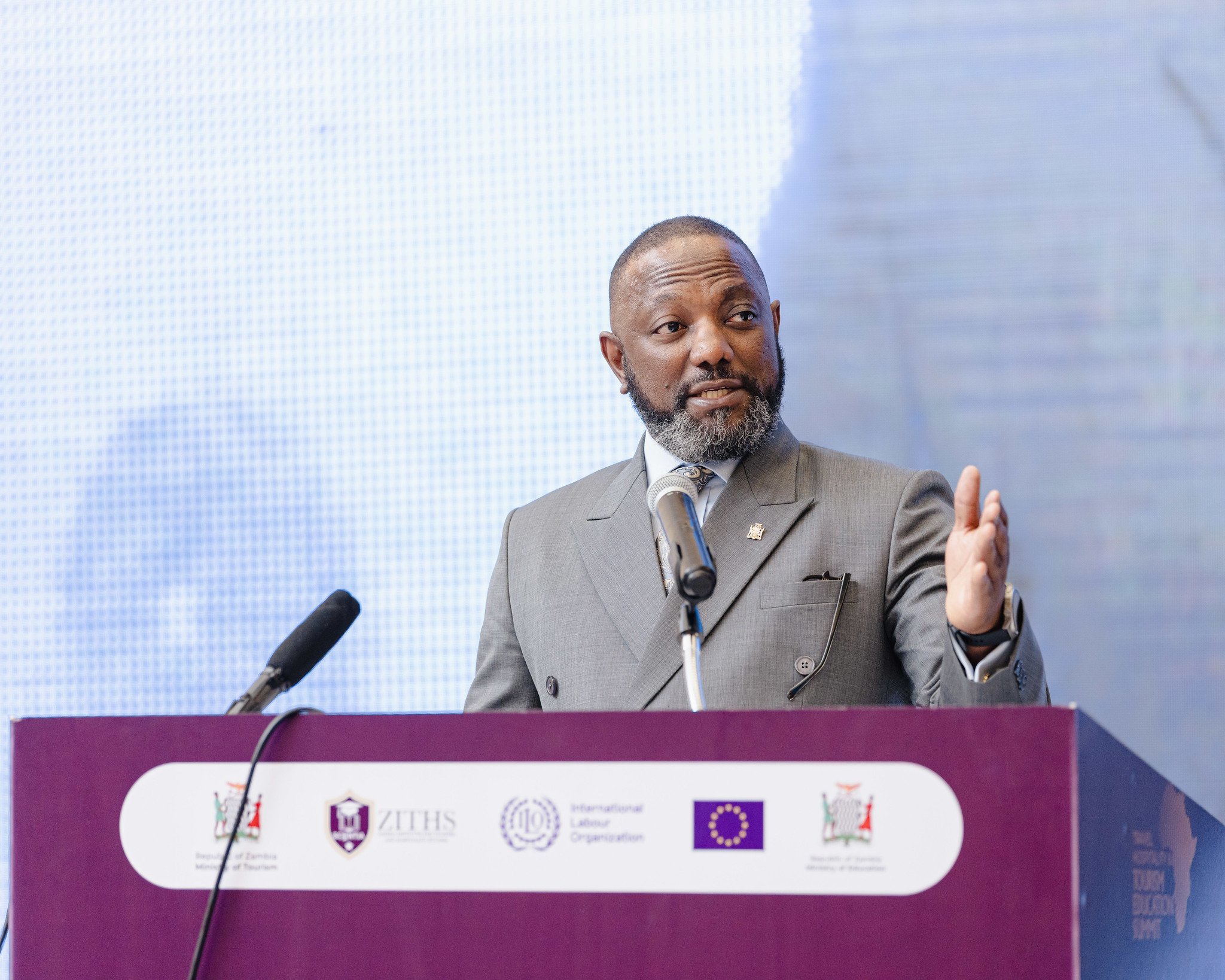
Zambia’s Minister of Tourism, Rodney Malindi Sikumba
This alignment is already taking shape through outcomes from previous editions. One of the most notable developments has been the integration of travel and tourism into Zambia’s national school curriculum, establishing a continuous learning pathway from early childhood through technical and higher education.
Anne Kaoma of ZITHS confirms that the policy has moved beyond planning into execution. “It’s implemented. This is actually the second year now for the travel and tourism subject pathway. We now have a pipeline, learners are being exposed to tourism from a very early stage,” she explains.
The introduction of tourism education at foundational levels is designed to address long-standing skills gaps within the sector by ensuring early exposure, structured progression and eventual transition into industry roles. Learners are already engaging with institutions such as ZITHS through guided visits, providing early insight into career pathways within tourism and hospitality.
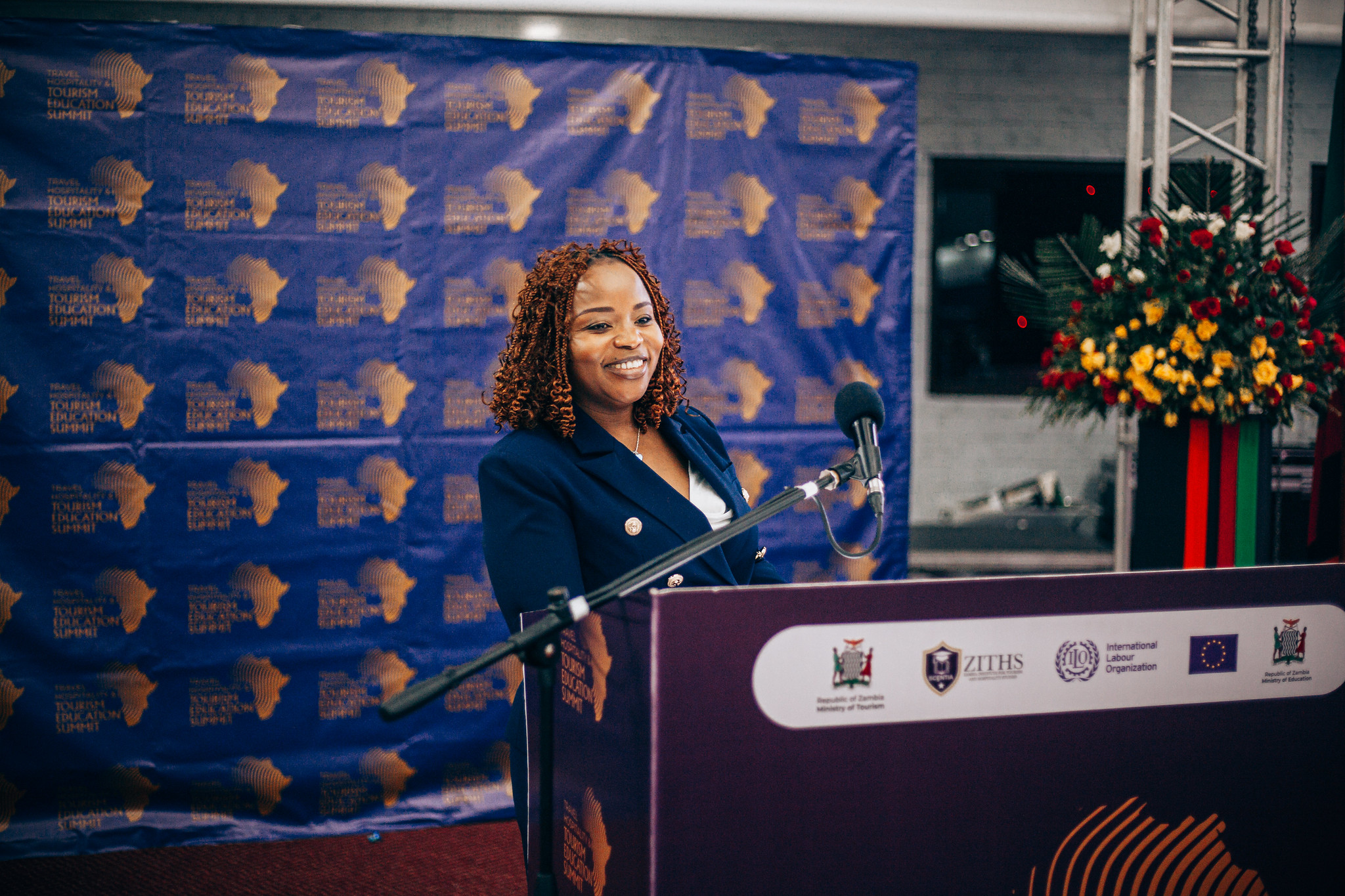
Anne Kaoma Executive Director, ZITHS
Beyond curriculum reform, the summit has also contributed to strengthening coordination among key stakeholders. By convening policymakers, educators and private sector operators within a single platform, previous editions have facilitated collaboration on curriculum development, internships and work-based learning frameworks.
For 2026, this collaborative model is being extended and formalized. The programme includes high-level plenaries, thematic sessions and dedicated Ministerial Roundtable bringing together portfolios such as tourism, labour, youth and technology. The objective is to reinforce a “One Government” approach, reducing fragmentation and enabling coordinated decision-making across sectors.
Kaoma highlights that the summit’s current focus is on operationalizing earlier proposals. “We are now saying we want action. Out of this, we need to see policy that will shape decisions in travel and tourism, building on what has already been achieved,” she states.
A key addition to the 2026 agenda is the structured integration of indigenous knowledge into formal tourism education. Traditional leaders will participate in discussions aimed at incorporating community-based knowledge systems into vocational training and curriculum design.
“We are bringing in traditional leaders to contribute knowledge around conservation methods, food systems and cultural heritage, and how this can be integrated into education and tourism experiences,” Kaoma notes.
This approach reflects a broader effort to align sustainability, cultural preservation and skills development within a single framework. Topics such as conservation practices, gastronomy and heritage interpretation are expected to form part of the knowledge exchange.
The summit will also introduce practical mechanisms to strengthen employability outcomes. These include industry-aligned vocational certification programmes, student and faculty exchange frameworks, and targeted employer engagement initiatives designed to connect graduates directly with job opportunities.
In parallel, research collaborations between academic institutions and private sector operators will be launched to address emerging skills gaps and inform curriculum relevance. Academic paper presentations and technical sessions will provide a platform for evidence-based contributions to workforce development.
Industry participation remains a central component of the summit’s structure. Technical professionals are expected to engage directly with educators, providing real-world insights into operational expectations and influencing curriculum development to reflect current industry standards.
“What excites us most is having industry professionals interfacing with teachers, sharing what really happens on the job and what is expected. This ensures that what is taught is relevant,” Kaoma explains.
Student engagement is also being prioritized, with dedicated platforms for learners to contribute perspectives on education and industry readiness. This inclusion is intended to ensure that training frameworks remain responsive to evolving expectations within the sector.
The thematic focus for 2026, Education as a Catalyst for Tourism Transformation, Promoting Indigenous Knowledge and Vocational Training in African Tourism, will guide discussions across key segments including tourism growth, hospitality, travel services, wildlife and conservation tourism, and the MICE segment.
The summit builds on established frameworks such as the UN Tourism Education Guidelines and aligns with broader continental objectives under the African Continental Free Trade Area, AfCFTA, particularly in relation to labour mobility and skills development.
As participation is expected from policymakers, educational institutions, private sector operators and development partners, THTES 2026 is positioned as a working platform aimed at consolidating policy direction, educational reform and industry engagement into a unified skills development agenda.