
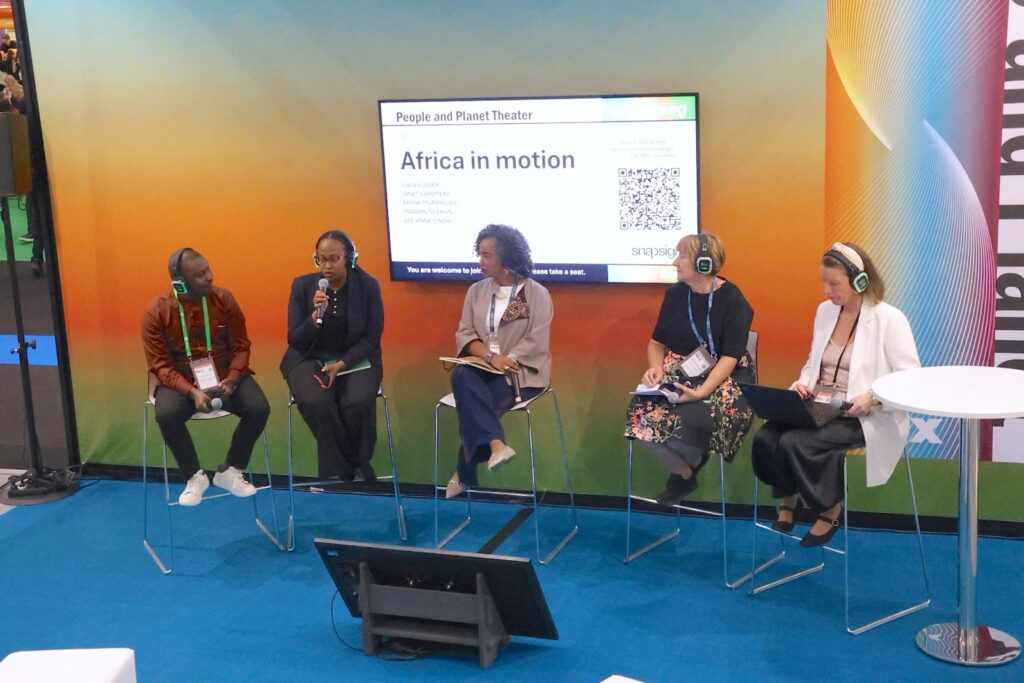
Africa’s place in the global meetings and events economy was forcefully reasserted on the opening days of IMEX Frankfurt 2026, as senior destination leaders and industry strategists used the “Africa in Motion” panel to challenge legacy perceptions and position the continent as an active architect of global MICE growth.
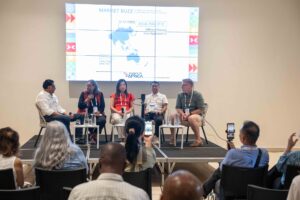
Held at the Inspiration Hub in Hall 9/F, the session brought together public and private sector voices from across the continent under the moderation of Frank Murangwa, Regional Director for Africa at the International Congress and Convention Association (ICCA).
From the outset, the message to international buyers and association executives was clear – Africa is no longer seeking permission to compete. “Africa is not an emerging player waiting for recognition – it already has the infrastructure, talent, and ambition to host world-class events,” Murangwa noted, setting the tone for a discussion that focused on confidence, credibility and control of narrative.
Rewriting the global story
A central theme of the discussion was the need for African destinations to move decisively away from externally imposed narratives and define their own positioning in the global marketplace.
Representing Angola’s expanding international push, Julia Kleber, CEO of Kleber Group, argued that Africa’s story must be told deliberately and consistently by those shaping its tourism and events ecosystems.
She stressed that modern Africa’s economic depth, professional capacity and creative capital are too often under-communicated, despite rapid progress across infrastructure, aviation and hospitality.
The discussion gained momentum with reference to Ethiopia’s successful bid to host the COP32 UN Climate Change Conference – a development repeatedly described by panelists as a watershed moment for Africa’s MICE credibility.
“It’s time for Africa,” said Yoadan Tilahun, CEO of Flawless Events, capturing the prevailing mood in the room.
That sentiment was echoed by Lee-Anne Singh, CEO and Founder of Image Promotions, who noted that hosting global summits is not only about venue capability, but about Africa’s right to participate meaningfully in shaping solutions to global challenges.
Authenticity as competitive advantage
Beyond hard infrastructure, panelists agreed that Africa’s strongest differentiator lies in its authenticity – the cultural immersion, human connection and sense of place that delegates experience when attending events on the continent.
However, Margarida Gorjão-Henriques, Director of the Angola Convention Bureau, cautioned that authenticity must be matched with discipline and consistency. She argued that African destinations should prioritise quality over volume, focusing on premium delivery, alignment between stakeholders and long-term reputation building rather than headline numbers alone.
Despite these strengths, the panel did not shy away from confronting the structural challenges that persist in global bidding processes.
Challenging the double standard
In one of the most direct interventions of the session, Janet Karemera, CEO, Rwanda Convention Bureau highlighted what she described as an enduring double standard in how African destinations are assessed.
She pointed out that even after successfully delivering complex, high-profile international summits, African convention bureaux are still rarely viewed as default strategic partners by global associations.
Her response was unequivocal – deeper continental collaboration. Karemera called for stronger pan-African bidding alliances and knowledge-sharing corridors that allow destinations to support one another and present a united front in competitive global processes.
Not one Africa, but 54
As the session concluded, Tilahun reminded the audience that Africa is not a single destination, but 54 distinct countries, each with its own cultural identity, economic proposition and meetings infrastructure.
For buyers navigating the show floor at IMEX Frankfurt 2026, Africa in Motion delivered a clear message – the continent is not only moving forward, it is increasingly confident in leading conversations about the future of global meetings and events.
Rather than asking whether Africa is ready, the panel reframed the question entirely – are global planners ready to fully engage with Africa on equal terms?