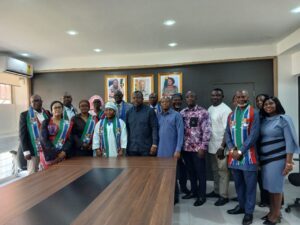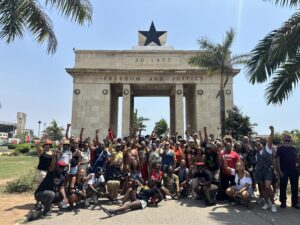

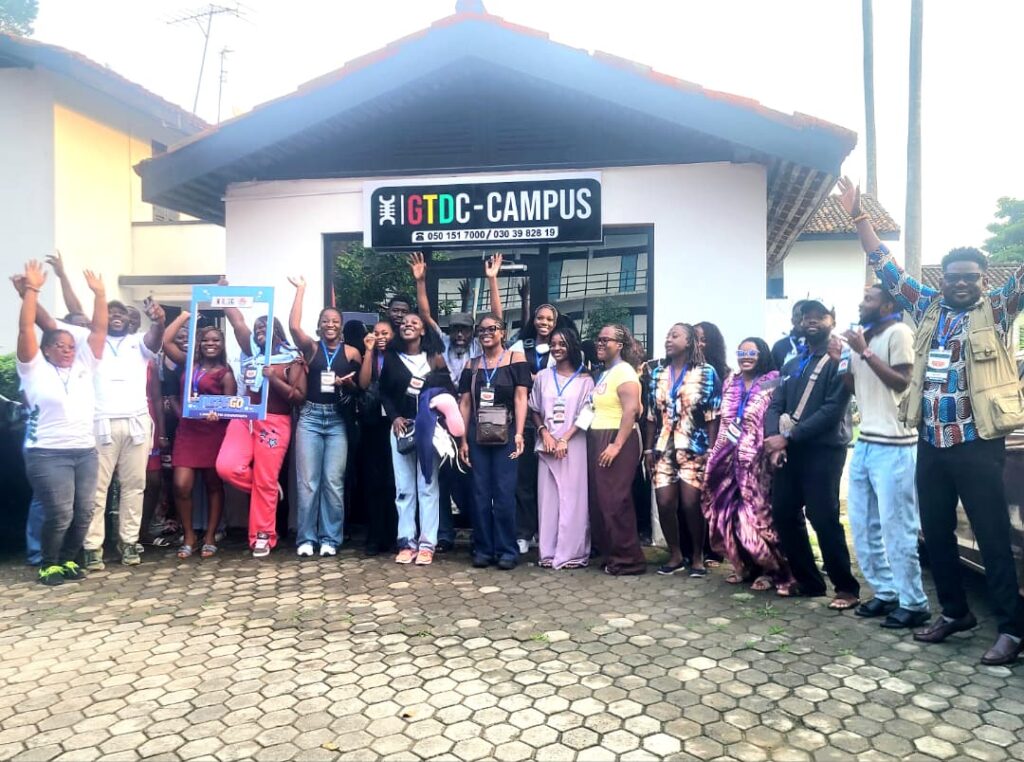
The Ghana Tourism Development Company (GTDC), in partnership with the University of Ghana Students’ Representative Council (UG SRC), is taken about 36 University of Ghana students on the maiden Campus to Countries tour, a three-day, two-night educational journey through Togo and Benin designed to give young travellers practical experience of cross-border travel within West Africa.
The initiative, led by GTDC Chief Executive Officer Professor Kobby Mensah, is built around a simple proposition: university students should not leave school without experiencing travel beyond Ghana, particularly within the West African sub-region.
For Prof. Mensah, the programme is as much about building confidence and knowledge as it is about visiting destinations. Students are expected to understand the practical mechanics of travel, from planning and booking trips to navigating immigration and land-border procedures, while developing a stronger appreciation of the region in which they live.

“If you want to fly, you must grow your wings first.” — Prof. Kobby Mensah
That idea sits at the heart of Campus to Countries (C2C). Rather than treating international travel as something reserved for later in life or for people with greater financial means, GTDC is introducing students to travel while they are still on campus, giving them the opportunity to learn through experience.
Building the habit of travel
Prof. Mensah, who is also a Professor of Marketing at the University of Ghana Business School, said GTDC’s role extends beyond tourism revenue generation to tourism development, including building knowledge and helping young people understand the sector.
One motivation behind the initiative is to challenge perceptions that tourism and holidays are activities reserved for people with substantial financial means.
“We have sort of demonized tourism,” Prof. Mensah said, pointing to attitudes that can make leisure travel appear unnecessary or inaccessible.
His response is to introduce young people to tours and holidays and allow them to understand the processes involved rather than simply hear about travel as an abstract experience.
That learning begins with the journey itself.
Students travelling by land are exposed to border procedures and interactions with immigration officials, giving them an experience that differs from travelling through airports. Prof. Mensah said organizers have been instructed to prioritize safety and security while ensuring that students participate in the border processes as part of the learning experience.
For the students, the journey is therefore more than sightseeing. It is an introduction to how regional travel works.
Starting with West Africa
Togo and Benin represent the first destinations in a broader regional ambition.
Prof. Mensah said GTDC intends to introduce students to Togo, Benin, Nigeria and Burkina Faso, with the programme designed around the idea that students should become familiar with the West African sub-region before completing university.
The immediate Togo-Benin journey is the first practical step in that direction, giving participants direct exposure to neighboring countries and the realities of moving across West Africa by land.
The partnership with the University of Ghana SRC has been central to taking the concept from GTDC’s vision to student participation.
Ebenezer Derrick Gyampo Ayeh, Vice President of the University of Ghana SRC, said the student body considered the partnership important because many students may not have travelled within West Africa or experienced land-border travel.

He described the tour as an opportunity for students to experience neighboring countries directly, understand their cultures and develop a more informed view of the region.
“By going to Togo and then Benin, as Prof said, they are going to grow their wings and prepare for the journey ahead.” — Ebenezer Derrick Gyampo Ayeh, UG SRC Vice President.
Ayeh also said the experience could help students move beyond assumptions about neighboring countries by seeing and understanding them firsthand.
“We get to appreciate their culture and see what’s happening in their country, and we just don’t get stereotyped by them. We get to understand what’s happening around us.”
The point is significant beyond the trip itself. The programme is giving young Ghanaians an opportunity to experience regional mobility, culture and proximity in practical terms.
When travel becomes education
The educational value of the initiative is perhaps most clearly expressed in what Prof. Mensah wants students to bring home.
He said the objective is for participants to return with practical travel knowledge, reducing the fear, anxiety and misconceptions that can prevent people from travelling.
“By the time you come back, you are no longer naive about travelling.”
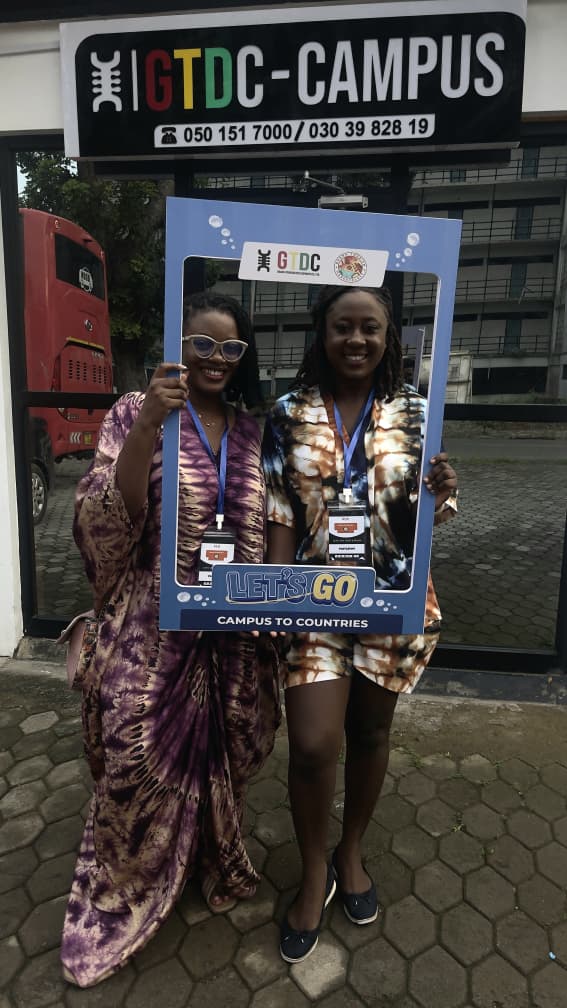
Students who learn how to navigate travel processes can carry that knowledge into their working lives and eventually share those experiences with their families.
The programme also encourages students to compare what they encounter in Togo and Benin with what exists in Ghana. Prof. Mensah said such comparisons should encourage young travellers to appreciate their own country and the wider West African region more deeply.
A wider appetite for regional travel
The maiden tour also attracted participants beyond the University of Ghana student body.
Priscilla Dabo, a worker who had previously participated in GTDC’s Accra by Night experience, said that experience influenced her decision to join the cross-border trip. Having never travelled to another African country, she saw the journey as an opportunity to experience new food, cultures and communities.
Ewura Ama Kwakyewaa Danso, a virtual worker who joined after hearing about the trip through a friend, said she was looking forward to learning about other cultures while meeting and socializing with other participants.
Their participation adds another dimension to the programme, showing an interest in accessible regional experiences beyond the university’s immediate student population.
Making West Africa part of the journey
The relevance of Campus to Countries extends beyond the immediate student experience.
For African tourism, intra-African travel remains closely connected to practical issues such as affordability, mobility, border processes, awareness and familiarity with neighboring destinations. By beginning with countries geographically close to Ghana, GTDC is testing a model that starts with proximity before long-haul aspiration.
The logic is straightforward: before young travellers look farther afield, they should have the opportunity to understand the countries around them.
That is where Prof. Mensah’s “grow your wings” philosophy becomes particularly relevant. The programme is not about limiting where students travel. It is about giving them the confidence and practical knowledge to begin.
For the participants on this maiden journey, the immediate experience is tangible: a first-hand understanding of two neighboring countries, their cultures and the realities of moving across West Africa by land.