
Essence of Africa panellists say tourism businesses need to rethink how they price, package and sell holidays to African travellers.
African tourism businesses risk losing business from their own continent because many still design their products, pricing and booking systems primarily for international visitors, industry leaders told Essence of Africa 2026.
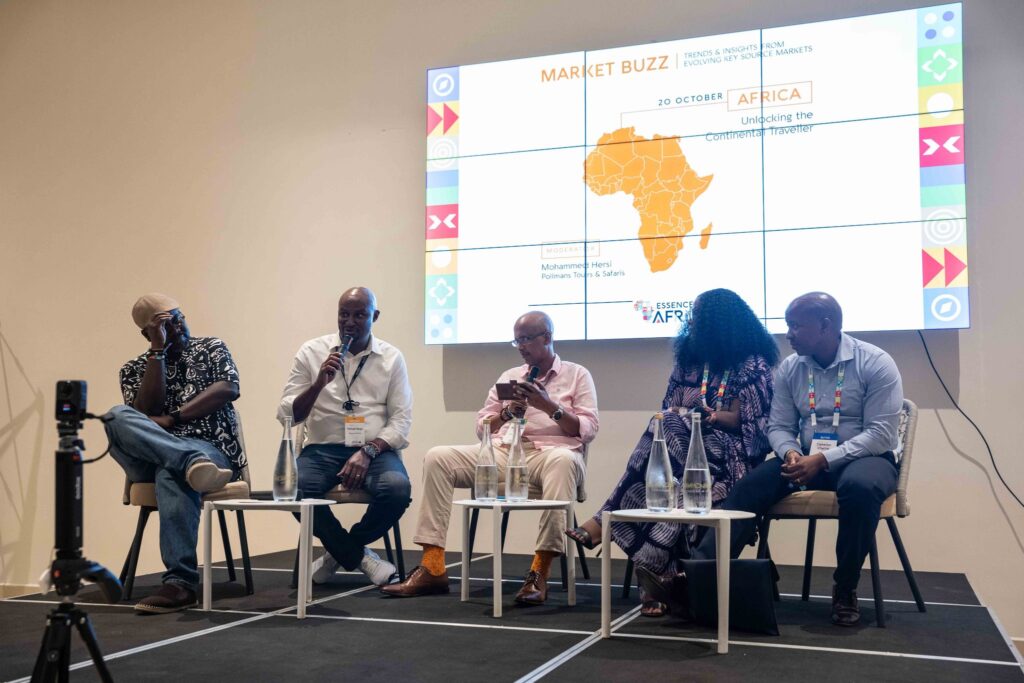
The issue was debated during the Market Buzz: Africa session, Selling Africa to Africans: Unlocking the Continental Traveller, at Diamonds Bijoux in Zanzibar.
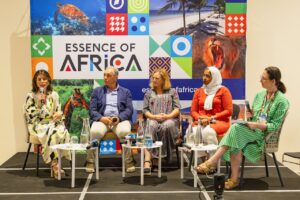
The discussion was moderated by Mohammed Hersi, Director of Operations at Pollmans Tours & Safaris and a member of the Essence of Africa Advisory Panel. Panellists were Kojo Bentum-Williams of Voyages Afriq; Cameron Charlie, Africa Product Manager at Thompsons Holidays in South Africa; Pelagie Egbane, Senior Travel Consultant and HR Business Partner at Nigeria’s 3Cords Leisure & Vacation; and Michael Njogu, Managing Director of Sense of Africa East Africa.
Hersi opened by asking delegates who had holidayed in another African country during the past year. Several raised their hands, but fewer had booked through an African tour operator. The response illustrated a problem the panel returned to throughout the discussion: African tourism businesses are not capturing enough of the continent’s own travel spending.
Domestic tourism should be the foundation
East Africa’s tourism industry has traditionally designed its products and facilities for international visitors, according to Njogu. Although businesses are paying more attention to domestic and regional travellers, he said there is still work to do. “Regional and domestic travel is not supplementary business for us. It should be the foundation on which we build the industry,” he said.
During the COVID-19 pandemic, Njogu recalled, domestic travellers were the first to return, followed by regional visitors. He said the experience showed why businesses needed to give these markets greater attention. He also questioned hotel pricing practices. Many properties, he said, start with a non-resident rate and add a separate resident rate, leaving local travellers feeling like an afterthought. “How then do you make somebody feel like they come in second and you expect them to consume your product?”
Nigerian travellers expect convenience and good service
Nigerian travellers consider the ease of reaching a destination alongside the price and experiences on offer, said Egbane. Her clients book luxury holidays, honeymoons, family trips and destination birthday celebrations, each with different expectations. “There is no one Nigerian traveller,” she said.
Egbane said it can sometimes be easier to arrange a holiday in Europe than within Africa because of limited direct flights and complicated entry requirements. She recalled previously having to apply for a referral visa to visit Tanzania. Service is equally important. Egbane said even a modest lodge could make a good impression by treating guests well. “You can maybe not have the most amazing property or the most amazing lodge, but you can’t go wrong with excellent customer service,” she said. She urged tourism businesses to give African guests the same attention they give visitors from overseas. “We need to honour our own.”
South African buyers want products designed for their clients
Thompsons Holidays is seeing demand for Zanzibar, Victoria Falls and East African safaris among South African travellers, according to Charlie. He said suppliers needed to work more closely with tour operators to understand what different markets wanted, rather than offering everyone the same holiday. “We need to create experiences that are one size fits one, not one size fits all,” he said.
When assessing an African destination, Charlie first considers how easily clients can reach it and the cost of flights. He then looks at the accommodation, experiences and value of the package. He also called for booking systems that allow travel advisers to confirm reservations immediately.
Airfares are holding back travel within Africa
Expensive flights and difficult visa processes remain major obstacles to travel between African countries, said Bentum-Williams. He pointed to visa facilitation initiatives in Benin and Ghana as examples of progress, while arguing that African governments still make it unnecessarily difficult for citizens to visit neighbouring countries.
Air connectivity presents another problem. Bentum-Williams said some city pairs lack direct flights despite potential demand, forcing passengers to take longer and more costly routes. He called for tourism boards, airports, civil aviation authorities and airlines to work together when developing new services. Decisions made separately, he argued, can overlook where demand exists.
An audience member from a Zanzibar tourism business illustrated the problem with an example of a client who had paid $1,200 to fly from Zimbabwe to Zanzibar. He compared this with an airfare of around $600 to Dubai. Hersi agreed that high airfares were putting African destinations at a disadvantage when competing for travellers from within the continent.
Younger Africans want to book and travel quickly
Njogu expects younger African travellers to favour shorter holidays, mobile bookings and flexible payment arrangements. They may prefer two or three days away rather than a ten-day or two-week holiday, and want to book at short notice rather than plan months ahead. He said businesses needed to offer payment options suited to these customers, including instalments, while reviewing prices that discourage domestic and regional travel.
The role of technology was raised by Tawanda Mambiro of Cedar Travel and Tours in the UAE, who asked how operators were adapting to young people using AI and other digital tools to research holidays. Njogu said his company was using technology to automate routine work, but argued that hospitality would still depend on personal service. “When you arrive at a place, when you arrive at an airport or a lodge, you want a smiling face. You want a warm face, somebody to say hello to you.” He said technology could not always provide the help needed when a traveller experienced a problem, particularly in a remote destination.
Other insights from the Africa session
Easier movement across borders: Bentum-Williams called for an “Africa without borders”, arguing that easier access and better promotion could encourage more Africans to explore the continent.
The African diaspora: Egbane encouraged suppliers to reach Africans living in countries such as the UK, US and Canada who want to visit destinations including the Masai Mara and Serengeti. She described a recent destination birthday celebration attended by guests travelling from several countries.
Experiences beyond safaris: Njogu questioned the industry’s reliance on wildlife imagery when marketing Africa. Having grown up around elephants and lions in Kenya, he said a safari would not necessarily appeal to him in the same way as an international visitor. He urged businesses to promote other experiences.
Sporting events: An audience member proposed creating travel packages around the 2027 Africa Cup of Nations in Kenya, Tanzania and Uganda, combining football matches with local experiences, as operators do around major international sporting events.
Encouraging leisure travel: An audience member argued that tourism businesses should encourage more Africans to take holidays, rather than travelling mainly for work, family commitments or events.