
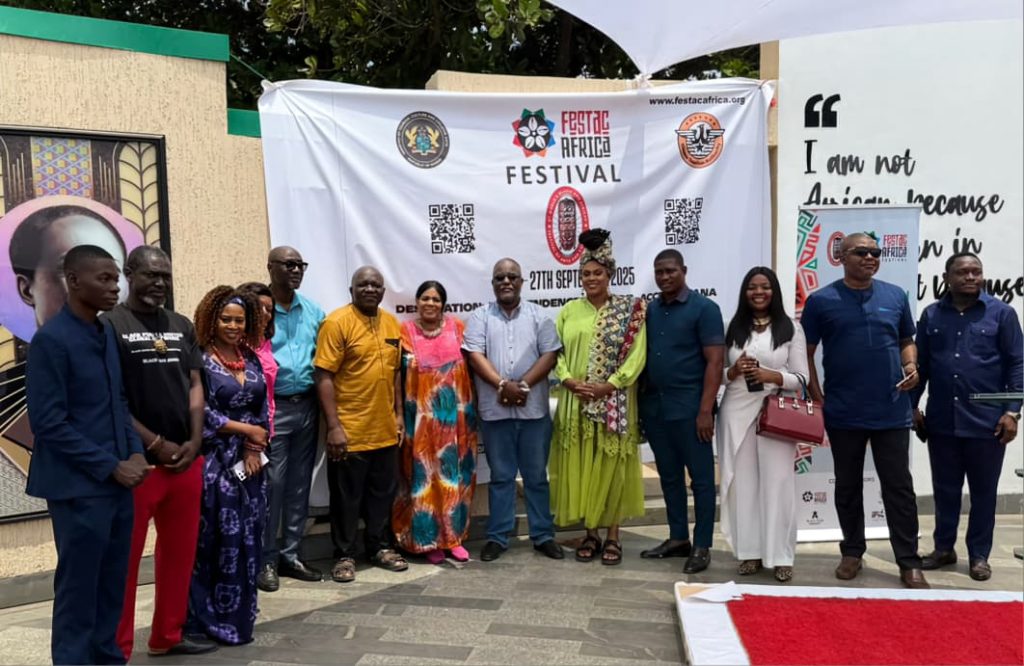
A Pan‑African renaissance will be on public display at the Independence Square this September as Ghana stages a week‑long festival that aims to convert Africa’s cultural riches into tangible social and economic gains. FESTAC Africa 2025 running from 21–27 September 2025 unites artists, entrepreneurs, policy‑makers, health practitioners, and civic groups from across the continent and the diaspora to exchange ideas, strike partnerships, and build market linkages.
The Ghana Tourism Authority in partnership with the Ministry of Tourism, Arts and Culture, FESTAC Africa Foundation, Black Star Experience and multiple private sector sponsors, leads the festival. Anticipating 100,000 attendees, more than 500 performances, and a cross-border carnival with over 1,000 participants, FESTAC Africa sets the stage for a week-long convergence that blends vibrant celebration with purposeful strategy. Across seven days, the programme brings together:
• A cross‑border road carnival that will begin with convoys from Nigeria and travel through Benin and Togo before entering Accra, a deliberate signal for increased regional mobility and cultural exchange. The procession and its pageantry are intended to promote cross‑border trade and tourism long after the floats have dispersed.
• Multi‑strand conferences and summits that place trade, tourism, technology, health and gender equity side‑by‑side. Tech Tuesday will highlight digital tools for the creative economy; the Women Arise Summit will press for women’s economic leadership; a Youth Summit and Writers’ Retreat will foreground emerging voices and literary revival.
• A full cultural programme, daily durbars, film screenings, music and dance performances, designed to make the festival accessible to the public while also creating visible platforms for artists and cultural entrepreneurs.
• Inclusion and legacy actions, including a ‘Dinner in the Dark’ with visually‑impaired communities, free health screenings provided by partners such as St. Michael’s Specialist Hospital, PKF, BOSS, Dorothy Hope Foundation and blood donation drives supported by Korle Bu as well as a continent‑wide tree‑planting campaign under the banner Keep Africa Green.
• Culinary and fashion showcases that pair Ghana’s cocoa with coffee from Kenya and Ethiopia, matoke from Uganda and spices from Zanzibar and resolve, at least for one day, the old jollof rivalry with a Ghana vs Nigeria cook‑off followed by a fashion runway featuring a dozen designers.
The week is bookended by two emblematic dates: the opening aligns with celebrations honoring Dr. Kwame Nkrumah on 21 September and the festival closes on World Tourism Day (27 September), a conscious link between cultural heritage and the tourism economy.
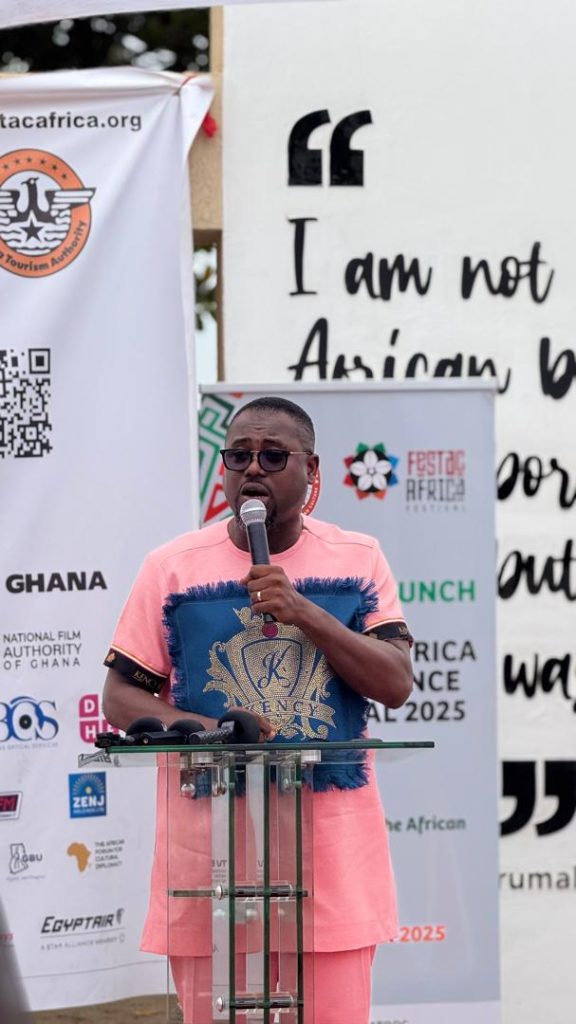
Delivering remarks on behalf of the CEO of the Ghana Tourism Authority, Hon. Maame Efua Houadjeto, Mr. Gilbert Abeiku Aggrey framed the festival as a corrective to prevailing narratives: “It’s about time we change the narrative. It’s about time we tell our story well, positively.” He pressed further on historical redress and dignity, observing, “The world cannot live without Africa.” Later in his address, he invoked both the legacy of leaders such as Kwame Nkrumah and the long arc of colonial extraction from the 1844 bond to the tide of resources that left many African economies impoverished to argue for recognition and reparative action.
Ms. Grace Mumo, Chief Executive Officer of FESTAC Africa, repeatedly positioned the event as intergenerational and purposive: “We are not uniting for today…what we are doing today; we are doing it for the future generation.” She urged attendees to convert this gathering into lasting market access and equity, adding the festival’s rallying invitation: “Come and Experience Africa in Just 7 Days. Come and taste the Black Star Experience where culture meets opportunity, and where Africa connects to the world.”
Across the platform, Engr. Yinka Abioye, Chairman of FESTAC Africa, described the gathering as both movement and mission: “This festival is more than an event. It is a movement. A rallying point. A legacy.” He later articulated the festival’s economic promise: “This is where culture meets commerce, where tradition meets innovation, and where Africa meets the world.”
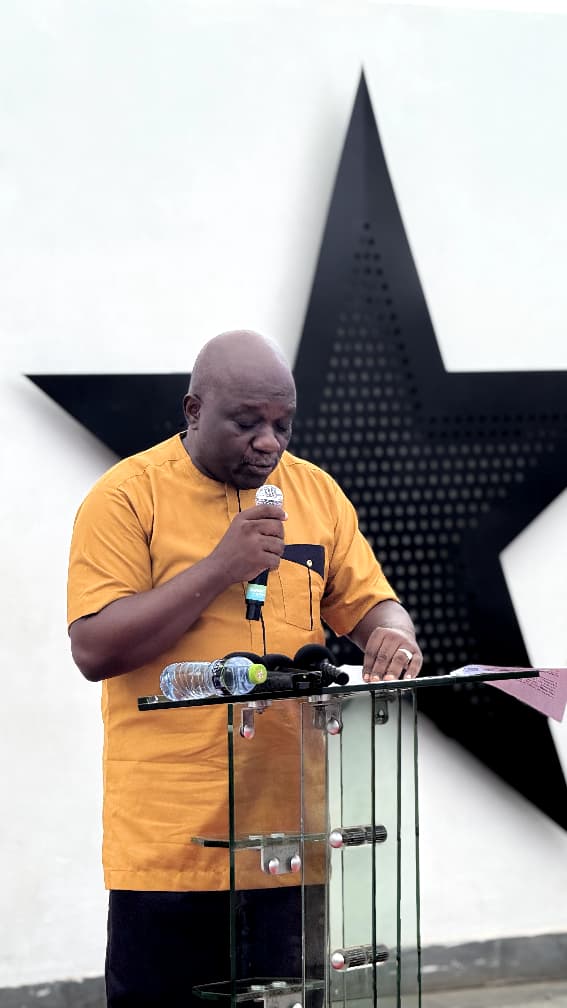
The official theme, Harnessing Health, Culture, Trade, Climate Change, Gender Equity, and Tourism for Sustainable Economic Growth is intentionally integrative. Each pillar has a practical line of sight to outcomes:
• Health: free screenings and medical campaigns aim to leave local clinics better connected to partners and to display public–private models for community care.
• Trade & Tourism: the trade marketplace and cross‑border activations aim to create direct buyer‑seller connections for SMEs and artisans, while tourism activations seek to extend visitor stays across Ghana.
• Climate action: the tree‑planting drive and environmental walks are designed as visible, measurable legacy projects that link public participation to a long‑term replenishment agenda.
• Gender equity & inclusion: programs such as the Women Arise Summit, youth forums and the Dinner in the Dark create structured entry points for under‑represented groups to benefit economically and culturally.
Accra’s Independence Square will not merely stage performances, it will host a live experiment in culture‑led development. The challenge for leaders, partners and participants is simple: convert the week’s energy into sustained economic ties, health gains and environmental action. If those commitments are met, FESTAC Africa 2025 will be remembered less as a festival of spectacle and more as the moment Africa deepened its own story, on its own terms.