

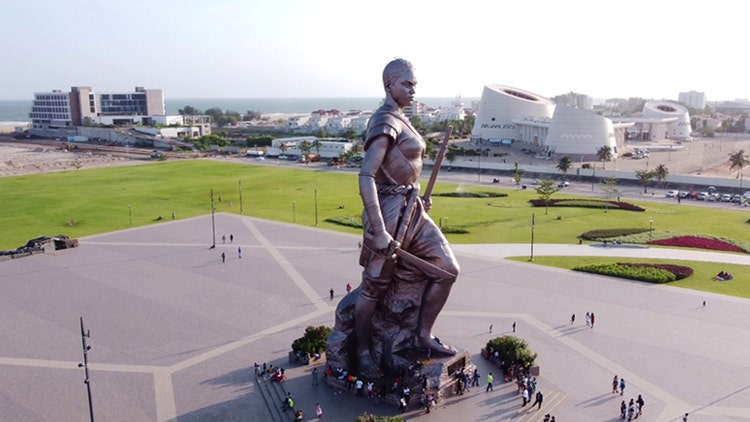
Benin was thrust into global headlines this weekend after an attempted coup that was swiftly contained by the government. Although order was quickly restored, incidents of this nature rarely pass without consequences, particularly for a country that has spent the last decade building one of the most promising cultural tourism identities in West Africa.
This moment matters because Benin has been on a determined rise. Its historical depth, the revival of the Royal Palaces of Abomey (a UNESCO World Heritage Site), the redevelopment of the Route of Slaves in Ouidah (a historical and cultural trail that retraces the path of thousands of enslaved people forced to take to the Atlantic coast for deportation to the Americas), its contemporary arts and fashion renaissance and a strong push to attract African diaspora travellers have all pushed the country into a new international spotlight.
In many ways, Benin has been positioning itself alongside Ghana, Senegal and Côte d’Ivoire within a cultural tourism corridor that can rival the more established circuits of East and Southern Africa. The attempted coup changes none of the intrinsic cultural value that has underpinned this rise, but it does introduce a sudden reputational shock that could influence how travellers, investors, airlines and the global tourism trade view the country in the months ahead.
This is precisely why any rupture in political stability hits harder now than it might have a decade ago.
According to 2023 aviation sector data, Cotonou’s international airport handled more than 555,000 passenger movements, an increase of 21 percent over 2022, with nearly 271,000 arrivals. This steady growth signals renewed optimism for Benin’s broader tourism rebound after the disruption of COVID-19. Under the government’s 2025 strategic framework, the ambitions are even more striking. Tourism is projected to contribute 13.4% of national GDP by 2030, with a target of welcoming two million visitors annually. These figures underscore one reality: tourism is not a side venture for Benin but a central pillar of its economic future. A coup attempt, no matter how short-lived, must therefore be examined through the lens of long-term sector stability.
Immediate Implications: Perception Is Everything
Tourism is extraordinarily sensitive to perceptions of insecurity. Even when an attempted coup is contained within hours, the global headlines alone can trigger hesitation among risk-averse travellers, particularly long-haul visitors from Europe and North America.
Airlines, tour operators and travel insurance providers often respond conservatively to political signals. While Benin has not been associated with chronic instability like parts of the Sahel, the regional environment, combined with the proximity to an electoral season, may influence how external observers assess risk across the entire neighbourhood.
For a country that markets itself on authenticity, heritage and peaceful cultural immersion, even a brief moment of political tension can create a reputational setback that must be managed quickly.
Impact on Cultural Tourism Growth
Benin’s cultural tourism momentum has been fuelled by several interconnected drivers, including:
• diaspora interest in memory, identity and reconnection
• the growth of arts festivals and creative expressions
• increasing visibility in travel media and social platforms
• infrastructure improvements and new museums
These gains are promising but also fragile. Cultural tourism attracts travellers who are emotionally invested in personal safety and meaningful experience. When political instability features prominently in the international news cycle, first-time travellers tend to pause plans, while group travel organisers can shift itineraries to more stable alternatives such as Ghana or Senegal.
If the government responds quickly and transparently, however, the damage can be contained.
Regional Dynamics: West Africa’s Competitive Cultural Landscape
The timing of the incident is significant because West Africa is entering a period of intensified competition in culture-led tourism. Ghana’s December in GH ecosystem, Nigeria’s rapidly expanding Detty December, Senegal’s arts and fashion visibility, Côte d’Ivoire’s growing conference tourism sector and Togo’s boutique coastal tourism push all mean that travellers have multiple short-haul options.
Benin had begun to distinguish itself as:
• a safe, well-organised destination
• a premium hub for intimate cultural experiences
• an attractive short-break destination for Ghanaians and Nigerians
In a tight regional marketplace, any hint of instability can tilt demand elsewhere.
Investor and Creative Industry Confidence
Cultural tourism is also driven by the creative industries: filmmakers, festival curators, digital creators, musicians and event organisers who have been increasingly drawn to Benin’s renaissance. These sectors rely heavily on predictability, sponsorship and transport certainty. Even when political incidents are short-lived, investors and organisers often slow decision-making until the landscape stabilises.
The government’s communication in the coming weeks will therefore matter greatly. Clear signals to investors, diplomatic partners and cultural organisations will help prevent a loss of momentum.
The Northern Question: Security Spillover Risks
The coup plotters cited insecurity in northern Benin, where spillovers from jihadist activity in Niger and Burkina Faso have created pockets of instability. While northern regions are not major tourism hubs, the mention of insecurity in a coup announcement draws sharper international attention.
Travellers rarely distinguish between geographical zones of risk. Strong communication around the safety of key heritage corridors such as Cotonou, Ouidah and Abomey will be crucial.
Medium-term Outlook: Resilience Is Possible
If the government maintains stability, transparency and open borders, the tourism impact need not be long-lasting. West Africa’s cultural tourism markets have shown resilience in the face of political tension, including during election years in Ghana and Senegal.
In Benin’s favour:
• the country has no history of repeated coups
• the government acted decisively
• ECOWAS and the AU responded firmly
• Nigeria offered strong support
• global headlines emphasised that the coup failed
This gives Benin a foundation for a rapid reputational recovery.
Conclusion: A Setback, Not a Collapse
Benin’s rise as a cultural tourism destination has been built on deep heritage, creative energy, restored historical assets and a growing global interest in West African narratives. These fundamentals remain strong.
The attempted coup introduces a shock, but it does not negate the progress made in heritage tourism, diaspora engagement and cultural renewal. What matters now is how swiftly and convincingly Benin reassures the world and continues along its chosen path.
Handled well, this incident will be a temporary disruption, not a turning point. Thankfully, tourism is very resilient and an assurance from the government could help restore the needed confidence in no time.
The author is an Accra-based journalist, podcaster, travel writer and newspaper columnist, marketing communications executive, tourism marketing professional and conference speaker on travel, tourism and MICE. He is also the Founder and CEO of Maestro Africa Group and West Africa Director of South Africa-based Africa Tourism Partners.