
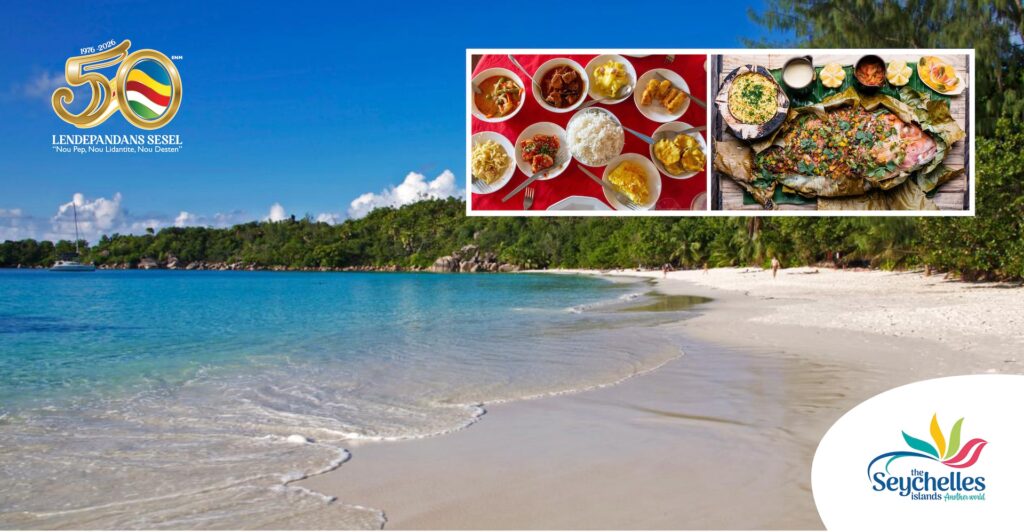
Seychelles has long held a distinctive place on the global travel map — not just as a postcard-perfect escape, but as a destination that has consistently delivered experiences that feel both intimate and immersive. For decades, travellers have been drawn to its turquoise waters, sculpted granite coastlines, and soft white-sand beaches, but what has kept them returning is something less visible and more enduring: the feeling of being inside a living culture, not just a landscape.
Over the past 50 years since independence, Seychelles has refined that proposition — evolving from a remote island outpost into a globally recognised premium destination built on experience-led tourism.
From Paradise to Experience-led Destination
Here, the ocean is not just a backdrop for leisure — it is a playground for diving, snorkelling, sailing, and discovery. The islands are not only scenic — they are active terrain for hiking trails, nature walks, and adrenaline-fuelled exploration across protected landscapes.
But the Seychelles story has never been only about nature.
It is equally about rhythm, taste, and identity — expressed through Creole culture in all its forms. Over time, gastronomy, music, storytelling, and community life have become central to the visitor experience.
Creole cuisine, in particular, has moved beyond cultural detail to become a defining feature of the destination itself — a sensory entry point into the islands’ layered history. Every dish carries influence, memory, and geography. Every experience reflects a meeting of land, sea, and people.
A Golden Jubilee That Becomes a National Invitation
This June, that story reaches a symbolic and strategic milestone.
As Seychelles marks 50 years of independence, the country is not simply commemorating a national anniversary — it is staging a destination-wide celebration that brings together everything it has become known for: beautiful beaches, warm and wonderful people, delectable cuisine, satisfying beverages, an idyllic destination with azure-blue seas and friendly giant tortoises.
From 26 to 29 June, the islands will transform into a multi-layered cultural stage, rolling out what is effectively a national invitation: a red carpet extended across islands, communities, and experiences.
The Golden Jubilee is designed to be felt by both indigenes and visitors, not just observed.M
Mahe takes centre stage : Food, Culture and Innovation
On the main island of Mahé, the Roche Caiman Sports Complex becomes one of the central hubs of activity with the Local Food Fest 2026.
This is not a conventional food fair. It is a curated Tourism Village bringing together over 30 local brands, culinary innovators, and cultural entrepreneurs in one experiential space.
At its core is Sustainable Gastronomy — a deliberate focus on local sourcing, seasonal ingredients, and Creole culinary heritage. Traditional recipes are reimagined for contemporary palates, while live demonstrations and storytelling bring depth to what is being served.
Food here becomes more than consumption — it becomes narrative, identity, and cultural memory on a plate.
La Digue and the Power of Heritage in Motion
From Mahé, the celebration flows naturally into La Digue, where the historic L’Union Estate hosts the Rendezvous Diguois. Here, heritage is not preserved in silence — it is activated in motion.
The cultural bazaar blends food, craft, storytelling, and music within one of Seychelles’ most recognisable historic sites. Generational knowledge is shared openly, while the island’s slower rhythm gives the experience a distinctly intimate character.
La Digue, in this moment, becomes a reminder that Seychelles is not one uniform destination, but a collection of distinct island identities working in harmony.
Across the Islands: A living Celebration
Beyond the main programmed hubs, street parades, neighbourhood activations, and community showcases ensure that the Golden Jubilee is not centralised or staged in isolation. It is distributed to give national experience to visitors and local celebrants alike.
Seychellois are not observers of the celebration — they are its carriers. Music, dance, food, and storytelling spill into public spaces, turning everyday environments into shared cultural stages.
Elsewhere, curated experiences such as Takamaka (the famed Seychellois-created rum) tastings and island-wide cultural showcases add another layer to the sensory journey, bridging heritage and hospitality in ways that feel organic rather than manufactured.
The Crescendo: Fireworks, Identity, and Reflection
As the programme builds toward its conclusion, the archipelago moves into a collective moment of reflection and celebration.
On 29 June, fireworks, music, and national festivities bring the four-day experience to a close — not as an ending, but as a release of energy accumulated across islands, communities, and experiences.
More than a Celebration- A Destination Statement
Beyond the performances and programming, the Golden Jubilee carries a quieter but more powerful message.
It demonstrates that destination strength is not only built on infrastructure or scale, but on cultural clarity — the ability to take identity and translate it into experience at every level of the visitor journey.
At 50, Seychelles is not just marking independence. It reaffirms its place in global tourism as a destination where the sea, nature, culture, and people are not separate offerings — but one continuous story.
And between 26 and 29 June, across Mahé, La Digue, and the wider archipelago, that story will not be told. It will be lived.