
West Africa’s long-standing ambition to make air travel more affordable received fresh impetus at the 69th Ordinary Summit of the ECOWAS Authority of Heads of State and Government, with leaders urging Member States to accelerate reforms aimed at reducing the cost of flying across the region.
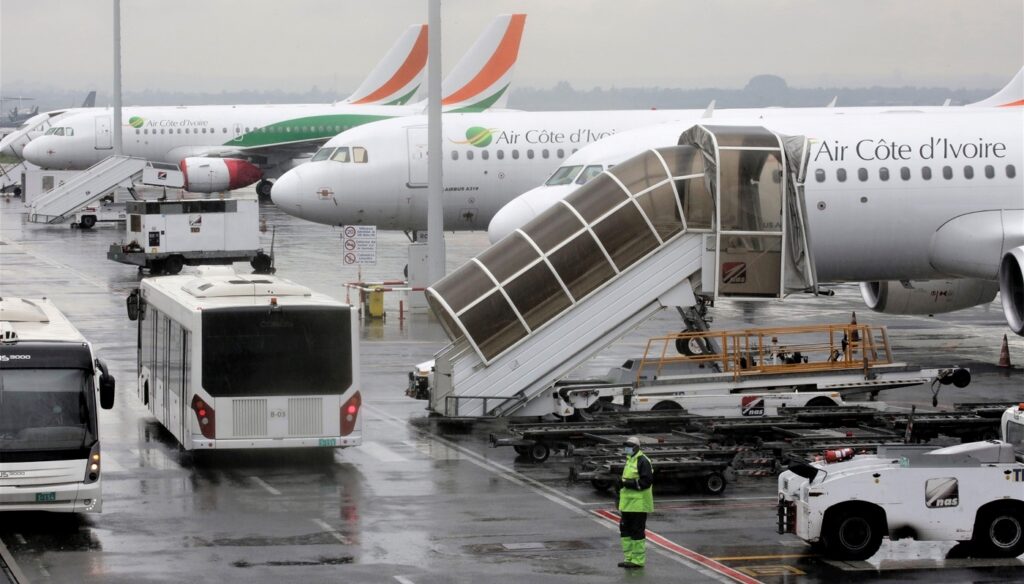
Meeting at the newly inaugurated President Julius Maada Bio International Conference Centre in Lungi, Sierra Leone, the Heads of State commended Côte d’Ivoire as the first – and currently the only – ECOWAS Member State to have fully implemented the bloc’s landmark decision to remove selected taxes on air transport and reduce passenger and security charges.
The renewed commitment comes as governments seek to unlock the economic potential of aviation by making regional travel more accessible for business, tourism and trade.
A costly barrier to regional integration
For years, West Africa has consistently ranked among the world’s most expensive regions in which to fly. While many ECOWAS capitals are separated by relatively short distances, passengers often pay disproportionately high fares because of the numerous taxes, levies and airport charges built into ticket prices.
Studies by ECOWAS, the African Airlines Association (AFRAA) and the International Air Transport Association (IATA) have repeatedly identified these charges as one of the biggest obstacles to aviation growth in the region.
Passengers can face dozens of taxes and fees on a single ticket, while airlines contend with more than 100 operational charges across different jurisdictions. The result has been suppressed travel demand, limited airline expansion and weaker regional connectivity.
This has also undermined one of ECOWAS’s core objectives – the free movement of people, goods and services.
The Abuja Decision
The reforms stem from a landmark decision adopted by ECOWAS Heads of State in Abuja in December 2024 through the Supplementary Act on Aviation Charges, Taxes and Fees.
The policy requires Member States to remove selected taxes imposed on air transport and reduce passenger service and aviation security charges by 25 per cent. The measures were expected to take effect from 1 January 2026 through amendments to national legislation.
ECOWAS believes the reforms could reduce ticket prices by as much as 40 per cent on some regional routes, making air travel more affordable while stimulating passenger demand and strengthening airline sustainability.
Cote d’ivoire sets the pace
During the Summit in Lungi, regional leaders singled out Côte d’Ivoire for successfully implementing the agreed reforms.
Abidjan had already begun easing the tax burden on aviation several years ago by removing the Treasury tax and national solidarity contribution on airline tickets before reducing the international tourism tax. Earlier this year, the Ivorian Government approved additional measures cutting passenger service and aviation security charges on intra-ECOWAS flights by 25 per cent, fully aligning with the regional framework.
The Summit urged other Member States to expedite legislative reforms, engage airport authorities and complete the necessary policy adjustments to ensure uniform implementation across the region
A win for tourism and aviation
For Africa’s tourism industry, the significance of the reforms extends far beyond lower airfares.
Affordable air connectivity remains one of the continent’s biggest tourism challenges. High ticket prices continue to discourage multi-country itineraries, weekend city breaks and regional leisure travel, while increasing the cost of attending conferences, exhibitions and business meetings.
Reducing the cost of flying could stimulate demand across several tourism segments, including leisure, corporate travel and the fast-growing Meetings, Incentives, Conferences and Exhibitions (MICE) sector.
As more African destinations invest in convention centres, hotels and tourism infrastructure, improved regional air connectivity becomes increasingly important in supporting visitor growth.
Beyond lower fares
Recognising that reducing taxes alone will not transform the sector, ECOWAS is also strengthening regional aviation cooperation.
The Authority welcomed the establishment of the ECOWAS Regional Air Transport Economic Oversight Committee to monitor implementation of the reforms and support Member States. Leaders also called on the ECOWAS Bank for Investment and Development (EBID), the African Development Bank, Afreximbank and other development partners to mobilise funding for airport infrastructure and aviation services in countries implementing the reforms.
The message from Lungi was clear: making air travel more affordable is not simply an aviation policy. It is an economic development strategy.
If implemented consistently across the region, the reforms could strengthen airlines, boost tourism, facilitate trade and bring ECOWAS closer to its vision of seamless regional integration.
Hosting the Summit at the new President Julius Maada Bio International Conference Centre was itself symbolic. As Sierra Leone unveiled one of West Africa’s newest conference facilities, regional leaders were discussing another critical ingredient for tourism and business events growth – making it easier and more affordable for people to get there.
For West Africa’s aviation and tourism sectors, that conversation could prove just as significant as the infrastructure itself.