
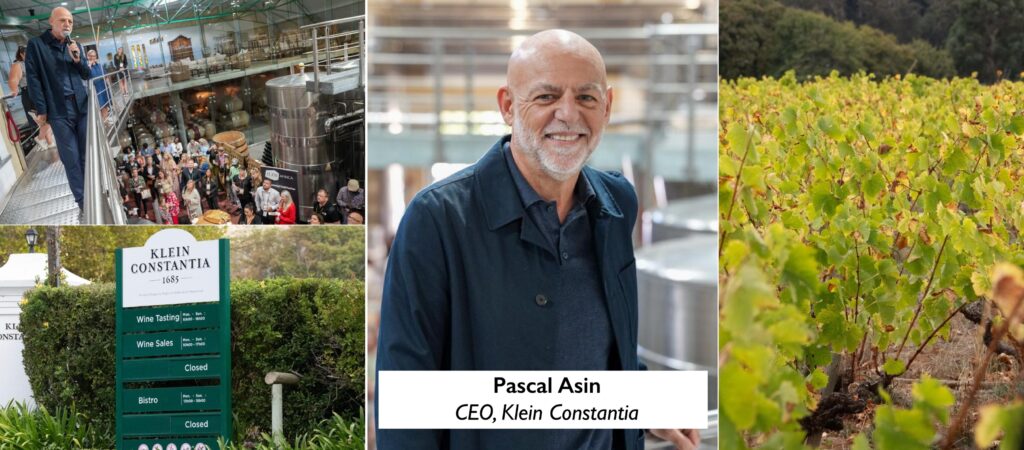
Nestled against the eastern slopes of the Constantiaberg mountains in Cape Town’s celebrated Constantia Valley, Klein Constantia is far more than a wine estate. It is a living chapter of South African history, where centuries-old vineyards, world-renowned wines and warm hospitality come together to create one of the country’s most memorable visitor experiences.
During the International Luxury Travel Market (ILTM) Africa 2026, delegates were treated to an unforgettable luncheon hosted at the estate, offering many international buyers and media their first taste of Klein Constantia’s celebrated hospitality. Speaking to VoyagesAfriq on the sidelines of the event, CEO Pascal Asin shared the remarkable story behind one of South Africa’s oldest and most prestigious wine farms.
A legacy spanning more than three centuries
Klein Constantia’s story began in 1685, when Dutch Governor Simon van der Stel established his vast Constantia estate on the fertile slopes beneath the Constantiaberg Mountains. Over the centuries, the property evolved into one of the world’s most respected wine estates, becoming internationally renowned for its flagship dessert wine, Vin de Constance.
Asin believes the estate’s history remains one of its greatest assets.
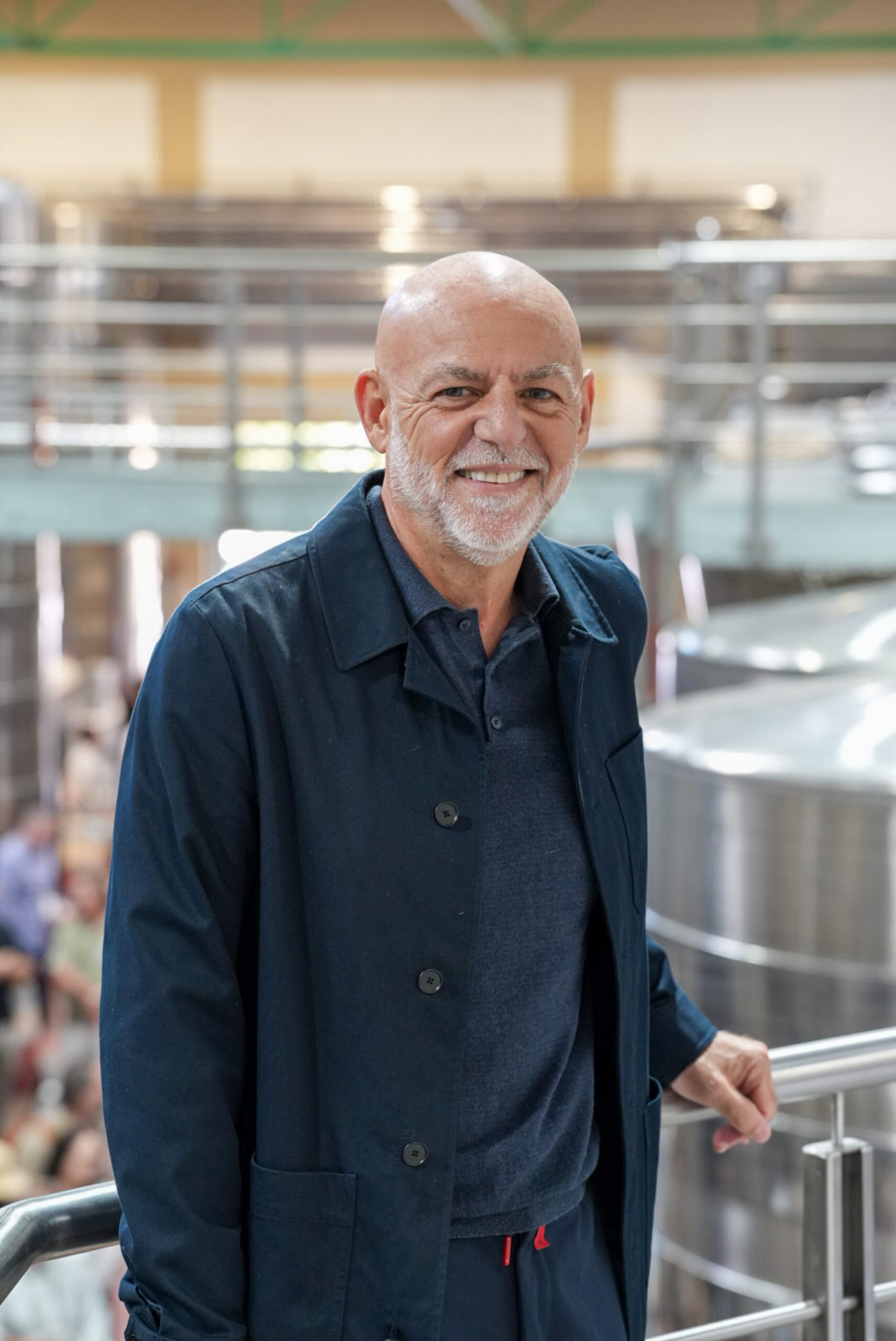
CEO Pascal Asin
“As I said, this estate is 341 years old. It was one of the first wine farms in South Africa. So they arrived in Cape Town and they moved to Constantia to plant vine and they created this sweet wine called Vin de Constance 340 years ago.”
The natural sweet wine, produced from Muscat de Frontignan grapes, quickly gained favour across Europe during the 18th and 19th centuries. Its naturally high sugar content allowed it to withstand long sea voyages, making it a favourite among royal courts and aristocratic households.
The Wine that captivated an Emperor
Few wines can claim a place in world history quite like Vin de Constance.
Among its most famous admirers was French Emperor Napoleon Bonaparte, who continued to enjoy the wine during his exile on the remote island of Saint Helena in the South Atlantic.
Asin recounts the remarkable story.
“And because it was such a sweet wine, it was easy to travel. And all the kings of the world drank that wine in Europe. But it became very, very famous when Napoleon was in exile on Sant’Elena on the islands. And he had to choose his wine. And the first port to get access to wine was Cape Town. And he decided to drink Vin de Constance. And he had an allocation of one bottle a day. So for about seven years in exile, he drank every day a bottle of Vin de Constance.”
Today, Vin de Constance remains one of the world’s most celebrated natural sweet wines, earning international acclaim while preserving a tradition that stretches back more than three centuries.
Opening the doors to the World
Although Klein Constantia enjoys an enviable reputation among wine connoisseurs, Asin believes many international travellers have yet to discover the estate.
“South Africa, I think, is becoming a place to be. People want to visit South Africa. And there’s so many things to still discover. And we’re one of the kind, one kind of farms that people are not much aware of it. So we want to open the doors. We want to show to the world that we have been there since 340 years and before the others.”
That vision goes beyond wine. Klein Constantia has developed into a destination where visitors can immerse themselves in the beauty of the vineyards, learn about centuries of winemaking tradition and experience South African hospitality at its finest.
Hospitality sits at the heart of the Klein Constantia experience.
Visitors can enjoy guided vineyard walks, cellar tours and curated wine tastings before settling in at the estate’s acclaimed restaurant, where seasonal ingredients and local flavours complement the wines produced on the property.
For Asin, creating memorable experiences is just as important as producing exceptional wines.
“So what we do today is try to expose the farm. And we do three things extremely well. In fact, we do hospitality. We’ve got an incredible restaurant with Chef Garth. And of course, we’ve got a tasting room and tour around the farm. So we are about hospitality. And we want to make sure that we give incredible experiences to our people from overseas, but also local, who are coming to the wine farm at Klein Constantia.”
The estate’s location within the Constantia Wine Route also places it within easy reach of Cape Town’s city centre, allowing travellers to combine vineyard experiences with beaches, mountains, culture and world-class dining.
Among the world’s best
Klein Constantia’s commitment to quality has earned widespread international recognition.
Its wines consistently receive outstanding ratings from critics, while the estate itself has been recognised among the world’s leading wine destinations.
Asin points to one accolade in particular.
“First of all, we’ve been ranked in the top 50 wine farms in the world. We are number one in Africa and number six in the world. So that’s everything.”
The estate continues to build on that reputation under the guidance of winemaker Matt Day, whose work has helped position Klein Constantia among the leading producers of cool-climate Sauvignon Blanc and premium Muscat de Frontignan wines.
A complete Cape Town experience
For international visitors, Klein Constantia represents far more than a wine tasting.
Its location in Cape Town places guests within one of the world’s most diverse tourism destinations, where natural beauty, gastronomy, heritage and adventure exist within a relatively compact area.
Asin believes that combination is difficult to match anywhere else.
“Why did you come here in the Western Cape and Cape Town and in this wine farm? Because you’ve got access to everything. You’ve got nature. You’ve got beautiful restaurants. You’ve got value for money. You’ve got a sea. You’ve got culture. You’ve got music. So Cape Town as a whole, with Clément Constantia, can offer a 360 experience that is really difficult to get around the world.”
For many visitors, a day at Klein Constantia naturally complements visits to Table Mountain, the Cape Peninsula, Kirstenbosch National Botanical Garden and the vibrant culinary scene that has made Cape Town one of Africa’s premier tourism destinations.
Excellence and sustainability
While heritage attracts visitors, maintaining world-class standards remains central to the estate’s future.
Asin credits the estate’s long-serving winemaker for maintaining that pursuit of excellence.
“The second thing is my winemaker, Matt Day, who’s been with us for 18 years and is all about excellence. We want to make the best Sauvignon Blanc and Muscat de Frontignan in the world. That’s what we want to do.”
Equally important is the estate’s commitment to responsible farming and environmental stewardship.
Klein Constantia practises dry farming wherever possible, allowing vines to rely primarily on natural rainfall while encouraging deeper root systems and preserving water resources. Much of the surrounding landscape also forms part of the ecologically significant Cape Floral Kingdom.
Asin sees environmental responsibility as inseparable from producing exceptional wines.
“Also what we do is balance between nature and agriculture. So we are on a dry farming and we try to look after nature as much as we look after the farm. So yes, that’s what we do.”
Beyond the vineyards, the accolades and the centuries of history, Asin believes the defining characteristic of Klein Constantia is something uniquely South African.
“And I will add one thing, people. People are absolutely incredible in this country in terms of hospitality. And that’s what we try to create as well, is to promote locals with local people, local chefs, local dishes. So that’s all about what we are. That’s Africa and that’s very important.”
This article was first published in the August 2026 Issue of VoyagesAfriq Travel Magazine