
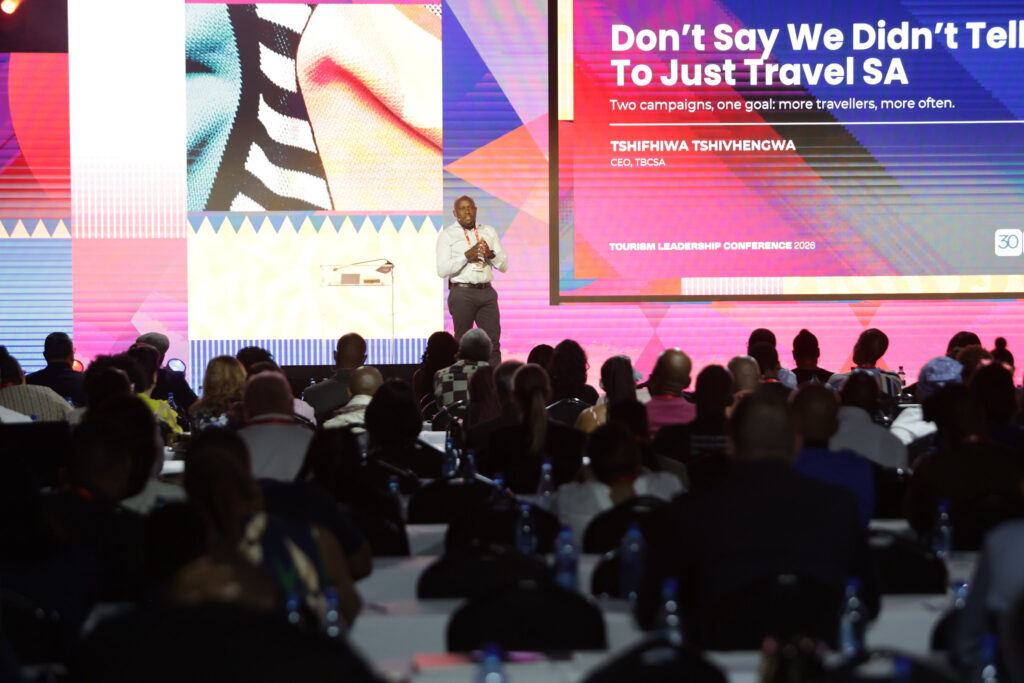
The 5th annual Tourism Business Council of South Africa (TBCSA) Leadership Conference concluded at Sun City in the North West, with a commitment from industry leaders to continue working together towards fostering sustainable growth, creating jobs and improving competitiveness.
Held from 27 to 28 October under the theme “30 Years in Tourism Still Matters”, the conference brought together leaders from the private and public sectors to reflect on three decades of tourism development and agree on practical priorities for the sector’s next chapter.
Discussions focused on aviation connectivity, investment, domestic tourism, destination competitiveness, digital innovation, workforce development and the conditions required for tourism businesses and communities to thrive.
Tourism contributed R361.7bn to South Africa’s GDP in 2024 and supported nearly 954,000 direct jobs. According to data from Statistics South Africa (Stats SA), the tourism sector now rivals several other industries in terms of workforce size. While also accounting for 4,9% of gross domestic product (GDP), the sector employs more individuals than the respective industries of agriculture, mining and utilities.
The numbers cement tourism’s role as an engine of economic activity and underpin the government’s recognition of tourism as a core priority sector for phase three of the Government-Business Partnership, announced by President Cyril Ramaphosa in August.
Addressing the TBCSA Leadership Conference 2026, Honourable Najib Balala, Executive Vice President of the World Travel & Tourism Council (WTTC), highlighted South Africa’s position among Africa’s leading travel and tourism economies and the opportunities for further regional growth. Balala further emphasised stronger air connectivity, visa facilitation, infrastructure investment, workforce development and crisis preparedness as key priorities for improving competitiveness and unlocking Africa’s tourism growth potential.
Dr Negar Rezvany, Industry Analysis Specialist at the International Air Transport Association, as well as Lee-Anne Bac, Advisory Partner: Tourism at BDO South Africa took part in a panel on the state of global aviation and examined how South Africa can position itself to leverage the various opportunities. The conversation centred on aviation trends shaping international travel and what they could mean for South Africa and the wider African.
Today’s actions and the future of tourism
Priorities for South Africa for the next year and the next thirty years include expanding air access and regional connectivity; improving visa facilitation and the visitor journey; accelerating joint destination marketing; supporting investment and small-business participation; strengthening skills development; and building the sector’s resilience and preparedness for future disruptions.
The conference also underscored the value of a unified destination voice. TBCSA members and partners agreed that closer alignment across the industry, supported by focused investment in priority source markets and high-potential segments, will be essential to convert demand into arrivals, longer stays, greater visitor spending and more jobs.
The key takeaway is clear: the future of tourism depends on the actions taken together today. Through strategic partnerships, bold ideas and visionary leadership, new opportunities can be unlocked. After all, tourism is much more than travel; it is a catalyst for job creation, investment, economic transformation, and improved livelihoods.
This year, TBCSA is marking 30 years of representing the country’s tourism private sector. The general sentiment in the industry is that the world wants to come to South Africa, and the task for the tourism industry is to ensure that everyone is ready and the regional spread is equitable. With modern tourists looking for unique and genuine experiences, the tourism offering in the country needs to shift to include more heritage and cultural experiences that go beyond the popular tourism products and offerings.
Greater tourism products in wider parts of the country will boost the economic ecosystems of smaller towns and rural areas, create jobs and empower small and medium-sized businesses. The inclusion also requires using AI and other technologies to improve payment methods, especially as the drive to increase visitors from India and China intensifies. African travellers continue to support the local tourism sector, and the Leadership Conference acknowledged the urgent need to ensure that those visitors feel welcome in South Africa. Better visa regimes, improved safety and security and public education and advocacy for more inclusion have been identified as important pillars of growth.
With the local government elections just days away, the conversation also delved into the importance of competent and reliable delivery of basic services such as water and electricity, as well as tariff and administrative efficiencies.
Eskom chairperson Mteto Nyati offered a leadership masterclass, where he outlined the role of courageous, inclusive and exemplary leadership. He emphasised the importance of solid planning, strategy and execution in solving crises and achieving goals. Using his experience as a corporate leader, Nyati challenged stakeholders in tourism to never be afraid of pushing boundaries, pivoting when the initial plan does not work and turning plans into action. Building businesses that last need brave leaders who are also executors, Nyati said.