


Africa’s growing influence on global tourism could be entering a defining phase, with a new report set to spotlight the continent’s expanding outbound travel market and the opportunities it presents for airlines, hospitality businesses and tourism destinations.
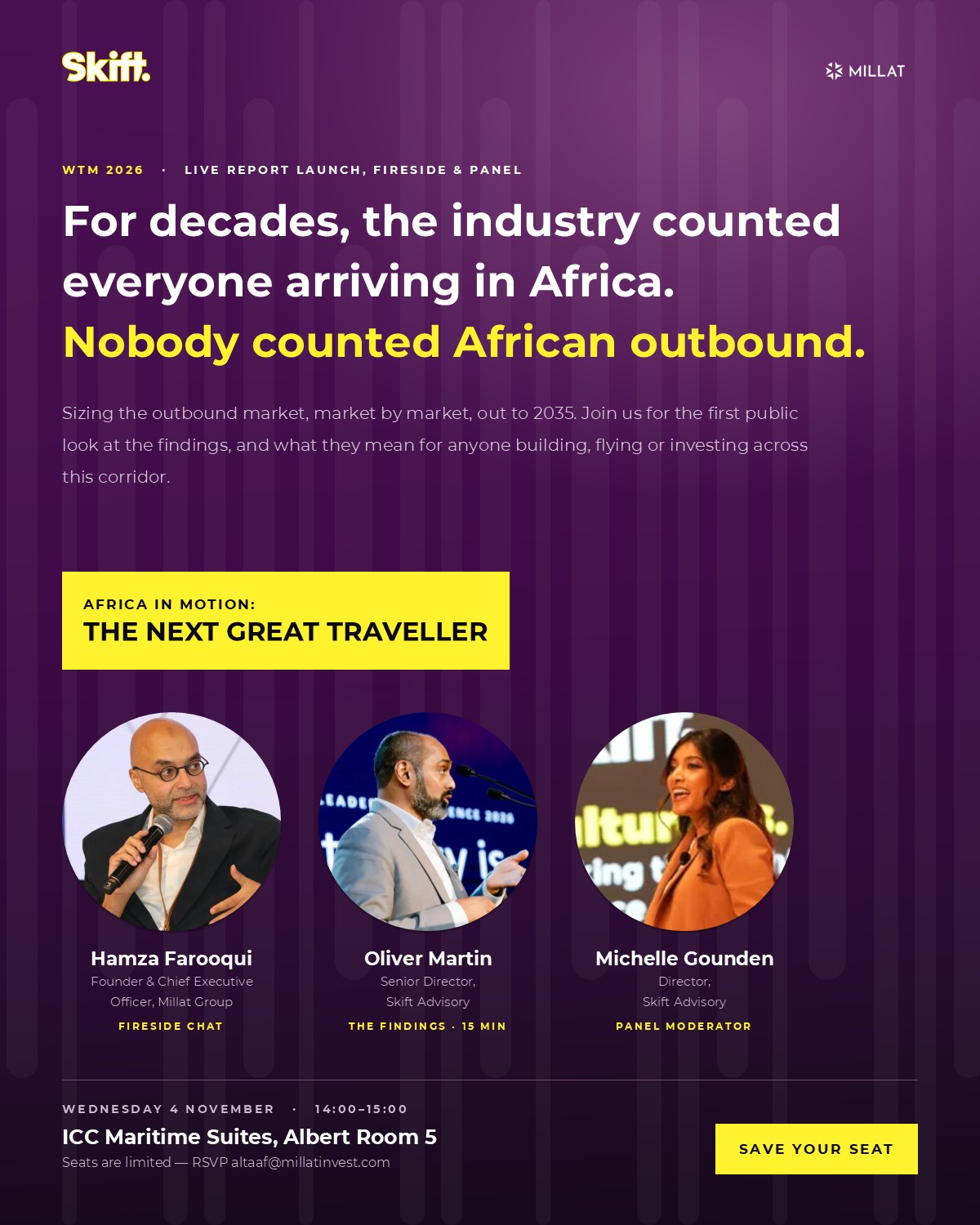
Titled Africa in Motion: The Next Great Traveller, the report by Skift Advisory, and presented by Millat Group, is expected to feature during this year’s World Travel Market (WTM) London, taking place next week. It examines the scale of Africa’s outbound travel demand, where African travellers are going, how much they spend and whether the continent’s aviation and hospitality infrastructure is prepared to support future growth.
The report shifts the focus from Africa as a tourism destination to Africa as a source of international travellers—a market that could play an increasingly important role in shaping global tourism over the next two decades.
According to the report, outbound trips from five key markets—Egypt, Ethiopia, Kenya, Nigeria and South Africa—are projected to rise from 13.3 million in 2025 to 19.4 million by 2035. Outbound travel spending is also projected to reach $30.4 billion by 2030, representing an increase of approximately 61% over five years.
These projections point to a significant opportunity for international destinations and travel businesses seeking to connect with Africa’s growing base of outbound travellers.
However, the report argues that realizing this potential will require a better understanding of the markets driving demand, alongside greater investment in the infrastructure and services needed to support travel.
Demand, connectivity and investment in focus
One of the report’s central findings is that interest in visiting Africa exceeds familiarity with its destinations across the 14 source markets studied. This suggests that limited awareness, rather than a lack of interest, may be constraining Africa’s appeal in international tourism markets.
The report also highlights differences in the travel patterns and spending power of African markets. Nigeria, for instance, ranks seventh among eight markets by outbound departures but leads in outbound spending, at $7.7 billion. The finding underscores the importance of looking beyond passenger numbers when assessing the commercial value of a source market.
Connectivity remains another major challenge. Although intra-African travel accounts for around 40% of international arrivals on the continent, the report estimates that only about 19% of routes are served by direct flights. This gap points to the potential value of stronger regional air links in making travel across Africa easier and more accessible.
The report further draws attention to aviation costs, airline profitability and hotel investment. African carriers face high departure taxes and low passenger load factors, while the continent’s hotel development pipeline remains heavily weighted toward luxury properties. Of 168 branded hotel signings cited in the report, only 14 are in the economy or midscale segments—categories that could be important as travel volumes expand.
A changing global travel landscape
By examining these trends together, Africa in Motion: The Next Great Traveller makes the case for treating African outbound tourism as a strategic market rather than a secondary consideration in global travel planning.
For destinations, airlines, hotel operators and investors, the report offers a framework for understanding where demand is emerging and what may be needed to capture it. Its findings also raise important questions about how African countries can strengthen regional connectivity, retain more travel value within the continent and ensure that tourism infrastructure keeps pace with changing traveller needs.