


Outbound travel from five key African markets is forecast to reach 19.4 million trips by 2035, but poor air connectivity and a shortage of affordable hotels threaten to hold back growth.
Africa is emerging as one of the world’s most promising sources of international travellers, with outbound tourism spending across five major African markets expected to reach $30.4 billion by 2030, according to new research launched today at World Travel Market London.
The study, Africa in Motion: The Next Great Traveller – produced by Skift, the global travel intelligence company, and commissioned by the Millat Group – challenges an industry that has traditionally viewed Africa as somewhere international tourists visit, rather than a market generating significant travel demand of its own.
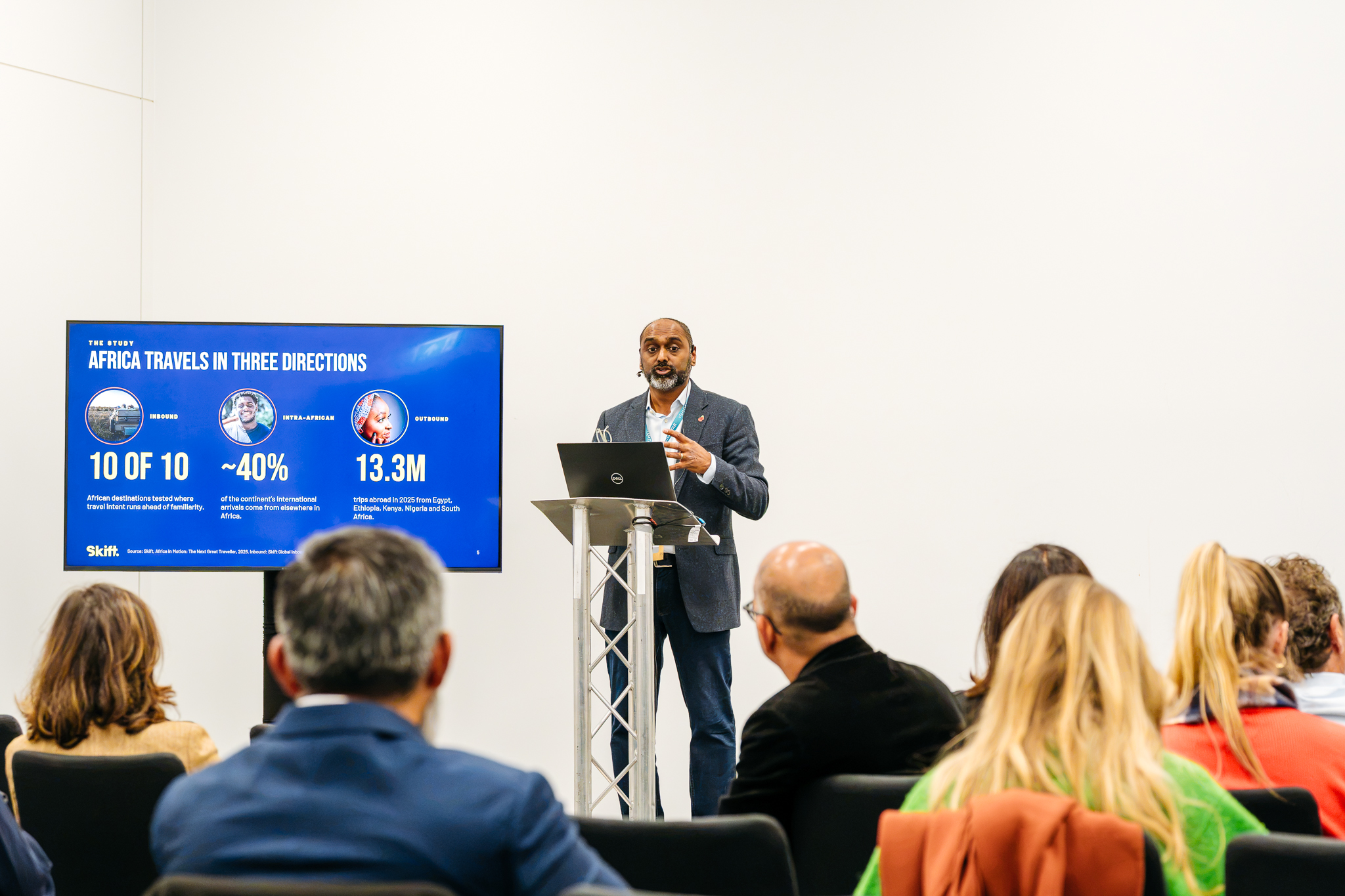
Examining Egypt, Ethiopia, Kenya, Nigeria and South Africa, the research forecasts that outbound trips from these five markets will increase from 13.3 million in 2025 to 19.4 million by 2035. Outbound spending is projected to rise by approximately 61% over the five years to 2030.
But the findings also expose serious weaknesses in the infrastructure needed to support that growth, including inadequate air connectivity, high travel costs and a shortage of accommodation aimed at middle-income travellers.
Hamza Farooqui, founder and CEO of Millat Group, says the international tourism industry needs to fundamentally rethink Africa’s place in the global travel economy.
“For decades, the conversation has been about bringing tourists to Africa. That’s important, but it’s only half the story. Africans are travelling, spending money and supporting tourism industries around the world. Yet we still haven’t built a travel and hospitality system that properly serves them.
“We have to stop treating the African traveller as an afterthought. This is a serious market, and it deserves serious investment.”
One of the study’s most striking findings concerns Nigeria. Although it ranks seventh of eight markets examined for outbound departures, it leads in spending at $7.7 billion, approximately 41% more than South Africa despite generating only around one-fifth as many trips.

“Rank African markets by trip counts and you’ll back the wrong ones,” said Michelle Gounden, Director, Insights, Skift. “Nigeria sends a fraction of South Africa’s travellers abroad and outspends them by 41%. In this corridor the money follows family, faith and business, and anyone chasing headcounts will miss it.”
The research also reveals a substantial mismatch between interest in visiting Africa and actual knowledge of its destinations. Across 14 international source markets, potential visitors expressed greater interest in visiting African destinations than their familiarity with those destinations would suggest.
India and the United Arab Emirates showed the strongest forward travel intentions at 32% and 29% respectively, compared with 16% in the United States.
The findings raise questions about why so much African destination marketing remains concentrated on traditional Western markets.
Air connectivity presents another challenge. Although intra-African travel accounts for around 40% of international arrivals on the continent, only around 19% of intra-African routes are served by direct flights.
Passengers departing African airports pay the world’s highest taxes and charges, averaging $68 per international departure compared with $32 in Europe. In West Africa, the figure reaches $109.50.
According to the research, African airlines generated just 90 US cents in profit per passenger in 2024, compared with $15.20 for Middle Eastern carriers.
Meanwhile, Africa’s hotel development pipeline of 123,846 rooms remains heavily concentrated in the luxury segment. Only 14 of the 168 hotel brands with signed deals in Africa sit in the economy or midscale categories, where much of the future growth opportunity lies.
Farooqui says these imbalances require a coordinated response from governments, airlines, hotel operators and investors.
“We cannot keep talking about Africa’s tourism potential while making it difficult and expensive for Africans to travel across their own continent.
“We need better connections between our cities, more accessible capital and accommodation that reflects how people actually travel. And we need to develop African businesses and operating expertise, not simply rely on international brands to deliver that growth.”
The research identifies the Middle East as a critical link in Africa’s expanding tourism economy, both as a destination and as an aviation hub connecting African travellers to Europe and Asia.
Approximately 28% of South Africa’s connecting traffic to Europe travels through Gulf hubs, demonstrating the increasingly important role of the Africa–Middle East–Europe corridor.
Farooqui believes the findings provide a starting point for a new discussion about investment and tourism policy.
“Africa doesn’t need another conversation about its potential. We know the opportunity exists. What we need now is to connect the markets, finance the infrastructure and build businesses that allow Africans to participate fully in the global travel economy.”
For the full report, click here