

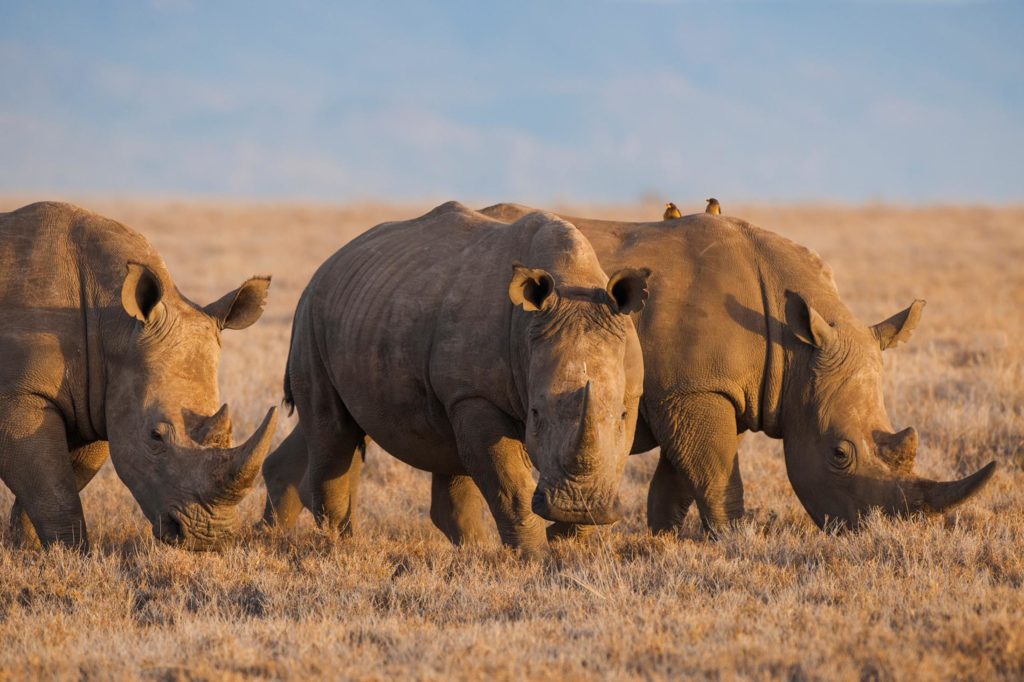
Kenya has expressed disquiet about a recent decision by China to lift a 25 year ban on trade in rhino horns and tiger bones.
China announced earlier this week it has allowed trade in products from these endangered animals in “special circumstances,” including medical research or healing. But in a statement today, Kenya said it had received the news with “consternation,” citing a number of reasons why they believe the Chinese decision could have adverse effect on wildlife conservation.
Read full statement below:
As a country, Kenya’s position is that rhino horn trade should not be legalized for the following reasons:
• Trade in and sustainable use of natural resources, including wildlife, depends on the species, its biology, trends in illegal killing and the value of the product.
• Given the rhino’s slow reproductive rate, small continental population (25,460 in 2012) and the high value for horn (US$60,000/kg), there is no realistic scope for achieving a sustainable balance between production and supply for rhino horn.
• At a time when poaching and trafficking are at historically high levels, Kenya does not support trade in products obtained from endangered species, for which most range states are not achieving their population growth targets.
• Black rhinos are critically endangered and there is no differentiation of the origin of the horn (black or white rhino) once it gets to the market.
• Based on experience with the ivory trade over the last 25 years, legalized trade has proven ineffective in stemming elephant poaching in Africa and will not discourage existing illegal syndicates driving this trade.
• The current rhino trade is perpetrated by illegal syndicates that would continue to poach rhinos, trade in horn and drive the market further underground.
• Demand for rhino horn in Asia is driven by the false belief that it has medicinal properties, which is yet to be scientifically proven. Allowing rhino horn to be marketed as medicine is dishonest and sends mixed messages to the marketplace at a time when a single, clear message needs to be communicated to the billions of potential consumers.
• Rhino horn has no medicinal value, results in the killing of rhinos and should not be consumed.
• Any rhino horn sales at a time when rhino poaching and trafficking is at its historical height will send the wrong message to the public and jeopardize current efforts to reverse the species decline.
FACTS ABOUT THE RHINO
• There are less than 25,000 rhinos left in Africa. Approximately 96% of these are found in South Africa, Namibia, Kenya and Zimbabwe, each of which is affected by the current poaching crisis.
• The overall population trend for black and white rhinos in Africa is still increasing, but the rate of increase has slowed markedly and deaths could begin to exceed births in the next two years.
• Illegal trade in rhino horn has reached its highest levels since the early 1990s. Last year approximately 2,000 rhino horns from Africa went into illegal trade, according to conservation body, Traffic. The illegal supply of rhino horns out of Africa is now 30 times greater than in the early 2000s, and it remains unclear how big the potential market for this product is.
• Rhino horn trade is one of the most heavily-criminalized sectors of the global illegal wildlife trade, as Africa-based Asian syndicates move large volumes of rhino horn to markets in Asia, according to conservation body, Traffic.
• Therefore, Kenya does not support the re-opening of trade in products obtained from endangered species, especially rhino horn trade.