
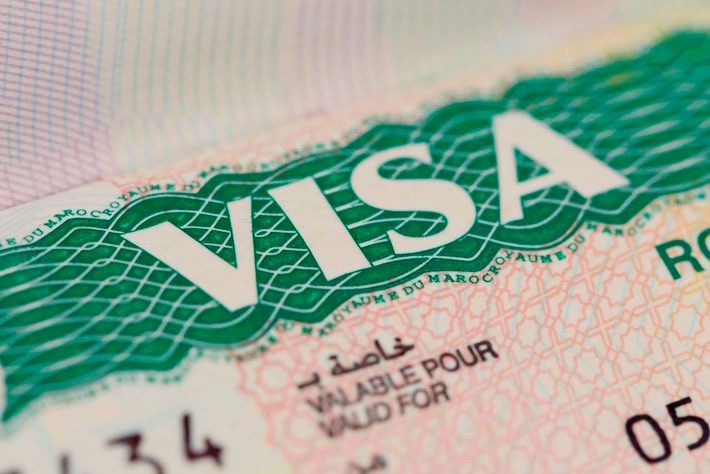
The Kingdom of Morocco has announced the launch of an electronic visa for travellers to the country. The online system will simplify the process of obtaining a Morocco visa for citizens of 49 countries.
The e-visa for Morocco will be available through a simple online application platform managed by the Moroccan Ministry of Foreign Affairs. It is expected that the online visa form will only take a few minutes to complete with basic personal, passport, and travel information.
It is also expected that applicants will also be able to pay the visa fee securely online. In most cases, online visas for Morocco will be processed within 24-72 hours.
Once approved, the e-visa allows the holder to stay for up to 30 days in Morocco. However, it can also be extended once in the country for a validity of up to 6 months with multiple entries.
E-visa for Morocco Expected to Boost Tourism
The introduction of an e-visa for Morocco was ordered by King Mohammed VI in order to facilitate the issuance of visas for tourism and boost tourist arrivals to the country, Moroccan government spokesperson Mustapha Baitas confirmed.
“Foreigners who want to visit Morocco are no longer obliged to go to consulates to collect a paper visa”, Baitas said during a press briefing to announce the online visa system.
The simplifying of the visa application process is designed to reposition the country as a prime travel destination and revive the tourist industry after a slow-down caused by the COVID pandemic.
Tourism makes up a large part of Morocco’s economy. The government is eager to boost revenue from the tourist sector, which was estimated to have made an economic contribution of around $8 billion in 2021 alone.
Who Can Apply for the Morocco Visa Online
The electronic Morocco visa will be available to 3 categories of foreign citizens:
Foreigners who have resided in the European Union, the USA, Canada, the UK, Japan, Switzerland, New Zealand, and Australia for a minimum of 180 days
Foreign residents in the USA, Australia, Canada, the UK, Ireland, and New Zealand with a Schengen visa valid for a minimum period of 90 days
Nationals of countries including Israel and Thailand
Not all foreign nationalities need a visa for Morocco. Passport holders from over 65 countries and territories, including all European Union citizens, and nationals of the United Kingdom, the United States, Australia, and New Zealand, among others, can visit Morocco visa-free for up to 90 days.
Citizens of the Republic of the Congo, Guinea, and Mali are also considered visa-exempt for Morocco, but they are required to obtain an approved Electronic Travel Authorization in advance of travel.
All other passport holders are required to have either an approved visa to travel to the country, no matter the intended length of stay or purpose for the visit. Those not eligible to apply for the Moroccan e-visa online will continue to need to submit visa applications at an embassy or consulate of Morocco in person.