
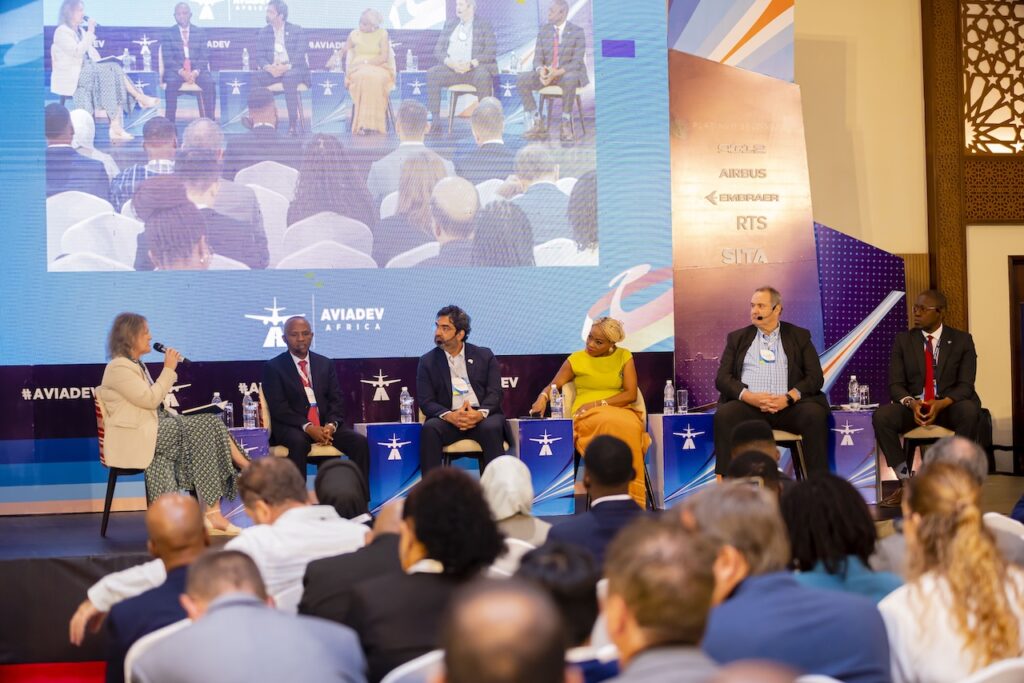
One of the most frank and forward-looking discussions at AviaDev Africa 2025 came during the high-level panel Flightpath to Growth, which tackled the continent’s most pressing aviation issues – from ownership models and capital mobilisation to market access, visa policy, and the future of regional connectivity.
Moderated by respected aviation journalist Hilka Birns, the session brought together leading voices in the industry: Helen Brume (Afreximbank), Munawer Dhirani (Flightlink), Julian Edmunds (Fastjet), Mesfin Tasew (Ethiopian Airlines), and Peter Ulanga (Air Tanzania).
At the heart of the debate was a critical message – ownership does not equal success. “It’s not about whether an airline is privately or state-owned,” said Helen Brume. “What matters is governance, autonomy, and commercial discipline.” That sentiment was echoed throughout the session, with panellists stressing that airline performance hinges on professional management – not structure alone.
Mesfin Tasew, CEO of Ethiopian Airlines, offered a powerful case study. Despite being state-owned, the airline has achieved sustained profitability and global recognition. “We don’t chase short-term profit,” he noted. “We invest to build a pan-African network that connects our continent on our terms.” Ethiopian’s recent joint venture with Malawi was cited as a model of a well-structured public–private partnership (PPP) that delivers results when guided by the right vision.
The panel also addressed the role of government. The consensus was clear – states should enable, not operate. “The age of direct government control over airlines should be behind us,” said Julian Edmunds of Fastjet. “The focus now should be on creating a policy and infrastructure environment that supports competition and investment.”
Munawer Dhirani raised the critical issue of cost. “African carriers are often paying more for the same aircraft than global peers,” he pointed out. High taxes, airport fees, and leasing premiums were identified as persistent barriers to growth. Add to that the slow implementation of the Single African Air Transport Market (SAATM), and the result is a market where connectivity remains limited and intra-African traffic constrained by outdated bilateral agreements.
Brume called for renewed focus on unlocking local capital, noting that African pension and sovereign wealth funds represent untapped potential. “The money is there,” she said, “but we need the right structures, trust, and policy stability to attract it.”
Encouragingly, there is rising investor interest – including from the Gulf – in well-governed African airlines, both public and private, with clear revenue strategies and regional growth plans. Edmunds added that risk diversification strategies – like Fastjet’s franchise and group structures – can offer financial resilience and increase access to capital.
Another thorny issue raised was the continent’s growing talent drain. “We’re training engineers and pilots only to see them leave for better-paying jobs overseas,” said Ulanga. The panel called for urgent investment in local training and retention to build a sustainable aviation workforce.
Visa policy was also on the agenda, with Rwanda’s open-border model singled out as a proven driver of both tourism and air traffic. “Removing visa barriers has measurable economic impact,” one panellist noted. “Why aren’t more countries following suit?”
The discussion closed with a powerful call for a continental mindset shift. “Africa must stop waiting for others to connect us,” said Ulanga. “We have the people, the resources, and the market. Now we need the belief – and the policies – to take charge of our skies.”
The message from the session was clear: Africa’s aviation growth is not only possible – it’s inevitable, if the right priorities, partnerships, and political will are brought to the table.