
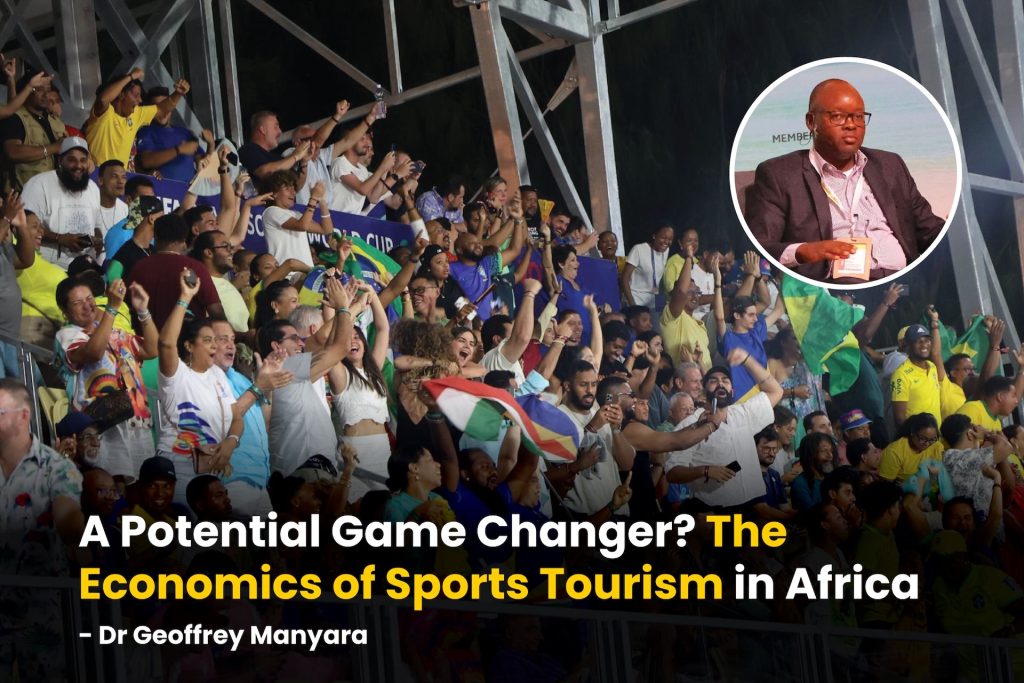
Over the past two decades, sports tourism has emerged as a dynamic and growing sector at the intersection of the global sports and travel industries. Defined as leisure-based travel that temporarily takes individuals outside their home environments to participate in, observe, or venerate sporting activities, sports tourism now encompasses three distinct categories: active sports tourism, where travelers engage in physical activities; event sports tourism, involving travel to watch live sporting events; and nostalgia sport tourism, which centers around visits to iconic sports-related attractions such as Old Trafford in the UK, Beijing’s Bird’s Nest Stadium, or Santiago Bernabéu in Madrid.
This sector has grown exponentially in recent years. In 2019, sports tourism was valued at over USD 458 billion, dropping to USD 323 billion in 2020 due to the pandemic’s global impact, before climbing again to USD 544 billion by 2024. Forecasts indicate it will reach USD 2 trillion by 2032, driven by a compound annual growth rate of more than 16 percent. On the supply side, this growth has been fueled by increased substantial investments in sports infrastructure, strategic promotion, and staging large-scale regional and international events. From the demand side, rising disposable income, greater leisure time, and heightened interest in sports have amplified the appeal of combining travel with athletic experiences.
Crucially, from an economic perspective, sports tourists tend to spend significantly more than their non-sporting counterparts. In 2019, the UK welcomed 1.5 million football tourists whose average spending per visit reached USD 1,272 far exceeding the USD 974 average of other visitors.

Dr Geoffrey Manyara
Major international events offer compelling examples of how strategic investment in sports tourism can yield substantial economic benefits. For the 2014 FIFA World Cup, Brazil spent USD 11 billion, generating USD 13 billion in immediate returns, with further projections estimating an additional USD 90 billion over a decade. Similarly, Russia’s USD 13 billion outlay to host the 2018 World Cup led to expected annual gains between USD 2.4 billion and USD 3.4 billion over five years. These tournaments greatly stimulated demand across sectors, notably hospitality—Brazil’s hotel occupancy rose by 18 percentage points, and Russia reached an impressive 87 percent during the games. More recently, France’s 2024 Olympics and Paralympics attracted a USD 9.7 billion investment, anticipated to bring in over USD 11 billion in returns over a 17-year span.
Africa, too, is awakening to the transformative promise of sports tourism. South Africa set a precedent in 2010 when it became the first African country to host the FIFA World Cup. With USD 3.12 billion invested, the event contributed USD 509 million to GDP that year alone. Households saw benefits totaling USD 769 million, including USD 228 million directed at low-income homes. Over 130,000 jobs were created in construction and hospitality, and the nation received over 300,000 sports tourists, generating USD 514 million in revenue. Tourist spending jumped dramatically, rising from USD 1,200 in 2008 to USD 1,571 in 2010. The event further resulted in improving South Africa’s brand awareness by 9% and an increase of 35% in intent to visit resulting in a steady growth in international tourism arrivals from 8 million in 2010 to over 10 million in 2019 post COVID-19 pandemic.
Cameroon followed in 2022 by hosting the African Cup of Nations (AFCON), investing USD 885 million to improve sports facilities, transport networks, and hospitality. Despite COVID-19’s lingering effects, the event had a positive impact on local businesses. Ivory Coast continued the trend in 2024, also hosting AFCON and investing USD 1 billion primarily in stadium construction. The event produced over 50,000 jobs and ignited demand in hospitality, apparel, and particularly the textile industry.
Kenya, hosting the World Rally Championships in recent years, demonstrated how niche sports can also yield large dividends. In 2021, the event generated over USD 80 million in tourism demand expenditure, supported nearly 25,000 jobs, and delivered USD 36 million in labor income. The total economic output was reported at USD158 million.
Looking ahead, Rwanda and South Africa have expressed interest in bringing Formula One to Africa. The initial infrastructure investment required is estimated at a minimum of USD 200 million, with annual hosting costs ranging between USD 15 million and USD 50 million, and maintenance adding another USD 18 million. Races such as those held in Belgium and Las Vegas have demonstrated economic values of USD 200 million and USD 1 billion, respectively—figures that could explain the growing appeal for African countries seeking to host.
Clearly, sports tourism presents a compelling opportunity for economic growth and diversification across Africa. However, tapping into its full potential will require strategic and sustained investments—not only in infrastructure but also in nurturing athletic talent. With coordinated planning, regional cooperation, and long-term vision, Africa could evolve into a competitive global sports tourism destination, capitalizing on its unique cultural vibrancy, dynamic youth population and growing sporting aspirations.
________________________________________________________________________
© Geoffrey Manyara 2025.
Dr Geoffrey Manyara works as an economic affairs officer (tourism) at the United Nations Economic Commission for Africa Sub-Regional for Eastern Africa. The views and opinions expressed here are those of the author and not necessarily those of the United Nations Economic Commission for Africa.