

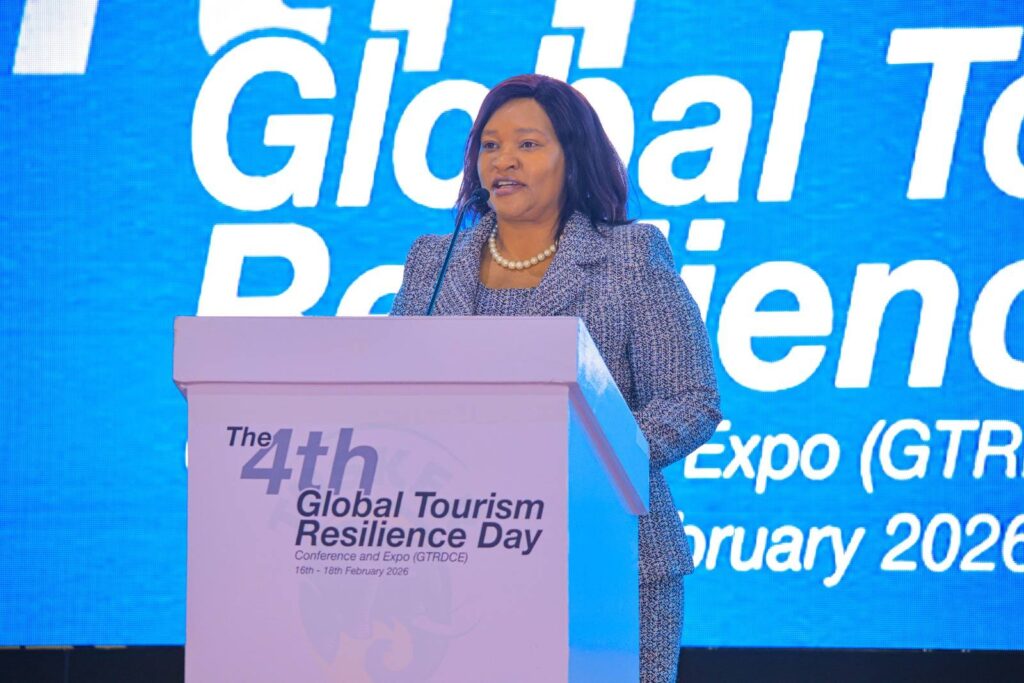
Kenya’s Cabinet Secretary for Tourism and Wildlife, Hon. Rebecca Miano, has underscored Kenya’s vision and steadfast commitment to tourism resilience through strategic investments in renewable energy, responsible infrastructure, and the innovative use of technology to bolster crisis response.
“As a government, we are committed to building a tourism sector that is robust, regenerative, and inclusive. This includes strengthening collaboration between the public and private sectors, expanding access to opportunities for micro, small, and medium enterprises, and ensuring that communities are the central beneficiaries of tourism growth,” Hon. Miano emphasised.
The Cabinet Secretary made these remarks while delivering the keynote address on behalf of the Chief Guest, Deputy President Prof. Kithure Kindiki, during the official opening of the 4th Global Tourism Resilience Conference and Expo on Monday. The landmark conference currently ongoing at the Kenyatta International Convention Centre in Nairobi will run from 16th to 18th February 2026.
Hon. Miano further noted that Kenya has taken deliberate strides to integrate sustainability into its national tourism and development agenda. She revealed that over 90 per cent of the country’s energy consumption is now derived from renewable sources, a significant commitment that underpins responsible tourism, climate action, and long-term resilience.
“We are also embracing technology and innovation as critical tools for resilience. By leveraging digital platforms, data systems, and emerging technologies such as Artificial Intelligence, we aim to enhance crisis preparedness, improve decision-making, and strengthen communication across the entire tourism value chain.”
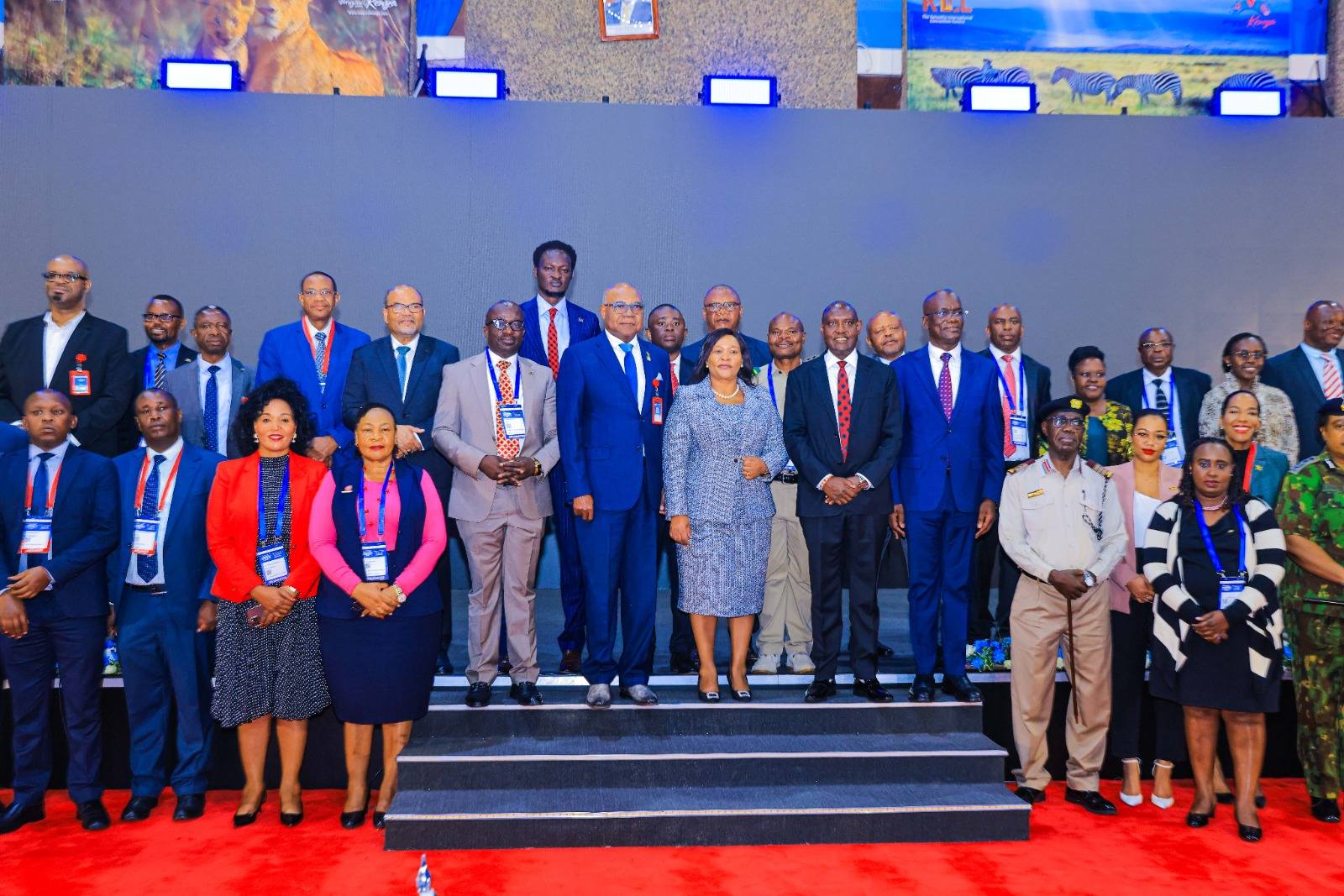
“Investing in resilience today is the surest antidote to tomorrow’s losses,” CS Miano stated, framing the conference as “an invitation to shape a tourism sector that is robust, regenerative, and capable of delivering benefits across communities.”
The Global Tourism Resilience Conference marks a historic milestone as the event is hosted for the first time outside of Jamaica. Following the success of its first three editions in Kingston (2023), Montego Bay (2024), and Negril (2025), the movement’s transition to Nairobi signals a new era of profound Afro-Caribbean partnership.
The Vision Behind the Global Resilience Movement
Addressing the high-level assembly at the KICC, Prof. Lloyd Waller, Executive Director of the Global Tourism Resilience and Crisis Management Centre (GTRCMC), hailed Jamaica’s Tourism Minister, Hon. Edmund Bartlett (the founder and co-chair of the GTRCMC) as the central architect of a movement that has successfully transitioned tourism beyond simple crisis recovery toward a permanent state of institutional readiness.
Providing context to the proceedings, Prof. Waller traced the origins of the Centre and its overarching global mission. He explained that the establishment of the GTRCMC was inspired by the vision of Hon. Edmund Bartlett, whose advocacy elevated resilience from a conceptual idea to a practical policy imperative.
According to Prof. Waller, the Centre was created to convene knowledge, strengthen preparedness, and support destinations before, during, and after crises. He stressed that resilience is not static but dynamic, requiring continuous adaptation in response to emerging global risks, including climate change, health emergencies, geopolitical instability, and digital threats.

Tourism as a People-Centred Industry
In his remarks, Hon. Bartlett reinforced the principle that tourism resilience is ultimately about people. He highlighted the sector’s role as a vital lifeline for jobs, livelihoods, and national development, particularly within vulnerable economies.
He cautioned against fragmented approaches, noting that no destination can withstand modern shocks in isolation. Instead, he called for aligned policies, stronger public-private collaboration, investment in skills and institutions, and enhanced regional cooperation across Africa, the Caribbean, and other emerging markets.
“This day is not about ceremony,” Bartlett noted. “It is about capability, continuity, and building systems that allow tourism to withstand disruption while continuing to deliver value to communities.”
Bridging Academia and Governance
Adding to the institutional weight of the event, Prof. John Okumu, Acting Vice-Chancellor of Kenyatta University, joined the ministerial delegation to highlight the critical synergy between research and policy. As Kenyatta University hosts the GTRCMC’s Eastern Africa regional office, Prof. Okumu emphasised that “academic institutions must generate evidence and knowledge” to support the dynamic nature of tourism resilience. Alongside CS Miano, he reinforced that the “Nairobi Tone” is built on evidence-based decision-making, ensuring that academic research directly informs the industry’s ability to anticipate and transform.

High-Level Panel: From Policy to Practice
Following the official opening, the focus shifted to a high-level panel on Resilience Policy in Practice, moderated by Dr Aradhana Khowala. The discussion featured Hon. Rebecca Miano and Hon. Edmund Bartlett alongside regional leaders, including Denay Jock Chagor, Minister of Wildlife Conservation and Tourism, South Sudan and Agosto Laurindo Kalikemala, Secretary of State for Tourism, Angola.
Joining the panel were John L. Ololtuaa, Principal Secretary for the State Department for Tourism, Kenya, and Jackson Hakiza, Director General of the Rwanda Chamber of Tourism. The panellists addressed the practicalities of translating national strategies into actionable frameworks, with Bartlett concluding that “a resilient tourism sector is not just about survival—it is about dignity, opportunity, and shared prosperity.”