

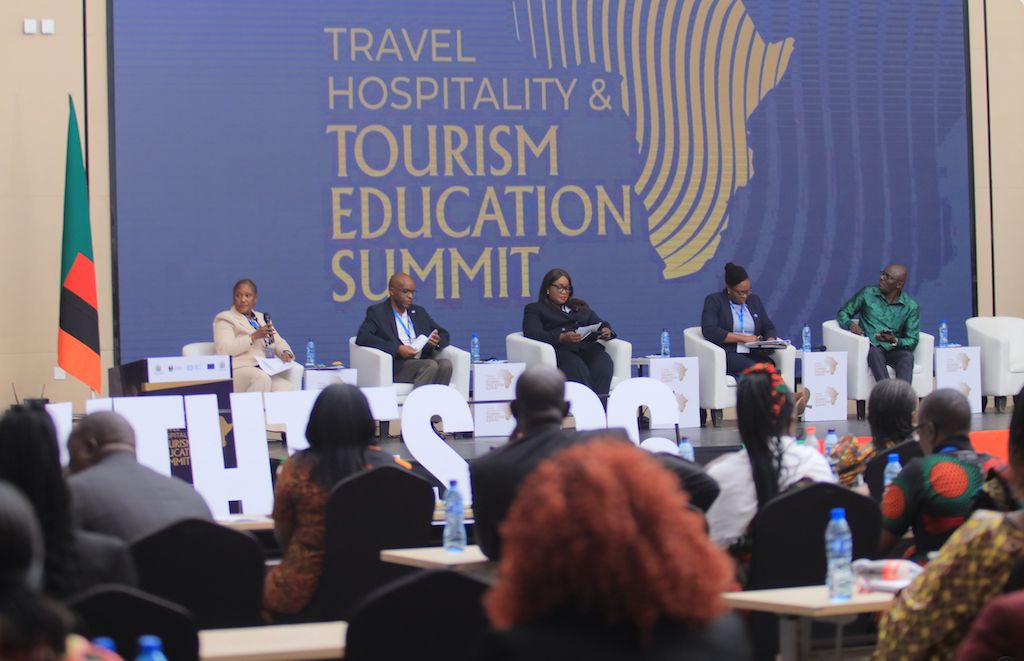
The long-standing disconnect between academic certification and workplace competence remains one of the tourism sector’s most persistent challenges. Yet, deliberations at the Travel, Hospitality and Tourism Education Summit in Lusaka delivered a decisive conclusion: practical, experience-driven learning is not optional, it is fundamental to building a job-ready workforce.
Bringing together voices from the International Labour Organization, the Bank of Zambia, Kenya Utalii College, leading hospitality brands, and regulators, the summit examined what truly defines effective apprenticeship systems. The consensus was firm, the era of graduates entering the workforce unprepared, and attributing it to the job, must end. The industry requires professionals who can integrate seamlessly from day one.
A central concern raised during the discussions was the limited value many internships currently offer. Too often, young trainees are confined to basic, repetitive duties that do little to build relevant skills.
As panelists observed, such experiences leave students disengaged and ill equipped, reiterating a system where certificates do not translate into capability. The shift required is clear: internships must be structured around defined learning outcomes, with measurable skills development at their core.
A standout example came from Mark Rachuonyo Ogendi, Chief Executive Officer of Kenya Utalii College, whose presentation underscored the value of intensity, structure, and industry alignment.
His approach is direct; training must reflect the realities of a demanding global hospitality environment.
“At any destination in the world, service standards are expected to be consistent,” he noted, stressing the importance of attitude, competence, and adaptability.
At Kenya Utalii, the training model prioritizes 70% practical engagement and 30% theory, supported by a fully operational four-star training hotel where students gain continuous hands-on exposure. In addition, learners are required to undertake foreign language training to enhance global employability.
Internships are treated as extensions of the workplace, not academic exercises. Through formal agreements with hotels, airlines, and industry bodies, students are integrated as staff, subject to the same standards and accountability. Failure to meet expectations carries real consequences.
The outcome is immediate employability, with graduates frequently recruited directly into leading establishments such as InterContinental Osaka.
The Bank of Zambia is advancing a more deliberate approach to internships through its Learning and Development Policy.
Represented by Assistant Director of Human Resource, Mrs. Mwaka Shimabale, the institution offers programmes ranging from one to six months, tailored to students’ academic disciplines and supported by structured supervision.
“We design programmes in collaboration with departments and ensure they are monitored,” she explained, highlighting the institution’s emphasis on mentorship and knowledge transfer.
While acknowledging limitations in short-term placements, particularly around formal performance agreements, she noted that longer apprenticeships provide stronger frameworks for tracking progress and outcomes. Partnerships with institutions such as the University of Zambia and the Copperbelt University further strengthen this integration of theory and practice.
The summit highlighted that sustainable apprenticeship systems require a strong legal and policy foundation.
Guidance from the International Labour Organization, particularly Recommendation 208 on Quality Apprenticeships (2023), framed the conversation around structured, inclusive, and regulated models.
As explained by Mr. Mpulu Makayi, National Project Coordinator, apprenticeships must adopt a dual learning approach, combining classroom instruction with workplace experience, while placing employers and workers at the centre of design and delivery.
He emphasized the importance of formal agreements:
“Without clear contracts outlining learning outcomes and supervision, there is a significant risk of exploitation. Apprenticeships must lead to real employment opportunities, not substitute for unpaid labour.”
Given Zambia’s large informal sector, particularly within tourism, the need to design systems that accommodate small and medium enterprises was also highlighted.
Addressing the issue of motivation and productivity, Ms. Mashimi Mwanza, Director of Marketing at InterContinental Hotel Lusaka, made a compelling case for financial incentives.
Her organisation has introduced stipends for interns, yielding noticeable improvements in engagement and performance.
“Even a modest allowance makes a difference. It shows value and encourages commitment,” she noted.
With a majority female intern cohort, the initiative also contributes to inclusivity and gender balance within the workforce. The broader message to industry players was clear, investing in interns is an investment in the sector’s future.
International perspectives further strengthened the discussion, particularly insights from Antonio López de Ávila Muñoz, Director of Innovation, Education and Investment at UN Tourism.
He pointed to Spain as a leading example, where internships are compulsory for certification and supported by a strong tripartite collaboration between government, academia, and industry. Companies not only host students but also remunerate them and contribute taxes towards their training, embedding apprenticeships firmly within the economic system.
He also highlighted Thailand, where the World Sustainable Hospitality Alliance trains over 8,000 people annually through programmes that allow individuals to work while they learn—even without prior formal education.
“We need to intentionally create these ecosystems,” he stressed. “When academia, government, and industry align, students gain real exposure to the sector—not just theory, but practice. And that significantly increases their value in the labour market.”
From a regulatory standpoint, Mrs. Mukamasole Kasanda, Assistant Labour Commissioner at the Ministry of Labour and Social Security, stressed the need for enforceable standards.
She highlighted the importance of clearly defined contracts covering working conditions, safety, and learning objectives.
“Training must be structured and measurable. Vague arrangements expose learners to risk and undermine the concept of decent work,” she stated.
Her remarks underscored the urgency of strengthening Zambia’s apprenticeship framework to ensure both protection and quality.
The conversation also extended to the growing demand for skilled hospitality workers beyond national borders.
With opportunities expanding in destinations such as the Middle East and within cruise tourism, the readiness of Zambia’s workforce came under scrutiny.
Experiences shared from Kenya illustrated how structured training can unlock international placement opportunities, positioning graduates as competitive players in the global labour market.
The message was clear alignment with international standards is no longer optional if Zambia is to benefit from labour mobility.
Deliberations at the summit converged around three essential pillars for reform:
• Structured supervision, ensuring mentorship and continuous assessment
• Incentivization, reinforcing dignity and commitment through financial support
• Legislative backing, safeguarding quality, fairness, and accountability
Together, these elements form the foundation of an effective apprenticeship ecosystem.
The summit ultimately reframed apprenticeships not as supplementary experiences, but as the backbone of skills development in tourism.
The takeaway is unequivocal: the responsibility lies not with the job, but with the system that prepares individuals for it.
In an industry where service excellence defines competitiveness, competence cannot be theoretical. It must be practiced, refined, and proven in real-world environments.
Learning by doing, therefore, is not an enhancement to education, it is the system itself.