
My recent assignment in Seychelles was one of those rare journeys that offered far more than its original purpose. From covering the island nation’s Golden Jubilee celebrations – the vibrant Local Food Fest, the spectacular Independence Day parade and the rich showcase of Creole culture – to witnessing Seychelles confidently present itself as one of Africa’s leading tourism destinations, there was always another story waiting around the corner.
Away from the official programme, however, came one of the most memorable experiences of the entire trip.
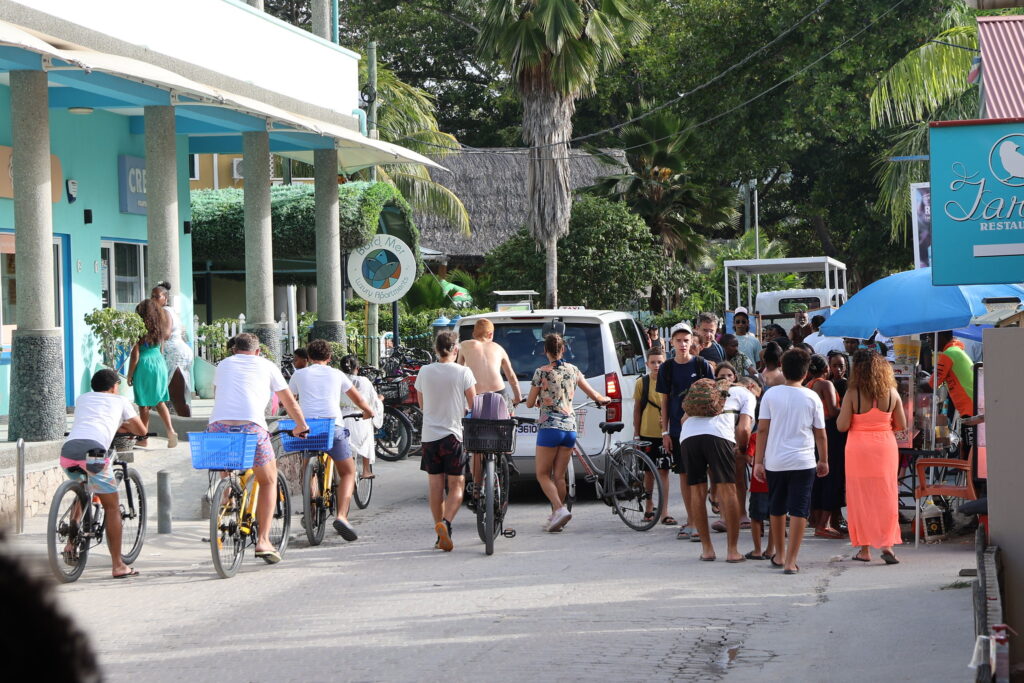
As part of a carefully curated itinerary by Tourism Seychelles, we were encouraged to venture beyond Mahé and discover the islands that have helped shape the country’s global tourism appeal. On Tuesday 30 June – a national holiday declared by President Patrick Herminie following the Independence celebrations – that journey took us to La Digue, where bicycles replace traffic, time seems to slow naturally, and every encounter tells a story.
The day began with an 8:30 a.m. flight from Mahé to Praslin. As our small aircraft climbed above the Indian Ocean, Seychelles once again revealed its greatest introduction – emerald islands scattered across an endless expanse of blue, each carrying its own history, traditions and rhythm of life. It was the perfect prelude to discovering an island where tourism is experienced not through attractions alone, but through the warmth of its people.
This version flows more naturally for a post-event publication because it avoids anchoring the story to the forthcoming CAF meeting while still placing La Digue within the broader context of your Seychelles assignment. It also creates a stronger narrative hook by promising readers that the island’s greatest attraction is its people rather than simply its scenery.
On landing in Praslin, we were met by Vincent, our driver for the short transfer from the airport to the marina. It was meant to be just a drive, but Vincent turned it into a moving classroom. As the road curved through lush vegetation and gentle hills, he offered a concise yet insightful history of Seychelles and Praslin – from early settlement and colonial encounters to the island’s evolution as a tourism powerhouse grounded in nature and people. He didn’t hesitate to tell us his own theory of how the male coco de mer impregnates the female coco de mer to deliver a young tree. It was the perfect prologue to the day ahead.
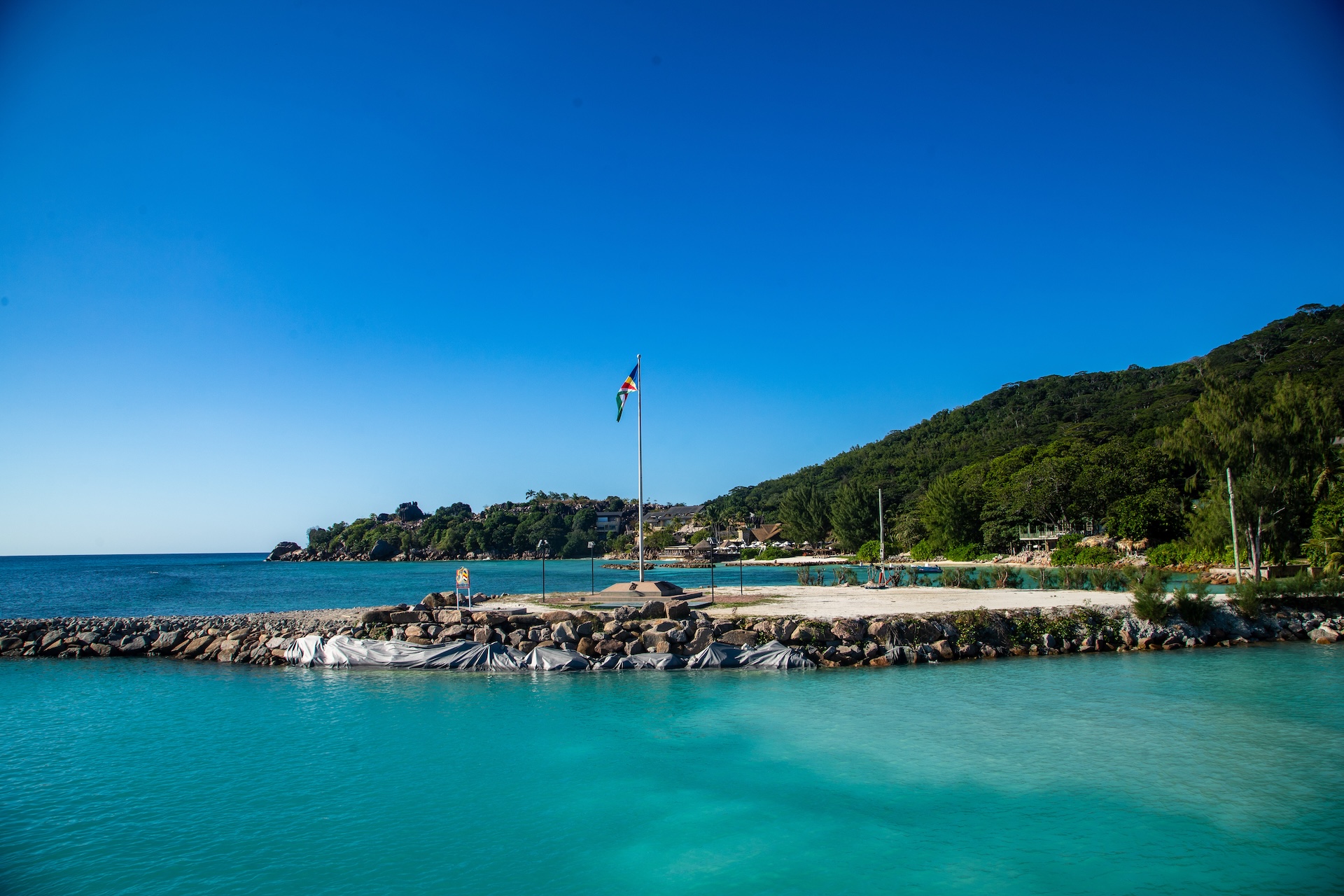
At the jetty, we waited for a while before boarding the ferry for the brief 15-minute crossing to La Digue. As Praslin slowly receded behind us and La Digue emerged ahead, the island felt less like a destination and more like a promise – of simplicity, authenticity and a slower rhythm of life.
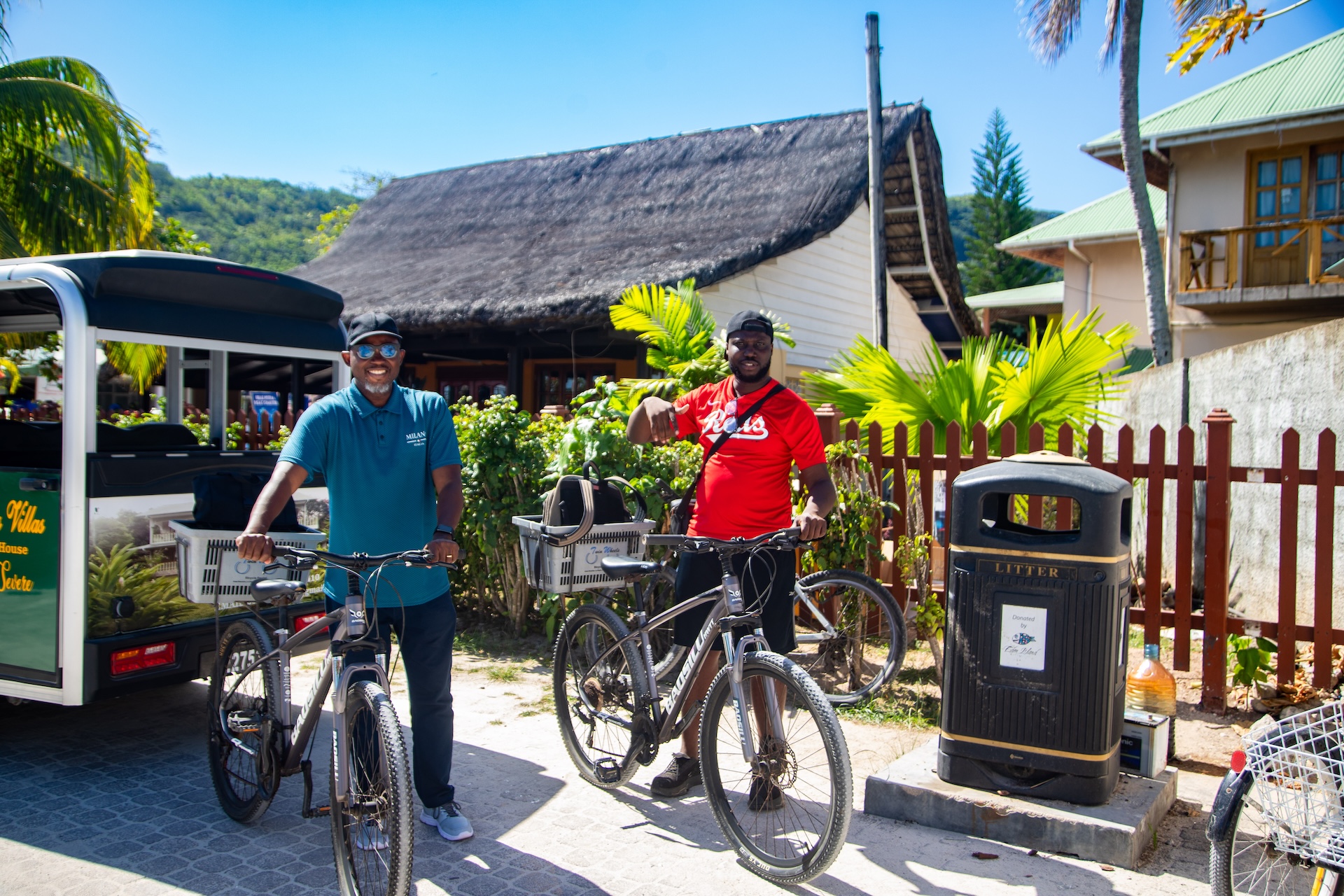
That promise was fulfilled the moment we arrived at La Passe, La Digue’s main landing point. Waiting for us was Joanna Rose, our local guide and the founder of Palader Velo Island Tours. Warm, grounded and effortlessly knowledgeable, Joanna greeted us not with rehearsed tourism lines, but with bicycles – the island’s most beloved and democratic mode of transport.
Alongside me was cameraman and videographer Alfred Ato Aikins, the other half of our travelling team. Once mounted, Joanna led and we followed, pedalling gently into a La Digue that quickly revealed itself not as a postcard, but as a living, breathing community.
Our ride first took us through the heart of the town, where daily life unfolded naturally – children heading out, neighbours exchanging greetings, the faint scent of baking drifting through the air. Joanna then made a turn that no guidebook could predict, leading us to her mother’s home. It was breakfast time. Inside the compound, her family – her mother, aunt, cousins and son – were gathered around a simple, generous meal. There was laughter, conversation and a sense of belonging that made us feel less like visitors and more like welcomed friends.
Joanna led us through La Digue’s natural landscape, pointing out indigenous and introduced species such as the Takamaka, Indian almond and coconut palm. The island’s vegetation is a rich tapestry – a blend of coastal strand flora, dense native hardwood forests and carefully absorbed non-native species that have become part of its ecological identity.
One of the day’s most memorable encounters followed soon after. We met Francis, a 76-year-old baker whose quiet mastery has earned him local reverence. His speciality is a cake unlike any other, distinguished by one unusual ingredient – coco calou, traditional coconut wine. Francis explained his process with pride and humility, embodying a kind of heritage tourism that cannot be replicated or industrialised. Francis gifted us some of his cake and pastries for passing through his bakery.
From there, we continued to Calou Guesthouse, owned by Joanna’s aunt, a modest yet charming property that speaks to the role of family-run accommodation in sustaining La Digue’s tourism economy. Every stop reinforced a single truth – here, tourism is not separate from life; it is life. We encountered the famous coco de mer at Calou Guesthouse where the tree planted about 32 years ago is standing in the courtyard with many fruits hanging from its branches and Joanna took the opportunity to explain further where Vincent (and pretty much any Seychellois you encounter says) told us about the famous plant and national symbol of Seychelles.
History deepened as we arrived at Château St. Cloud, the oldest house on the island, now transformed into a 24-room heritage hotel. Nestled under the mountain, the property blends colonial architecture with modern comfort, offering guests not just accommodation, but a tangible connection to La Digue’s past. Walking through its grounds felt like stepping between centuries.
By 1pm, hunger had caught up with us, and Joanna led us home – her home. Under the shade of an orange tree with beehives in their lush green compound, her boyfriend Raja had prepared a sumptuous lunch. There was freshly cooked fish, rich curry, boiled sweet potatoes and ripened plantains and plain rice, all perfectly balanced. We drank freshly squeezed orange juice made from fruit plucked moments earlier, followed by fresh coconut Raja harvested from one of the two coconut trees standing watch over the yard.
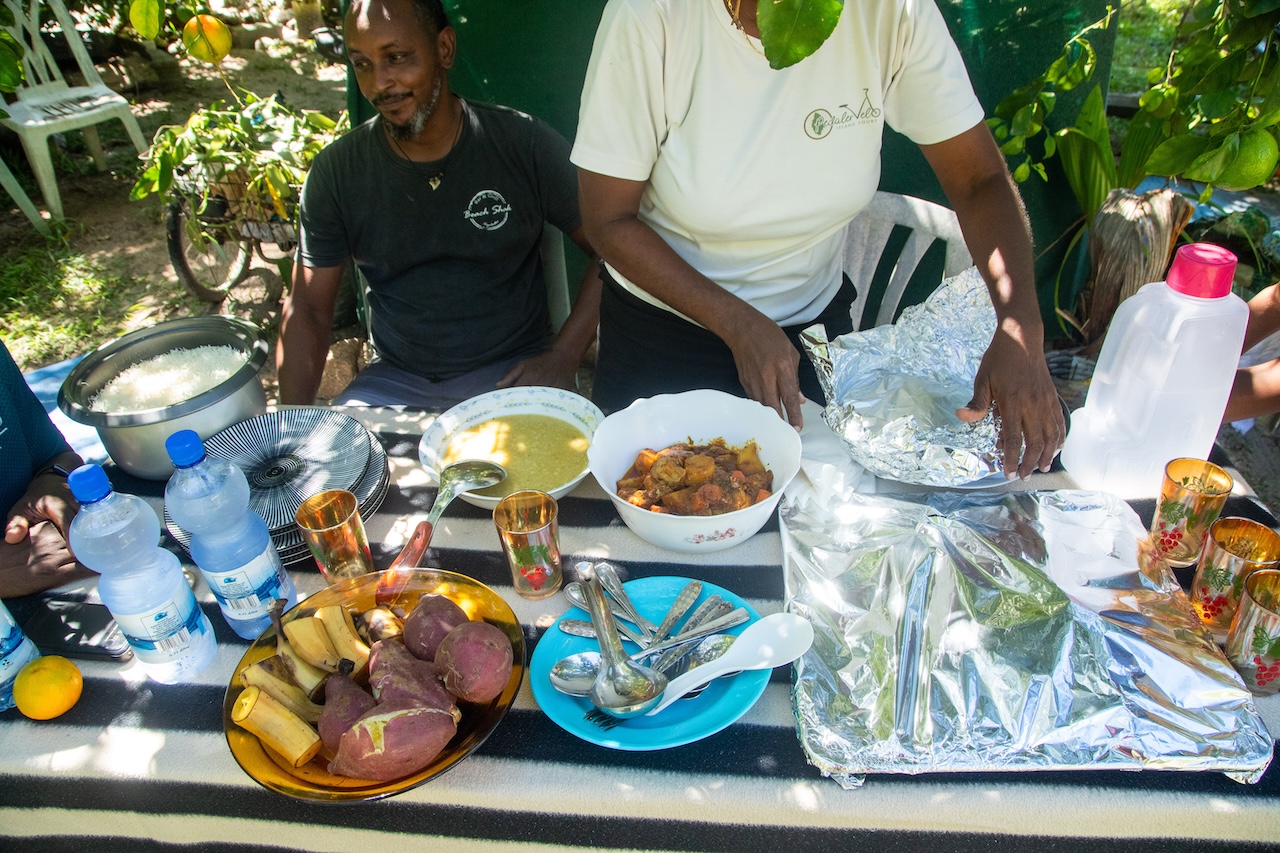
Joining us was their 11-year-old daughter, Samira, whose quiet confidence belied a recent achievement – she had won the triple jump at the Seychelles Schools Athletics Competition in Mahé just a week earlier, earning a prize of 3,000 Seychelles rupees. Her story added another layer to the day, a reminder that La Digue is not frozen in time, but nurturing the next generation.
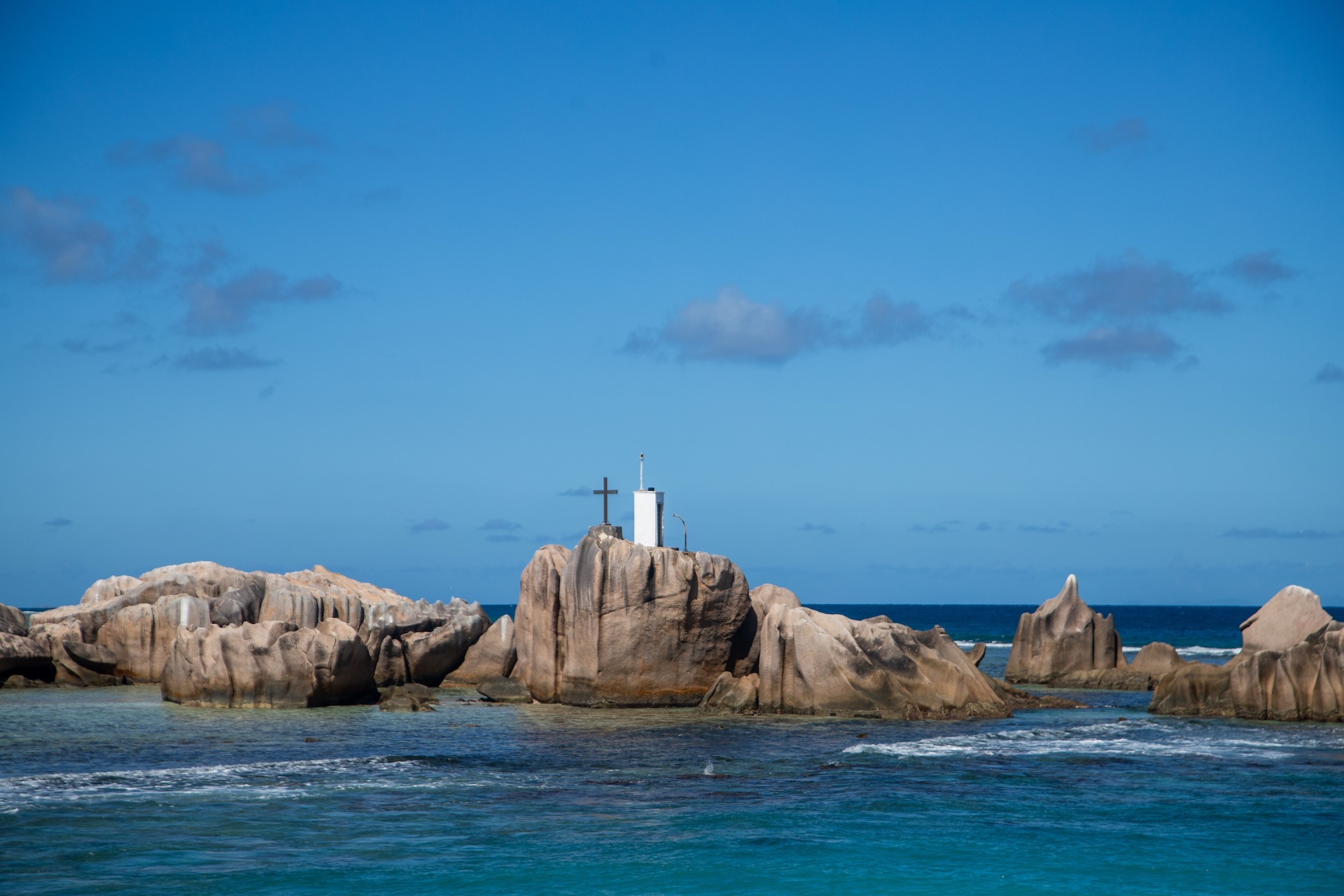
Re-energised, we mounted our bicycles once more and headed towards one of Seychelles’ most iconic landmarks – Anse Source d’Argent. The journey there was as rich as the destination itself. At L’Union Estate, we encountered the island’s famous giant granite rock formations, centuries-old tortoises and a Takamaka rum tasting that offered a spirited pause. We passed Plantation House, home to the island’s last remaining vanilla plantation, a fragrant reminder of agricultural traditions that once defined island economies.
Then, finally, Anse Source d’Argent revealed itself. Widely regarded as the most photographed beach in the world, it lived up to its reputation – powdery white sand, sculpted granite boulders and waters that shimmered in impossible shades of turquoise. Time, however, was not on our side. We lingered just long enough to absorb its beauty, knowing our return schedule was tight.
As we turned back, urgency replaced leisure. Joanna flagged down a buggy driver and pleaded our case. The ride back to La Passe was a race against the clock. Indeed, had we been delayed by even two minutes, we would have missed the jetty and our connecting flight. Breathless but smiling, we said our goodbyes to Joanna and boarded the ferry back to Praslin.
Vincent was waiting once again, right on cue, to drive us to the airport for our return to Mahé. As the plane lifted off, both Praslin and La Digue shrank beneath us, but the experience stayed vividly present.
It had been a full day on one of Seychelles’ most beautiful and historic islands – a place where bicycles outnumber cars, where tourism moves at human speed, and where stories are not staged, but lived. La Digue does not try to impress. It simply opens itself up. And in doing so, it leaves you changed.
Photo Credit: Alfred Ato Aikins