

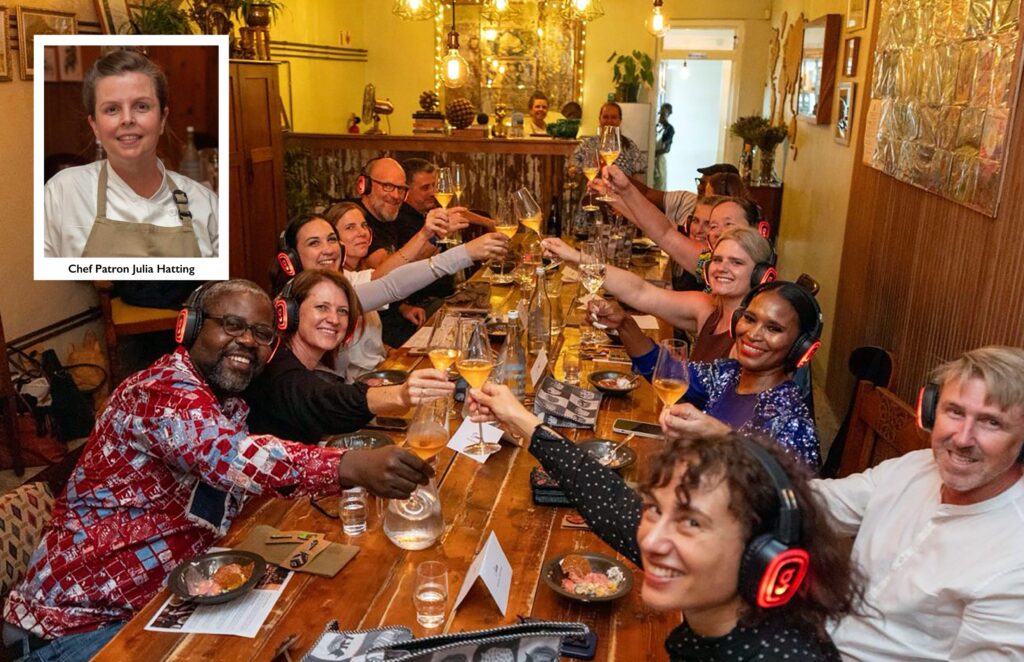
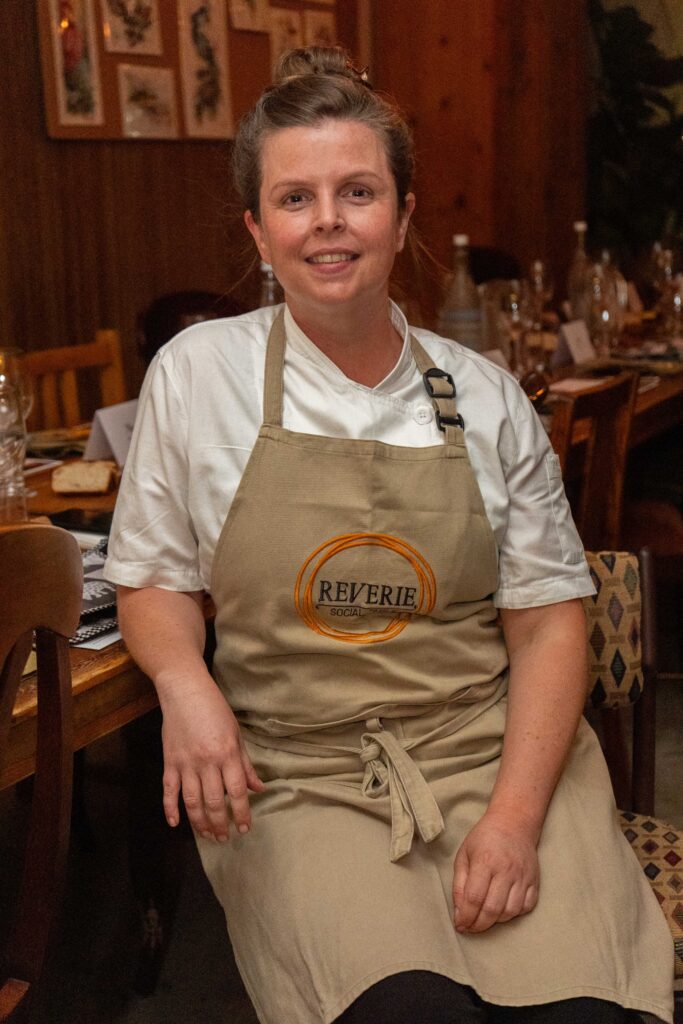
Chef Patron Julia Hattingh is redefining the restaurant experience at Reverie Social Table in Cape Town, South Africa, where shared tables, seasonal menus and conversation take precedence over conventional fine dining. Rather than focusing solely on food, Hattingh has built a concept that brings together strangers over a curated dining experience, creating a space where connection is as important as cuisine.
Founded more than a decade ago, Reverie Social Table has evolved from Hattingh’s ambition of opening her own restaurant into a hospitality concept centered on people, community and local producers. The restaurant hosts communal dinner parties where guests often arrive without knowing one another, the evening’s menu or the wines they will be served.
For Julia, the journey into hospitality began with a desire to pursue a different path from the corporate career her parents had envisioned.
“I was a fat kid and I loved to eat,” she recalls with characteristic humor. “Other than that, my parents wanted me to go into corporate and I desperately didn’t want to do that, so I decided to go into cooking instead.”
That decision eventually led her through chef school and into some of South Africa’s leading kitchens, where working alongside accomplished chefs deepened her passion for the profession.
Today, Reverie offers an experience that differs from the traditional restaurant model. Guests share a communal table, often meeting complete strangers while enjoying dishes that change frequently according to seasonal availability. Hattingh says the menu evolves by roughly one dish each week, while the accompanying wine selection changes every four to six weeks through partnerships with small wine estates.
The restaurant also works closely with independent producers, sourcing seasonal ingredients that reflect both locality and quality.
“You don’t know what you’re going to be eating, you don’t know what you’re going to be drinking, and it’s a dinner party,” Hattingh explains. “You can’t say that for many restaurants.”
While Cape Town has become internationally recognized for its vibrant culinary scene, Hattingh believes Reverie occupies a distinct space within the city’s hospitality landscape.
“Reverie is just something different,” she says. “Cape Town is known as a very clicky city, so we are trying to champion not being clicky.”
Supporting independent businesses has become another defining element of the restaurant’s philosophy. As larger hospitality groups continue expanding with multiple venues, Hattingh has deliberately maintained a smaller, more personal operation.
“There are a lot of big names in the business now that have multiple venues, so showing a more personalised approach and a personalised experience is important to us.”
At the heart of Reverie’s concept is the belief that dining can foster meaningful human connection.
“It’s the amazing people who choose to come,” Hattingh says. “It’s a conversation starter. It’s a place to connect with people from different walks of life and different cultures. In this day and age, it makes you a bigger person and a more fulfilled person just being able to connect with somebody who has a very different life from you.”
Over the past ten years, Hattingh says her vision for the restaurant has continued to evolve.
“Our ethos has definitely changed over the last ten years into something that I’m very proud of. It’s very much a focus on ingredients, a focus on people and a focus on community.”
She is equally clear about her ambitions for the business.
“It will never be a multi-million rand enterprise, and I’m quite happy with that, as long as the people coming in have an amazing experience and I’m able to support my team.”
Operating an independent restaurant in Cape Town, however, comes with significant challenges. Hattingh describes competition as “tough as nails”, pointing to the dominance of larger hospitality operators and what she views as an industry that still reflects elements of an “old boys’ club.”
She also acknowledges that Reverie’s concept is not immediately understood by every guest.
“Some people come in with a very incorrect impression of what it is that we do,” she says. “Most of the time it works really well. Sometimes you need to add a little bit more wine, and every now and then it doesn’t. That keeps us on our toes.”
Reverie’s approach reflects a broader movement within contemporary hospitality, where travellers increasingly seek authentic, locally rooted experiences rather than conventional dining. Across Africa, restaurants are becoming cultural spaces that celebrate local ingredients, showcase regional producers and create opportunities for genuine interaction between residents and visitors.
For destination cities such as Cape Town, concepts like Reverie contribute to the diversity of the visitor economy by offering experiences that extend beyond sightseeing. They encourage longer engagement with local culture while supporting independent suppliers, small wine estates and local food systems.
As culinary tourism continues to gain prominence across the continent, establishments that combine gastronomy with storytelling, community and cultural exchange are helping shape a more experience-driven visitor economy. Reverie Social Table demonstrates that, in an increasingly competitive restaurant sector, memorable hospitality can be defined as much by the people gathered around the table as by the meal itself.
This Article was published in the August 2026 edition of the VoyagesAfriq Travel Magazine