

Full-service mid-market hotels in Africa’s working cities, towns and trade hubs can make a strong investment case. The opportunity is easier to see when you start with the demand and the rate the market can support, rather than the building you want to develop.
Last month I sat on a panel at the Tourism Investment Forum Africa in New Orleans, where investors from the United States and further afield were considering where to put money into African tourism and hospitality. If I were one of them, I know where I would be looking. I shared my sentiments with them face to face.
I would be looking at a well-run, mid-market 3 star by South African standards, full-service hotel which looks like a 4 star hotel, of 80 to 150 rooms in a city where people travel because they have business to do. It isn’t the glamorous end of hospitality and it rarely generates investment headlines. Yet it is where I see some of the most dependable hotel demand on the continent.

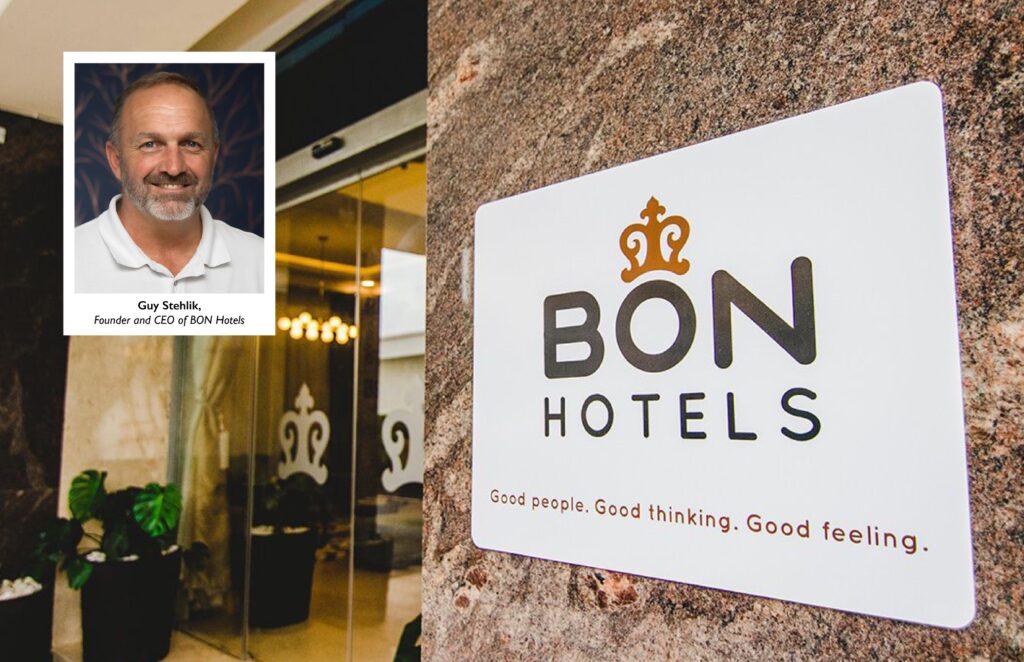
Guy Stehlik
The demand comes from fellow Africans travelling for a reason. Government work, sales work, infrastructure projects, regional business, cross-border trade, conferences and family occasions all put people on the road. I like that kind of demand because you are not hanging the hotel on one source of business. A project may end or government travel may dip, but there are always still other reasons bringing people into these cities, towns and trade routes all over Africa and keeping rooms occupied.
On paper, that should make for a bankable hotel.
This is where I think hotel owners and hotel developers here, get caught. The room may look affordable on paper, but the cost starts piling up long before the guest walks through the door.

In many African towns, the hotel ends up carrying some of the infrastructure around it as well. Developers may need to fund backup power and water storage. Equipment may need to be imported and paid for in foreign currency. Customs delays add cost, while slow municipal and various other approvals keep finance running before the hotel has earned a cent.
The guest is looking at the room rate in the context of the whole trip. At a minimum, they want a clean, comfortable room, reliable power, good internet, rate reliability, ability to pay online and service they can trust. Many will pay for that, but there is a point where the room no longer makes sense for the trip they are taking.
That leaves a narrow space between what the guest can pay and what the hotel can afford to cost. If the building is too large or the operating model too heavy, the required room rate starts moving beyond what the market can support.
This is where projects can drift away from the demand they were meant to serve. The development starts with the site, the size of the building or the product the owner wants to create. By the time the numbers are tested, the hotel may already need a rate that the original market will not carry. These African hotel projects often hit the road long before a market analysis and hotel operators’ involvement takes place.
It could then be reasonable and easy then to conclude that the mid-market opportunity is weak. I would question that. The demand may be there; the hotel may simply have been designed at the wrong cost.
I would start with the rate the market can sustain and work backwards. That tells you how much hotel you can afford to build and run, how many rooms make sense and what the food, meeting and staffing model should look like.
Bring the operator in super early or at least while you can still change things.
An experienced operator can test the room mix against the demand already in the market, work through the operating cost and plan for the realities of that market before those decisions are fixed.
Once the building is nearly complete, there is only so much anyone can change. An oversized kitchen stays oversized. A layout that needs more staff on every shift keeps costing money. The wrong room mix sits there for years.
The owner carries those decisions long after the development team has moved on.
The hotel that comes out of that process may be smaller than the one originally imagined. I would take that every time if it is easier to operate, easier to keep full and built around a rate the market can sustain.
Keeping operating costs under control also means reducing unnecessary dependence on imported staff, expats and suppliers. Local management can cut the cost and complexity of expatriate roles, while local procurement reduces exposure to foreign currency and customs delays.
At BON Hotels, most of our general managers in West Africa are now West African, and we test local suppliers before importing. That gives us local knowledge in the operation and keeps more of the cost base within the market.
I am also cautious when people describe whole countries as the next hotel hotspot. Demand does not work like that. It gathers around particular towns and commercial corridors.
I want to know what is already bringing people there. It could be mining or agriculture. It could be a port, a university or a major project nearby. Government activity can do the same. The hotel could also just be the first hotel to be built in a location which needs one. Then I want to know whether access is improving and what those travellers find when they arrive.
Sometimes that calls for a new hotel. Elsewhere, an existing property may be a better use of capital if it can be converted or turned around.
I also like markets that connect to one another. If the same companies are sending people between those cities, you are not starting from scratch every time. It is thus great for us to be able to have our hotels sitting squarely on these business “circuits”.
A hotel group present in several of those markets can carry corporate relationships across properties and share reservations, oversight, common services, sales, marketing or revenue management. There is more chance of repeat business and less need to keep paying a third party to bring the same customer back.
In the mid-market hotel space in Africa, there is less room to carry cost that does not earn its keep.
Of course, there is only so much an operator can fix. Investors still need clear title deeds and workable approvals. They still need well located, reliably accessed hotels not to mention foreign-exchange arrangements that allow the business to function. Governments and municipalities have a real role in getting those basics right because the hotel eventually carries the cost when they are not.
Intra-African trade accounted for about 18% of Africa’s total trade in 2025, according to Afreximbank. More than 77% of South Africa’s international tourist arrivals that year came from elsewhere in Africa, driven largely by neighbouring SADC markets.
For me, that is the point investors should be looking at. Those figures will not tell you whether a city needs 80 rooms or 150, but they do show how much economic activity is already moving people between African markets.
We still spend a great deal of time looking at African hotel demand through the arrivals hall and talking about who is flying in from Europe, America or Asia. That is only part of the picture.
If I were putting capital into a hotel in Africa, I would follow that movement very closely. Where are people travelling because there is business to be done? What are they being offered when they arrive? Is the hotel built for the market that is actually there?
I think there are a lot of places where the answer to that last question is still no. That is where I would be looking.
Guy Stehlik is Founder and CEO of BON Hotels and was a speaker at the recent Tourism Investment Forum Africa in New Orleans.