
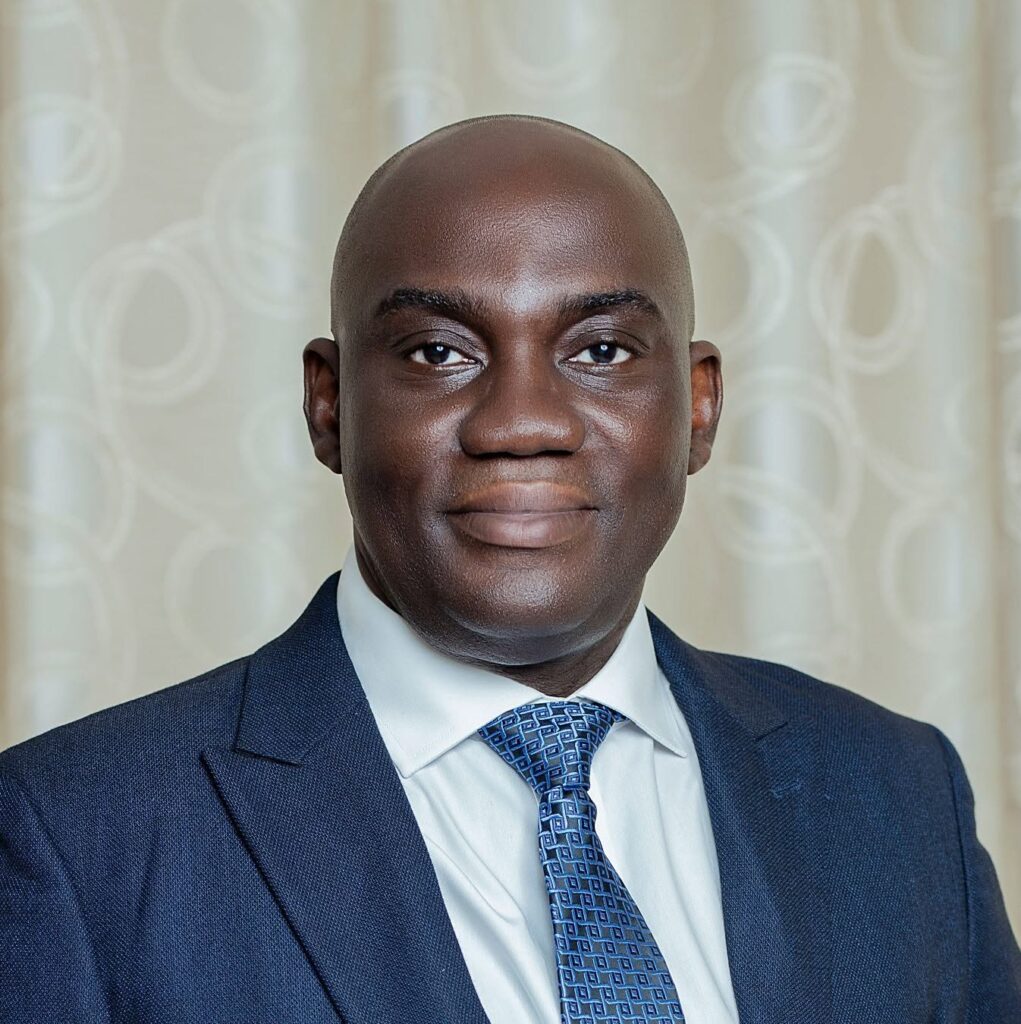
Ghana’s tourism industry must place greater emphasis on domestic tourism as it seeks a new path to sustainable growth, with tour operators taking a leading role in shaping the sector’s future, Vice Chancellor of Cape Coast Technical University, Prof. Kwaku Boakye, has said.
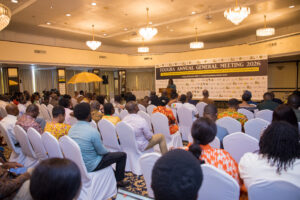
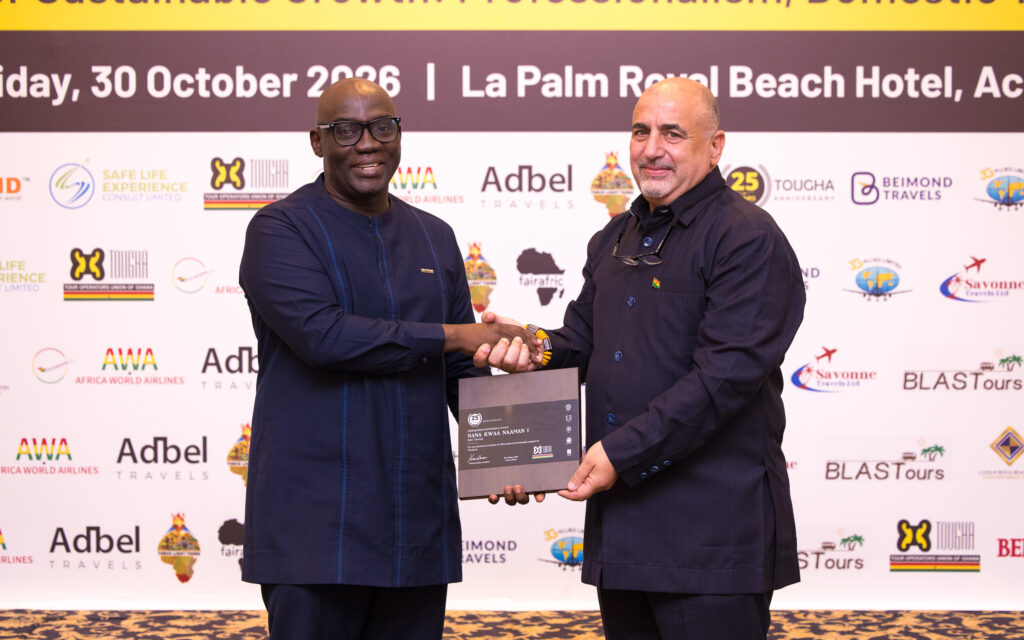
Delivering the keynote address at the 2026 Annual General Meeting (AGM) of the Tour Operators Union of Ghana (TOUGHA) at the La Palm Royal Beach Hotel in Accra on October 30, Prof. Boakye argued that while Ghana has made efforts to attract international visitors, the domestic market presents a significant opportunity that the industry must increasingly harness.
Speaking on the theme, “Transforming Tour Operations for Sustainable Growth: Professionalism, Domestic Tourism and Artificial Intelligence,” he described Ghana’s tourism sector as experiencing two contrasting realities: relatively slow growth in international arrivals and an increasingly promising domestic tourism market.
Citing Ghana Statistical Service figures, Prof. Boakye noted that approximately 15 million domestic tourism trips were undertaken in 2023, generating an estimated GH₵6.6 billion in expenditure.
He attributed the growth in domestic tourism to an expanding middle class with greater spending power, changing family values that are driving demand for leisure and recreation, and increased private sector investment in tourism attractions.
According to him, these developments present an opportunity for the industry to rethink its priorities and build a more resilient tourism economy by placing domestic tourism at the centre of its growth strategy.
“The future of Ghana’s tourism is domestic, not international, and that future lies with the tour operator,” he declared.
He explained that tour operators occupy a strategic position in the tourism value chain as wholesalers and offtakers of tourism products, including attraction sites. Their ability to package, promote and distribute these products makes them particularly important to the development of domestic tourism.
Prof. Boakye commended TOUGHA for recognising this potential and championing domestic tourism for more than 35 years, urging the association to strengthen its leadership role as Ghana enters what he described as the next phase of its tourism development.
Sustainability must go beyond business growth
Addressing the sustainability component of the theme, Prof. Boakye cautioned that business growth should not be measured solely by increased revenue or expansion, but also by the ability of enterprises to survive, adapt and remain relevant over time.
He observed that many businesses in Ghana have struggled to survive beyond the departure or passing of their founders, underscoring the need for stronger institutional structures and long-term business planning.
For tour operators, he said, sustainable growth should encompass increased business and revenue, reinvestment in operations, environmental conservation, and continuous investment in human capital.
He stressed the importance of recruiting quality personnel and equipping them with the skills needed to respond to changing consumer preferences and market demands.
Beyond the individual business, he proposed that TOUGHA consider adopting selected tourism host communities and supporting their developmental needs.
Such an initiative, he explained, would help communities better understand the relationship between tourism and their livelihoods, encourage greater local support for tourism businesses and strengthen the association’s standing within the communities where its members operate.
TOUGHA challenged to make professionalism its defining strength
A significant part of Prof. Boakye’s address focused on the need for TOUGHA to deepen professionalism and demonstrate greater value to its members and the wider tourism industry.
He outlined several elements he believes should underpin a more professional tour operating sector, including the establishment of industry standards, active membership participation, peer review, research and development, and certification.
However, he argued that professionalism must extend beyond internal organisational processes to include greater societal recognition and the ability to influence tourism policy through credible, consistent and evidence-based advocacy.
He challenged TOUGHA to develop a strong, data-driven voice on matters affecting the industry, pointing out that an association’s influence should not emerge only when problems arise.
As an example, he proposed that the Union consider publishing quarterly or annual reports on the state of tourism attractions across Ghana.
Given that tour operators are among the most frequent users of the country’s tourism sites, he believes the association is well-positioned to provide practical assessments of their conditions, operational challenges and service standards.
He argued that such reports, if scientifically conducted, could provide policymakers with valuable industry intelligence and strengthen TOUGHA’s influence in national tourism discussions.
Prof. Boakye further observed that the private sector enjoys significant recognition within Ghana’s tourism governance arrangements, including representation on various boards and the Public-Private Partnership Forum (PPPF), as provided for under the Tourism Act, 2011 (Act 817).
He encouraged the association to recognise the influence it already possesses and deploy it strategically for the benefit of its members and the country’s tourism industry.
Membership must offer tangible economic value
In one of his more pointed observations, Prof. Boakye challenged TOUGHA to rethink how it attracts and retains members.
He noted that several tour operators continue to operate outside the association and argued that the solution should not be to lobby government to make membership compulsory.
Instead, TOUGHA must become so beneficial and attractive that tour operators would voluntarily consider membership essential to their business success.
He referenced a 2015 study by Abanga, which found no significant difference between the annual revenues of tour operators who belonged to TOUGHA and those who did not.
The findings, he suggested, raised an important question about the economic value of association membership and whether the situation had changed over the subsequent 11 years.
For Prof. Boakye, the priority should be to create an association that delivers measurable benefits through professional development, research, business support, industry intelligence and improved opportunities for its members.
He maintained that investment in research and development would be more valuable to the association’s long-term transformation than an excessive pursuit of recognition from tourism authorities, particularly where such recognition may not translate into meaningful benefits for members.
Artificial intelligence offers opportunities but demands caution
Turning to artificial intelligence, Prof. Boakye acknowledged its growing relevance to tour operations, highlighting its potential to improve efficiency, customer engagement, product development and marketing.
He explained that AI-powered systems could help tour operators identify suitable target markets, communicate more effectively with clients, package tourism products and identify competitive rates for accommodation, transportation and other services.
However, he cautioned against excessive dependence on technology, warning that the growing capabilities of AI also present risks that businesses must take seriously.
He distinguished between earlier forms of artificial intelligence and the more recent development of generative AI, which has expanded the capacity of machines to produce content, process information and undertake increasingly complex tasks.
Referring to recent reports of AI-related security incidents and cyberattacks, he expressed concern about the possibility of increasingly autonomous systems operating beyond the control intended by their human operators.
His advice to tour operators was to embrace AI while maintaining appropriate human oversight and retaining manual alternatives for critical business operations.
“The Tour Operator is one of the jobs that AI cannot easily replace because tourism is still essentially a skill-based, people-centred profession,” he said.
The message was clear: technology should strengthen the tour operator’s capabilities rather than eliminate the human relationships, judgement and personal experiences that define the tourism business.
Calls for stronger government-industry collaboration
Prof. Boakye also called on government to intensify its support for tourism development through regulatory, financial and technical interventions that address the challenges facing industry stakeholders.
He expressed concern that the Public-Private Partnership Forum had not convened in recent times, despite the importance of sustained engagement between government and private sector operators.
He noted that industry players continue to encounter several challenges that contribute to an unfriendly business environment and stressed the need for a more functional platform through which such concerns could be addressed.
For him, effective collaboration between government and the private sector remains essential to creating the conditions necessary for tour operators and other tourism businesses to thrive.
Tourism deserves a stronger voice in the media
The media also came under consideration, with Prof. Boakye appealing for a more deliberate approach to tourism coverage and its positioning within the broader media landscape.
While acknowledging the media’s contribution to promoting the industry, he questioned the tendency to place tourism discussions predominantly within entertainment programming.
He argued that although tourism and entertainment intersect in many ways, they are distinct sectors, and tourism deserves dedicated platforms that reflect its economic importance, complexity and wider developmental implications.
According to him, treating tourism primarily as an entertainment subject risks limiting public understanding of the sector’s contribution to the economy and the science, research and professional practice that underpin it.
He recalled that Joy FM had a dedicated tourism programme in the early 2000s, suggesting that the reintroduction of similar platforms could provide greater depth and consistency in tourism reporting.
Academics urged to bridge the industry knowledge gap
Prof. Boakye concluded his stakeholder appeals with a call for stronger collaboration between academia and tourism practitioners.
He challenged academics to engage more directly with industry players, arguing that theoretical knowledge becomes more meaningful when tested and refined through practical experience.
Similarly, he said, industry practitioners must recognise the value of academic research and expertise in improving professional practice and addressing operational challenges.
He cautioned against the traditional separation between academia and industry, stressing that both depend on each other for their continued relevance and survival.
“Industry needs our knowledge and we need their experience,” he said, adding that the two sectors must move beyond perceived superiority or inferiority and develop mutually beneficial relationships.
TOUGHA’s role in Ghana’s next tourism chapter
Prof. Boakye’s address was also underpinned by his longstanding relationship with TOUGHA, which dates back to the late 1990s when the association first collaborated with the then Department of Geography and Tourism at the University of Cape Coast.
He subsequently participated in further academic collaborations with the Union, including a capacity-building initiative for members, and has served on its advisory council, in addition to contributing to mediation and advisory efforts.
Describing himself as a special friend of the association, he commended its contribution to Ghana’s tourism development and expressed confidence in its ability to lead the sector into a new phase.
He nevertheless acknowledged that the Union had experienced challenges over the years and expressed hope that outstanding issues would be resolved to enable it to reclaim its position as an influential and indispensable player in Ghana’s tourism architecture.