

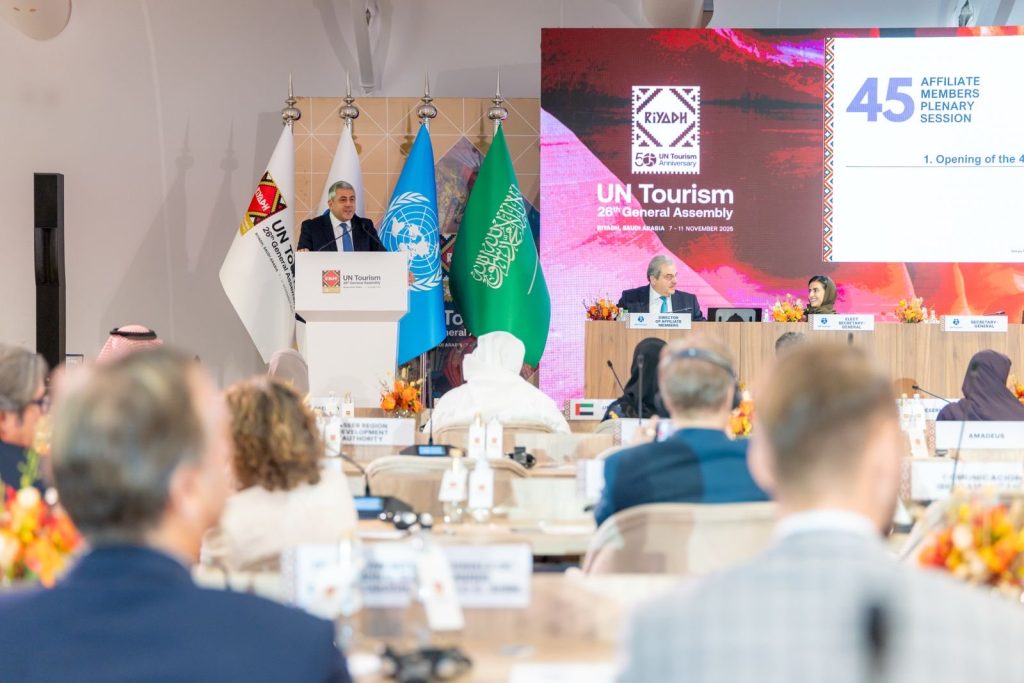
The 26th UN Tourism General Assembly opened in Riyadh with a structured series of technical and policy-driven sessions that set a clear foundation for the week’s multilateral deliberations. Convening from 7 to 11 November 2025, the first day brought together member states, affiliate partners, and institutional representatives for a programme centered on governance, competitiveness, climate action, and organizational planning.
A central moment of the day was the 45th Plenary Session of the Affiliate Members, where UN Tourism Secretary-General Zurab Pololikashvili reaffirmed the growing importance of the Affiliate Membership network. He noted that the network now comprises 500 members across more than 80 countries, stating, “The Affiliate Membership is one of the defining features of our Organization.” Reflecting on progress made since the previous General Assembly, he highlighted the impact of the 2021 Legal Reform, explaining that it strengthened the network and improved alignment with UN Tourism’s strategic direction. He also underscored the improved regional balance, noting increased participation from the Middle East and Africa, which, in his words, “confirms that our outreach strategy is working.”
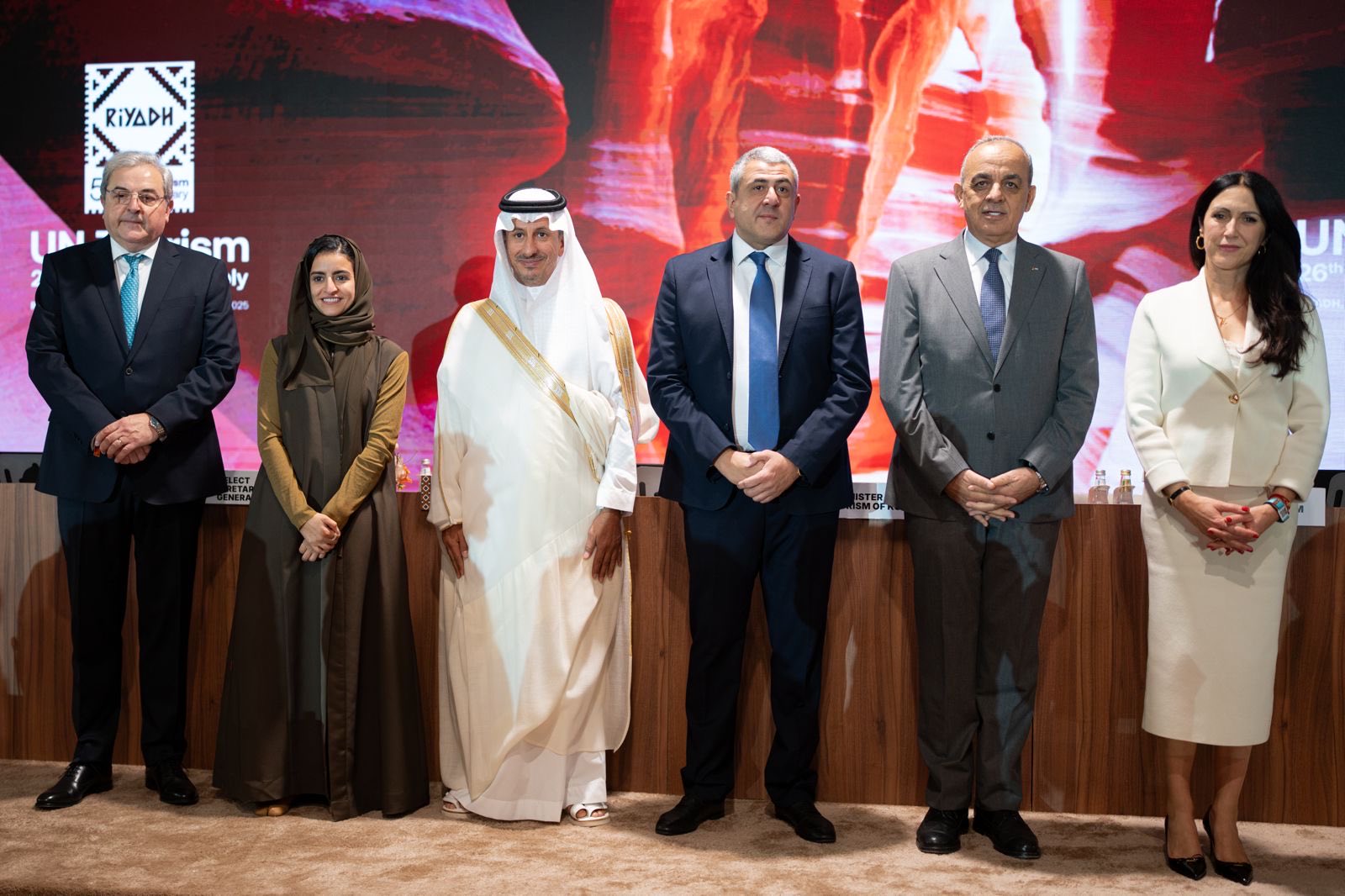
The host and Minister of Tourism for the Kingdom of Saudi Arabia, Ahmed Al Khateeb, welcomed delegates to Riyadh and underscored the critical role of the private sector in developing the tourism industry. ‘’ I am honored to address the 45th Plenary Session of UN Tourism’s Affiliate Members — “a powerful platform uniting public and private sectors to turn ideas into action and ensure tourism continues to be a force for good worldwide.” The Minister said.
Minister Al Khateeb highlighted that “the true value of tourism lies in its ability to create opportunities, empower communities, and connect cultures.” He added that the Kingdom looks forward to hosting and organizing a gathering that will redefine global collaboration in tourism and expand its positive impact across other sectors.
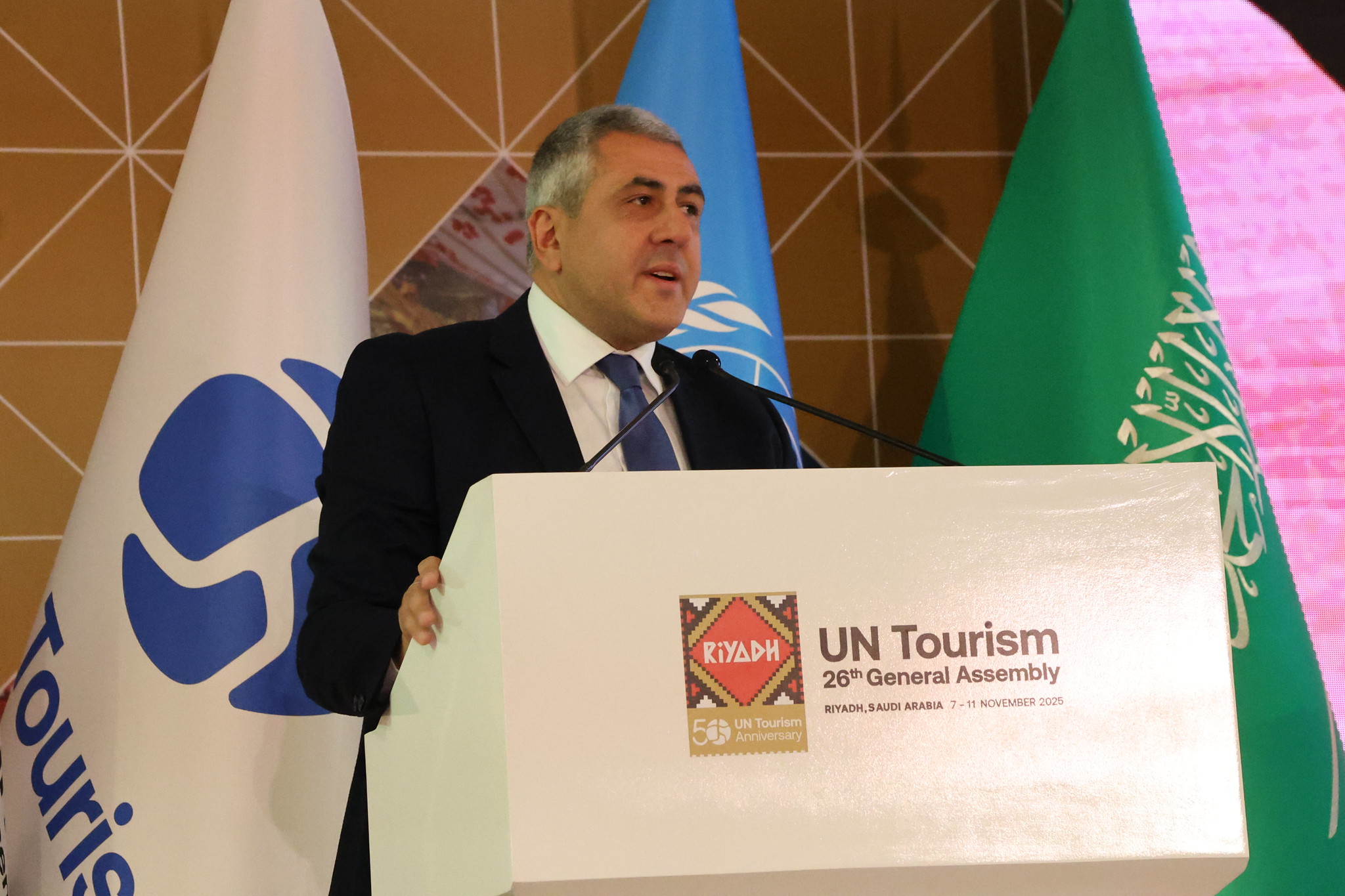
UN Tourism Secretary General Zurab Pololikashvili
Secretary-General Elect Shaikha Nasser Al Nowais commended the Affiliate Members for their long-standing contributions and active engagement. She emphasized the value of continuous dialogue, noting that the collective work of affiliates has strengthened the organization’s agenda and supported meaningful execution across global initiatives. She thanked members for their commitment over the years and remarked that their presence in Riyadh reflects the importance of maintaining collaborative momentum as UN Tourism advances its shared priorities.
The Committee on Tourism and Competitiveness led early discussions, with delegates examining performance indicators, policy alignment, and strategies designed to enhance global tourism competitiveness. The session underscored the need for coherent frameworks that support market resilience and enable destinations to respond effectively to evolving demand patterns.
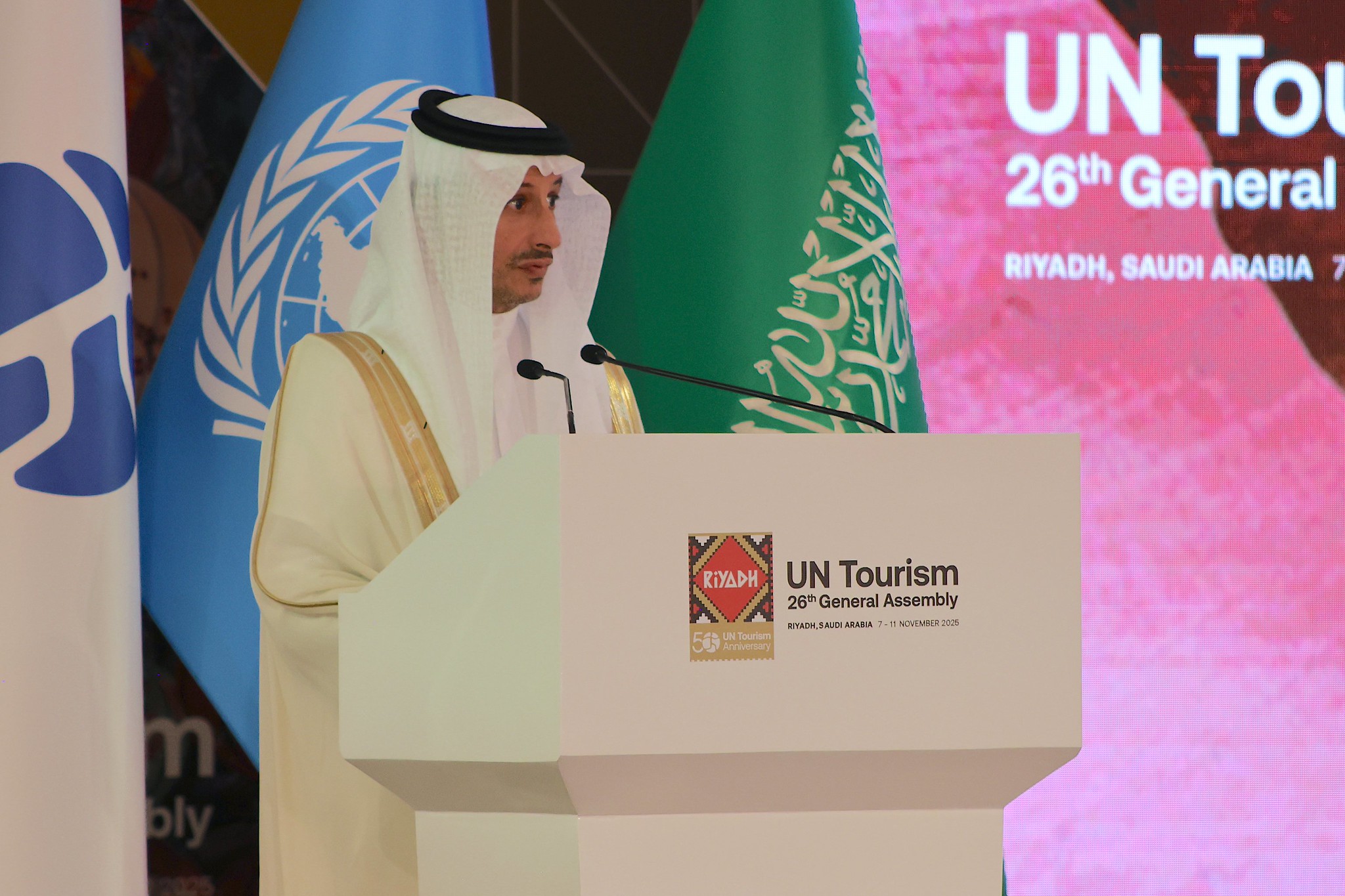
Ahmed Al-Khateeb, Minister of Tourism, Kingdom of Saudi Arabia
Parallel to this, the first meeting of the Inter-institutional Working Group on Tourism and Climate Action addressed coordinated approaches to climate resilience and sector-wide decarbonization. The working group explored the mechanisms required to align national commitments, industry capabilities, and global climate objectives, reflecting the increasing urgency of climate-linked action across the tourism value chain.
Financial governance took center stage as the Programme and Budget Committee convened to review resource allocation, organizational priorities, and financial planning for the next cycle. The committee examined proposals aimed at strengthening the organization’s operational structures and ensuring that budgetary decisions support long-term institutional mandates.
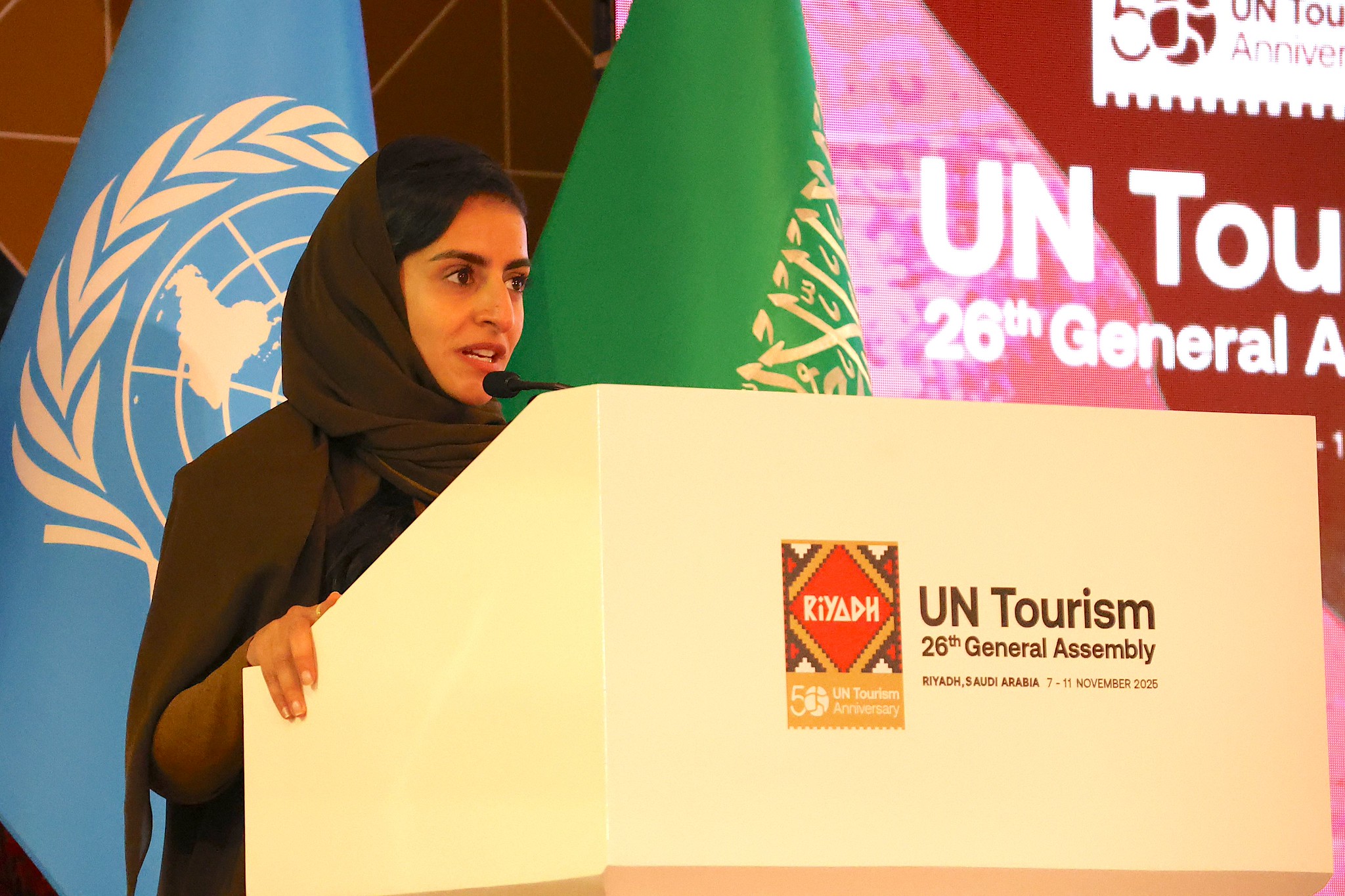
Secretary-General Elect Shaikha Nasser Al Nowais
The 45th Affiliate Plenary also formed a major component of the opening day’s programme, bringing together affiliated partners from across the tourism ecosystem. Building on this collaboration, Pololikashvili commended the network’s growing contributions to UN Tourism’s Programme of Work. He referenced notable achievements driven by Affiliate Members, including advances in sports tourism and the successful delivery of three editions of the World Sports Tourism Congress. He also pointed to new areas of innovation, highlighting the launch of the first UN Tourism publication on Artificial Intelligence, developed with leading Affiliate Members, adding, “Across culture, gastronomy, aviation, education, sustainability, accessibility, investments, and digitalization, our Affiliate Members remain a source of expertise and practical knowledge.”
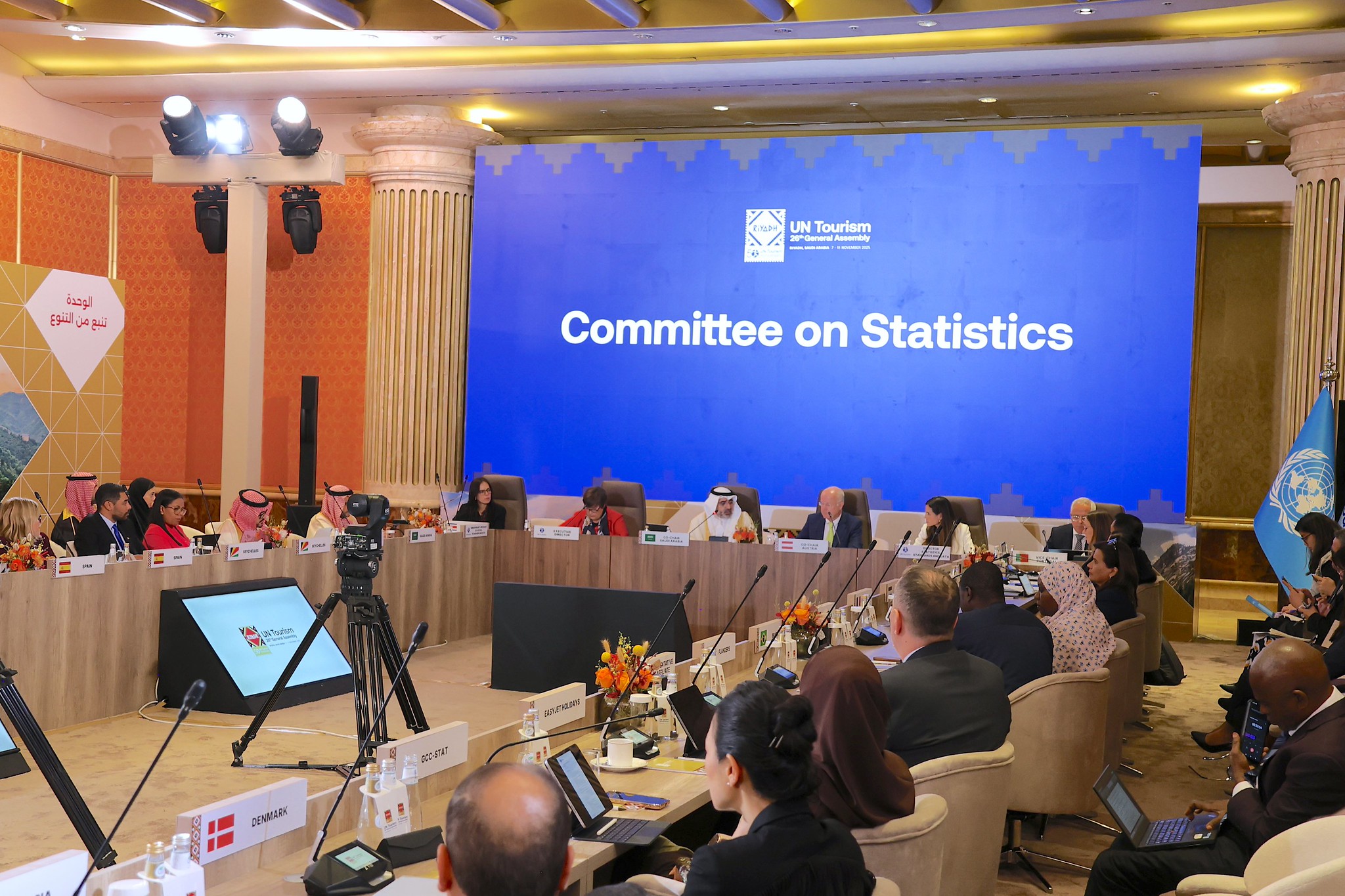
Collectively, the sessions of Day 1 demonstrated a disciplined approach to the Assembly’s core mandate, combining technical dialogue with governance-oriented decision-making. The opening day concluded with a clear trajectory for the deliberations ahead, reinforcing the Assembly’s role as the principal platform for shaping coordinated global tourism policy.
The General Assembly continues today with technical and closed-door sessions. The key highlights include the 124th Executive Council Meeting and the UN Tourism Tech Adventure: Grand Final of the UN Tourism Artificial Intelligence Challenge. The day’s activities will conclude with a welcome dinner.
As the principal gathering of UN Tourism, the General Assembly serves as a platform for dialogue focused on securing a brighter and more sustainable future for the global tourism industry, while shaping the direction of the sector for the next 50 years.