
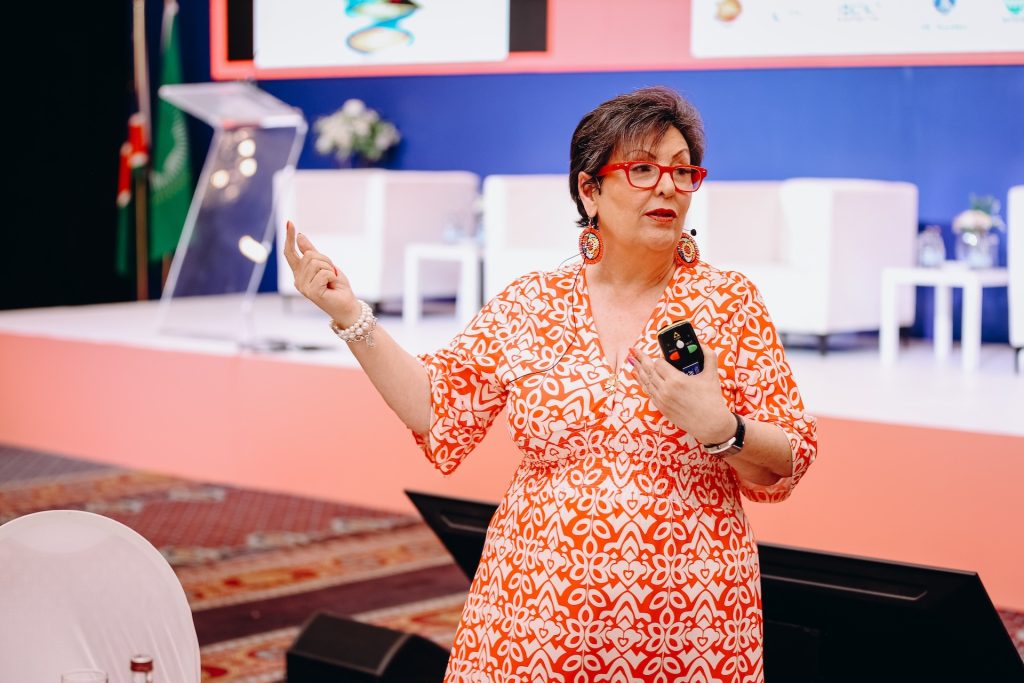
By Linda Pereira
After four decades in the global MICE industry, I’ve seen firsthand how meetings, incentives, conferences, and exhibitions can shape entire economies—when done right. And I can tell you with certainty: Africa is at a pivotal moment. The continent is beginning to realise that MICE isn’t just a niche add-on to leisure tourism, it’s a powerful lever for investment, job creation, knowledge transfer, and long-term economic transformation.
In 2023, Africa’s MICE sector was valued at around US$16.6 billion, with forecasts predicting rapid growth to nearly US$65.6 billion by 2032. That’s an extraordinary compound annual growth rate of over 16%. It tells us one thing very clearly: the potential is real, and the momentum is building.
Some countries are already leading the charge. South Africa remains the continent’s most mature MICE destination, and for good reason. It has the infrastructure, the international connectivity, the professional experience, and a broad economic base that supports and sustains the sector. Rwanda, in particular, has been a standout in recent years. With a purpose-built convention centre, a proactive convention bureau, government support, and strong safety and accessibility credentials, Kigali has become one of Africa’s go-to destinations for association meetings.
Others are making commendable progress. Kenya, Ethiopia, Ghana, and Zambia are actively developing national strategies, investing in venues, improving their policy environments, and looking at MICE through a broader economic lens. But in many parts of the continent, the sector remains fragmented, under-resourced, and lacking the coordination and institutional muscle to really take off.
And that’s a missed opportunity. Because MICE is about far more than bringing in visitors and filling up hotel rooms. When it’s done well, it has a multiplier effect,rippling out through investment, jobs, education, and even diplomacy. Let me break that down.
MICE is about global connections, local impact. When a major international conference or trade show lands in an African city, it brings with it decision-makers, investors, NGOs, tech innovators, and multinationals. These events become more than networking platforms, they’re gateways to inward investment, joint ventures, export opportunities, and regional integration, especially under frameworks like the African Continental Free Trade Area (AfCFTA).
MICE is also about jobs and economic spillovers. It is a labour-intensive sector, with demand stretching across hospitality, logistics, security, technology, transport, marketing, catering, and more. Crucially, it also supports a wide range of small businesses, from florists and entertainers to artisans and translators. For many cities, it can provide a reliable year-round economic boost that smooths out the seasonality of leisure tourism.
Here’s where I believe the deepest impact lies. MICE builds human capital. To host successful events, you need skilled professionals in everything from event planning to AV tech to sustainability. And as countries invest in this sector, they inevitably invest in skills development, educational reform, institutional strengthening, and service excellence. MICE becomes not just a revenue generator but a catalyst for human capacity building.
However In Africa I see glimmers of progress… and gaps that need closing. There are promising signs. Zambia, for example, has conducted a comprehensive national study titled “Harnessing MICE for Tourism Sector Growth”, a critical step in identifying gaps and mapping the way forward. Ethiopia has established a national convention bureau and is integrating MICE into broader tourism and economic planning. South Africa, already a leader, continues to refine its competitive edge through investment in marketing, visa reform, and infrastructure.
Moreover, we now have clearer insights into what’s working, and what’s not, thanks to research such as the African Perspectives on the MICE Industry 2024/25 report. It benchmarks national strategies, assesses the maturity of convention bureaus, flags institutional gaps, and stresses the importance of diversifying source markets, especially by growing intra-African MICE traffic.
But the challenges remain, and they’re significant. Many countries still lack a coherent national MICE strategy. Even when strategies do exist, they often suffer from underfunding, lack of continuity (as government administrations change), or weak implementation capacity. Too many venues remain underutilized because supporting infrastructure, flights, transport, visas, digital access, are just not up to par.
There’s also an overreliance on traditional markets in Europe and North America. That makes the sector highly vulnerable to global disruptions, be it pandemics, geopolitical tensions, or economic slowdowns. Meanwhile, intra-African demand remains a largely untapped opportunity.
And let’s not forget education and training. In too many countries, we still lack dedicated programmes in event management, technical production, sustainability, and service excellence. The result? Even where infrastructure exists, it’s often underused or poorly maintained, not due to lack of will, but lack of skills.
Here’s something I feel strongly about: Africa must not try to replicate the MICE models of Europe, Asia, or North America wholesale.
I’ve worked on projects in Dubai, Singapore, and Frankfurt and while these cities are remarkable in their own right, their models are rooted in very specific political, financial, and infrastructural contexts. What works in Singapore may be unfeasible, or even harmful, if applied uncritically to, say, Accra or Lusaka.
Instead, African countries must craft locally grounded strategies—ones that respect their cultural assets, environmental realities, cost structures, and human capital. African destinations offer something deeply unique: authenticity. Cultural heritage, natural beauty, community stories, and creative industries can and should be embedded into the MICE offering. Sterile convention centres and generic packages won’t stand out. Locally-rooted experiences will.
And let’s not forget sustainability. Climate change, biodiversity loss, and community livelihoods are not peripheral issues in Africa—they’re central. MICE development must be environmentally sound, socially inclusive, and economically equitable. Otherwise, we risk short-term wins at the expense of long-term damage.
What Must Happen Next? I identify seven urgent Priorities. To truly harness the transformative power of MICE, African governments and their partners in education and business need to act decisively. Here’s where I believe the focus should be:
Develop Coherent National MICE Strategies. With long-term vision, cross-ministry alignment (tourism, trade, transport, education), and resilience beyond political cycles.

Strengthen Convention Bureaus. Build capable, professional teams with real budgets, authority, and autonomy. These aren’t just marketing bodies,they’re ecosystem enablers.
Invest in Holistic Infrastructure. Not just buildings, but air connectivity, local transport, visa systems, digital infrastructure, safety standards, and service quality.
Create Tailored Education & Training Programmes.Through universities, technical colleges, and private partnerships. Event management, hospitality, conferencing tech, project management, all need attention.
Focus on Local Strengths and Intra-African Markets. African countries must learn to market to each other. And they must build MICE offerings rooted in their own culture, nature, and history, not someone else’s blueprint.
Build Data and Evaluation Systems. Collect and analyse real data, on attendance, spend, outcomes, infrastructure use. Benchmark performance. Use it to improve and attract investment.
Embed Sustainability and Social Inclusion. Ensure the sector delivers jobs for youth and women, supports local SMEs, and treads lightly on the environment. This isn’t a luxury, it’s a necessity.
After 40 years in this industry, I can say with confidence that MICE has the potential to be one of Africa’s strongest levers for development. It brings global visibility, builds institutions, develops skills, and creates livelihoods that touch all levels of society.
But that will only happen if we stop treating MICE as an afterthought, and start treating it as a strategic pillar of economic policy, education planning, and international engagement.
Africa doesn’t need to copy the world. It needs to lead with its own story. With vision, professionalism, and commitment, MICE can be a driver not just of economic activity, but of progress, pride, and purpose.
Let’s get to work.