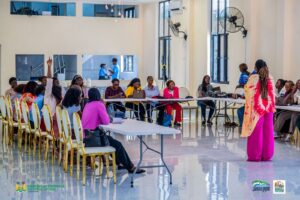

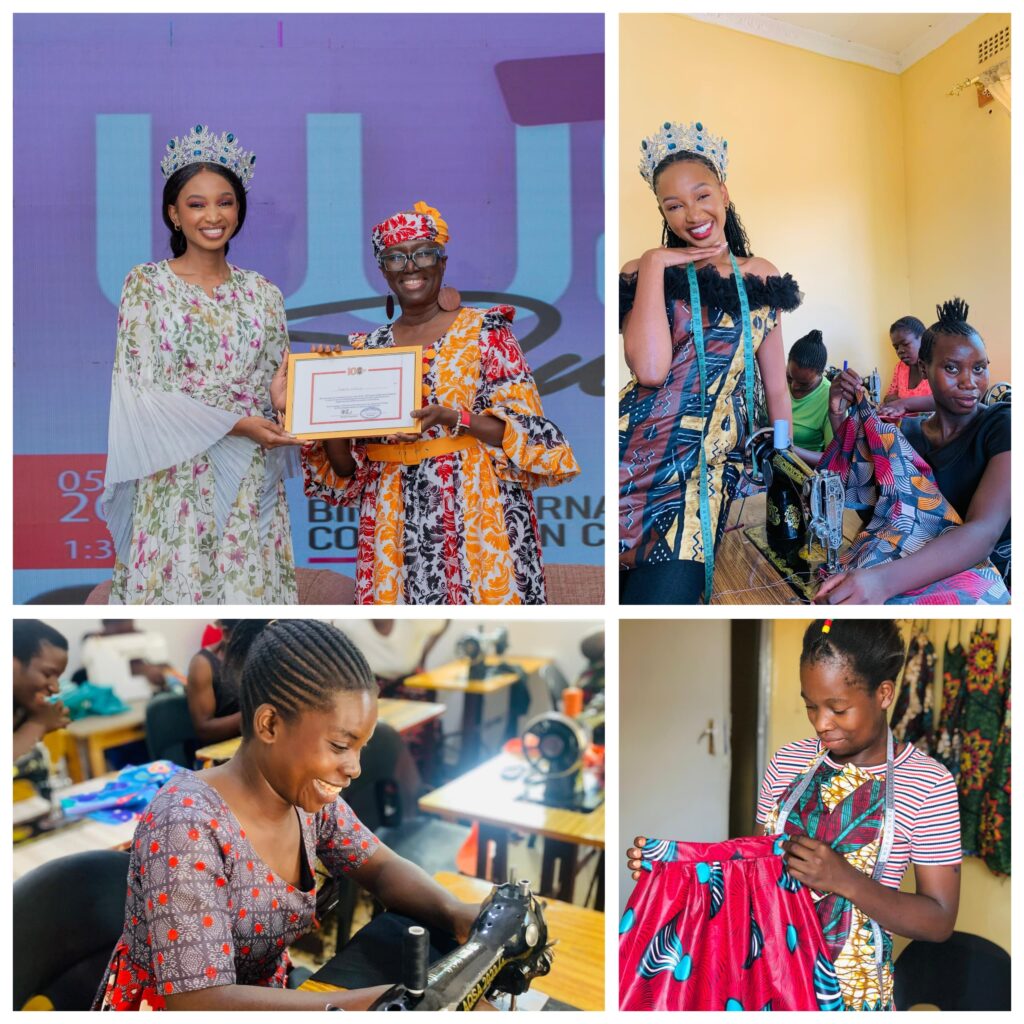
In a modest workshop tucked within a busy township in Malawi, the steady rhythm of sewing machines fills the air. Fabric is measured, cut, and stitched with quiet precision. For the women gathered here, this is not simply a lesson in tailoring. It is the beginning of something far more personal, far more transformative.
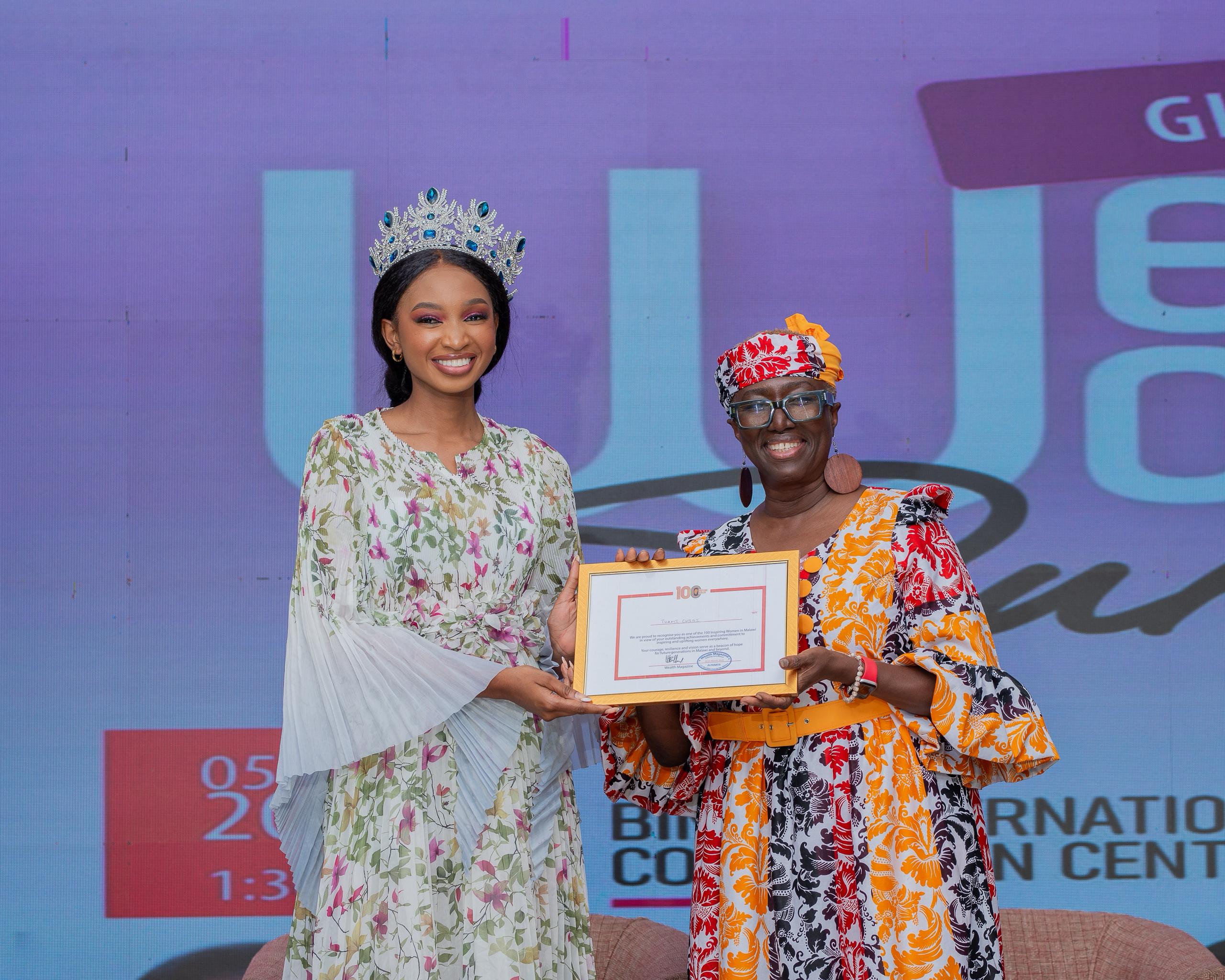
At the center of it all is Thandi Chisi, a beauty queen whose work is steadily challenging assumptions about what such a title can represent. While many still associate pageantry with glamour and appearances, her focus has been grounded in something deeper. Skills. Livelihoods. Identity.
Through her initiative, SFWE, more than 600 women and girls across Malawi have been trained in fashion, tailoring, and design. Many arrive with limited prospects. Some left school too early. Others are navigating the realities of raising children without stable income. Many have never had the chance to earn for themselves. What they leave with is not just a skill, but a sense of direction. A way to stand on their own.
“I didn’t want this to be something that only speaks,” Chisi says quietly during a visit to one of the training sessions. “I wanted it to be something you can see in people’s lives.”
And you can see it.
Graduates of the programme are now working in tailoring shops, starting small businesses, and in some cases, training others in their communities. In homes where options were once limited, there is now income. There is movement. There is possibility.
But the story here does not end with economics.
In Malawi, fashion carries memory. The fabrics, the patterns, the way garments are cut and worn often reflect where people come from and who they are. Chisi understands this instinctively. What she is building is not only a skills programme, but a quiet preservation of culture.
Inside the workshop, young women work with chitenje fabrics, transforming traditional prints into modern designs. Others repurpose old garments and unused materials, giving them new life. What might have been discarded becomes something of value again. The result is something striking. It feels familiar, yet new. Rooted, yet forward-looking.
This approach speaks to a broader global conversation around sustainability. The “People, Planet, Prosperity” framework in tourism, often referred to as the One Planet Vision, calls for a more responsible model of growth, one that balances social inclusion, environmental protection, and economic opportunity. In this small workshop, that idea is not theoretical. It is being lived out.
By recycling fabrics and reimagining materials, the women contribute to a cleaner environment. By learning skills and earning income, they secure their own economic futures. By working with culturally rooted designs, they preserve and evolve Malawian identity. And in doing so, they are not just participants, but active contributors to a growing fashion ecosystem that includes them, values them, and is shaped by them.
“Tourism is not only about places,” Chisi explains. “It is about people and culture. When someone wears something that tells a Malawian story, they carry a part of us with them.”
It is a simple thought, but a powerful one.
Around the world, there is a growing appetite for experiences that feel real and connected to place. Malawi, long known for its natural beauty, is slowly opening up another layer of its identity. One shaped by culture, creativity, and lived experience. In that space, fashion becomes more than clothing. It becomes storytelling. It becomes something visitors can touch, wear, and remember.
For Chisi, this is also deeply personal. Her love for Malawi’s tourism did not begin with the crown. It was shaped by travel, by seeing the country beyond its surface, by understanding the richness in its communities. That perspective now sits at the heart of her work.
By teaching women how to create, she is also helping to build something larger. A creative economy. A cultural voice. A different way of seeing Malawi.
Back in the workshop, a young trainee holds up a finished garment. The fabric is bright, the stitching careful. She smiles, a mix of pride and quiet disbelief. It is her first completed piece, and already, she knows who will buy it.
For her, and for hundreds of others, the journey often begins with something simple. A needle. A thread. A chance.
For Thandi Chisi, it is proof of something bigger. That even the most unexpected platforms can be turned into instruments of change.
And in a world that is learning to look beyond appearances, that shift may be the story that travels furthest.