
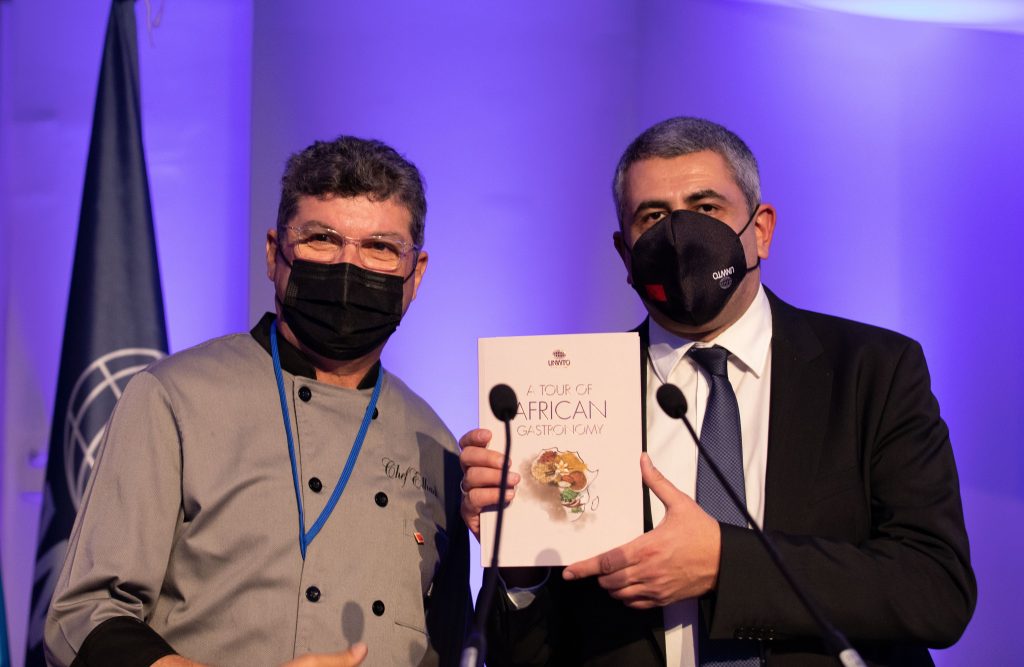
The 96 page document pays homage to the unique culinary experiences of several countries on the African continent.
It features background information of selected chefs from Algeria to Zimbabwe who also takes readers through recipes of at least one of their respective countries most savoury dishes.
“Through the history of humanity, food has always been an essential aspect of a community’s life, where strangers, friends and family members gather, share stories, create memories and even make history,” says Elcia Grandcourt, Director, Regional Department for Africa, UNWTO.
She adds: But gastronomy is much more than food. It is the beautiful connection between culture, people and food. In particular, African gastronomy is made up of all of the influences of its thousands of ethnicities, environment, traditions, ancient and modern history, reflecting countries’ rich identities.
Grandcourt states that more than ever before, African gastronomy is being recognized, such as the recent inscription of couscous, a dish from Algeria, Mauritania, Morocco and Tunisia, as a UNESCO Intangible Cultural Heritage.
“I invite you to join me on this journey in discovering the bursting flavours of our colourful gastronomy,” the Director beseeches.
Touching on the importance of Gastronomy to tourism, UNWTO Secretary General, Zurab Pololikashvili said in many parts of the world, gastronomy has grown to become an important part of the entire tourism value chain, not only supporting jobs and businesses but also promoting destinations and contributing to sustainable development.
“Enhancing the image of Africa as a diverse destination is among the main priorities of the UNWTO Agenda for Africa. The continent offers a wide range of unique experiences, including its rich array of local gastronomy. All of them deserve a place in the spotlight, to open new windows for people to discover Africa’s tastes, cultures and people,” he averred.
A simple act like sharing a meal with locals, he said, brings people together.
Pololikashvili adds that it is at the foundation of a new approach to building cultural bonds, empowering communities and contributing to the preservation of the culture and heritage of the world’s oldest inhabited continent. The benefits go beyond tourism itself.
“Gastronomy tourism has an active role to play in rural development, education, the inclusion of vulnerable populations and poverty eradication, to name but a few examples of its potential contribution to Africa’s future,” the Secretary General postulated.
Story written by Samuel Obeng Appah