
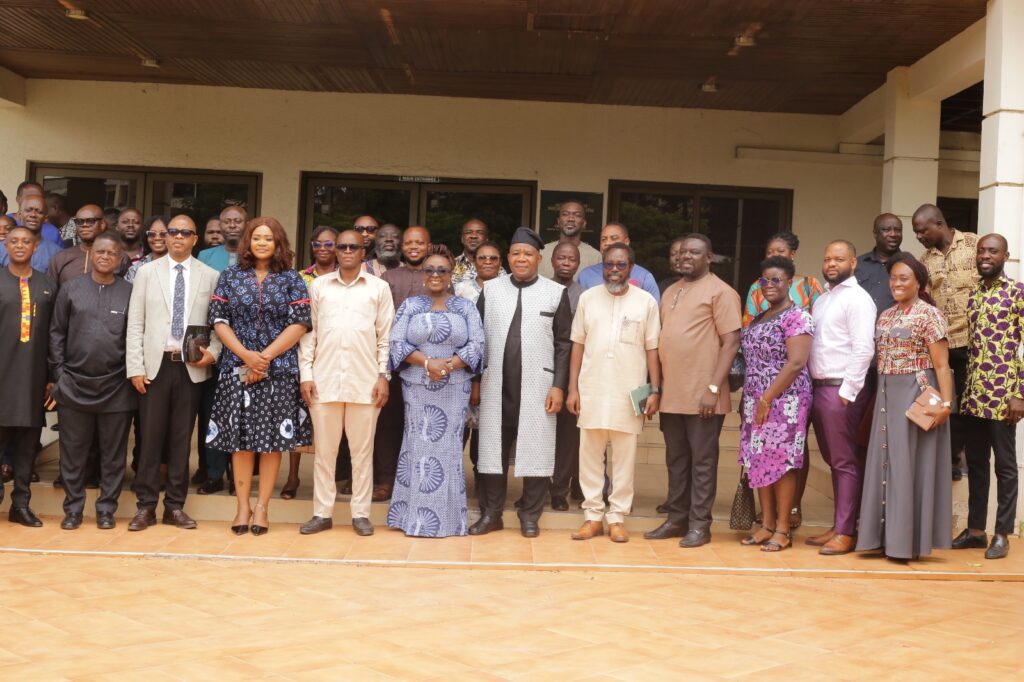
Ghana has officially launched the implementation of the UNESCO Culture|2030 Indicators, marking a significant step forward in integrating culture into the country’s sustainable development agenda. The launch event, held at the Accra Tourist Information Centre, was presided over by the Minister for Tourism, Culture and Creative Arts, Abla Dzifa Gomashie.
This milestone comes more than a decade after foundational work began in 2013, led by pioneering cultural leaders including Akunu Dake, Korkor Amarteifio, Prof. Esi Sutherland-Addy, Christopher Conduah, Abla Dzifa Gomashie, Carl Ampah, and others. Their vision and advocacy laid the groundwork for the eventual adoption of the UNESCO framework, affirming the long-standing national commitment to positioning culture as a pillar of sustainable development.
In her keynote address, Gomashie posed a critical question: “What is culture’s contribution to our dear nation’s GDP?” She described the launch of the Culture|2030 Indicators as a “strategic step” that will equip Ghana with evidence-based tools to quantify and articulate the impact of culture on national progress.
“The Culture 2030 Indicators will give us the methodology to track progress meaningfully, quantify the contribution of cultural employment to GDP, and advocate for stronger investment in the arts, heritage, and creative sectors,” she said.
The Minister emphasized the importance of collaborative involvement from key state institutions such as the Ghana Statistical Service, the Ministry of Finance, and the Ghana Revenue Authority. Their active participation will be crucial in ensuring the sector receives the recognition and resources it deserves.

She also reaffirmed that this initiative aligns with Ghana’s broader commitment to achieving the Sustainable Development Goals (SDGs), highlighting culture as a catalyst for inclusive growth and social transformation.
“Our culture gives us a platform for equality and not exclusion,” she added, underscoring the role of Ghana’s cultural diversity in fostering social cohesion and a shared national identity.
UNESCO Country Representative, Mr. Edmund Moukala N’gouemo, praised the initiative’s global relevance:
“The value of culture is evident and recognized worldwide. This project reflects a collaborative and evidence-based process involving national institutions and local partners, fully grounded in the five pillars of the 2030 Agenda: People, Planning, Prosperity, Peace, and Partnership.”
Dr. Osman Tahidu Damba, Acting Secretary-General of the Ghana Commission for UNESCO, noted that the Culture|2030 Indicators transcend the realm of heritage, positioning culture as both a driver and enabler of sustainable development across various sectors.
The UNESCO Culture|2030 Indicators framework provides countries with the tools needed to measure culture’s contributions to economic, social, and environmental objectives. By adopting this framework, Ghana affirms its leadership role in the region in integrating culture into evidence-based development planning and policy.