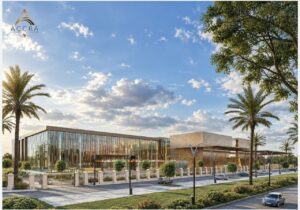

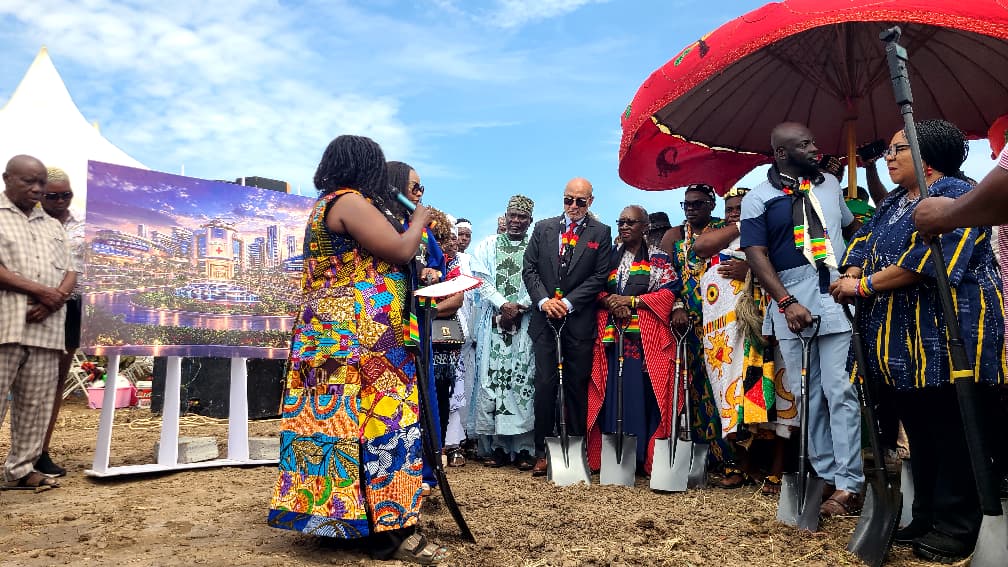
Ghana’s proposed Africa Medical City in Ada is being positioned as a multi-billion-dollar investment ecosystem spanning specialized healthcare, medical education, research, digital health, real estate, food processing and business incubation, with its promoters inviting African and international investors to participate in its development.
The project, an initiative of AFRICA’s BRAIN BANK, is planned for a stated 3,000-acre site at Togbloku in the Ada East District of the Greater Accra Region. While the September 7 groundbreaking marked the beginning of the physical development, the proposition presented by its promoters extends well beyond hospital construction, with the ambition of creating a large healthcare and economic cluster serving Ghana, Africa and international markets.
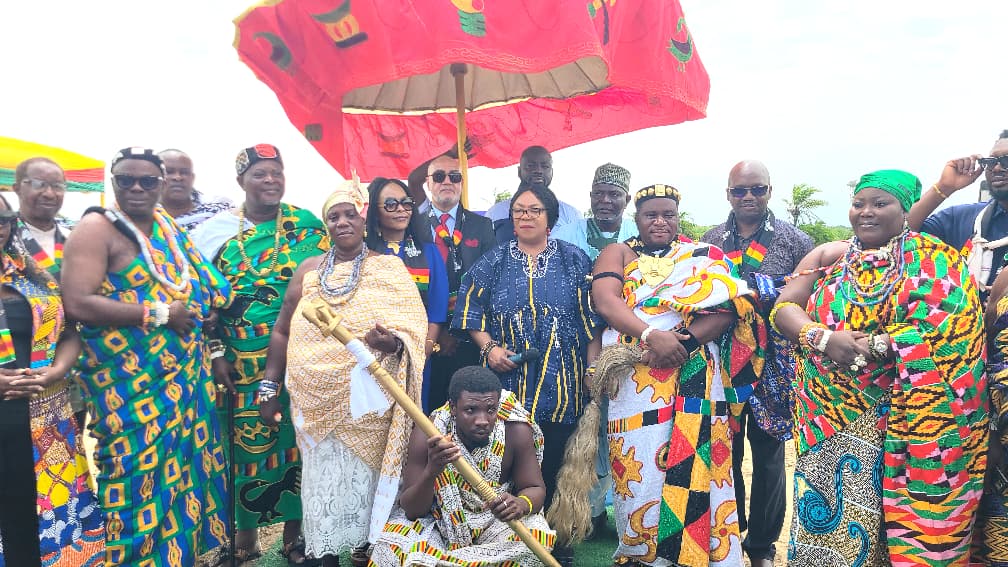
Rev. Dr Pam Fomunung, founder, CEO and visionary of AFRICA’s BRAIN BANK, said the concept initially emerged as a hospital complex planned for Nigeria before the COVID-19 pandemic disrupted the project. Following her engagement with Nene Lomo IV in 2023, the vision moved to Ada and expanded into a medical city.
“It’s a city but medical city,” Fomunung said, outlining plans for healthcare facilities alongside real estate, food processing, schools and other businesses. She said the development could eventually accommodate about 30 hospitals.
The commercial model is also deliberately broader than a conventional healthcare project. Fomunung described the Medical City as a multi-billion-dollar project but stressed that neither she nor AFRICA’s BRAIN BANK owns it. Instead, she said investors providing capital would participate in what they build, subject to contractual arrangements.
The investment proposition has also brought tourism into the conversation. The Ghana Tourism Authority partnered AFRICA’s BRAIN BANK around the six-day summit and Medical City programme, which brought together stakeholders from healthcare, tourism, pharmaceuticals, construction, finance, technology, logistics, real estate and infrastructure.
GTA Chief Executive Officer Maame Efua Houadjeto was also honored at the Africa Brain Bank’s 7th Annual Summit and Awards in Accra with the organization’s Premiere Africa Visionary Leadership Award for her leadership and contribution to Ghana’s economic, tourism and community development.
Houadjeto dedicated the recognition to the Ghana Tourism Authority’s management and staff, saying the award reflected the work of the team supporting the Authority’s mandate.
Building around specialized healthcare
Dr Michael K. Obeng, President of AFRICA’s BRAIN BANK, said the project is being designed to address a major economic problem in African healthcare: the cost of sending patients, professionals and money outside the continent.
He cited Africa’s dependence on imported medicines, saying the continent imports between 70 and 80 per cent of its medication. At the same time, he said African countries train doctors and nurses who leave because of limited infrastructure, working conditions and remuneration, while patients subsequently travel overseas for treatment.
For Obeng, the proposed Medical City offers an opportunity to retain more of that expenditure and expertise within Africa.
He said the facility will target quaternary rather than tertiary healthcare, with highly specialized services including specialty surgery, cancer treatment and cancer research. The intention, he said, is to provide treatment that currently sends patients to major international medical centers, including MD Anderson Cancer Center in the United States.
The first building is expected within three to five years, with development proceeding in phases. Obeng said funds for the first phase have been pledged by reputable funders, although the details and final arrangements are yet to be publicly disclosed.
The scale of the ambition is informed by an established global medical-city model.
Obeng said he did some of his surgical training at MD Anderson Cancer Center, which is within the Texas Medical Center in Houston — a complex he described as the world’s largest medical center and a reference point for what Ada could become.
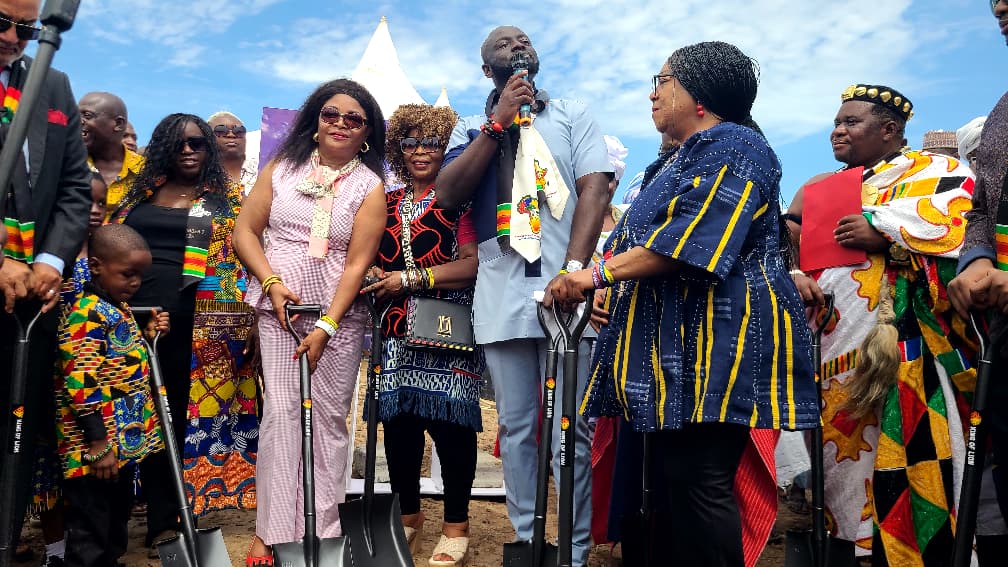
“We want to duplicate that and even make it bigger here,” he said.
The Ada project is being planned deliberately as an integrated city. Its promoters say the development will combine healthcare with education, research, technology, real estate and commercial ventures, with the aim of attracting world-class specialists, scientists and researchers.
That makes talent attraction as important to the proposition as patient attraction.
AFRICA’s BRAIN BANK’s broader mission is centered on mobilizing African intellectual capital, and Fomunung said the Medical City will use digital health and telemedicine to connect professionals abroad with those working in Ghana.
“You don’t have to physically come back home when your brains can go,” she said.
The planned technology layer includes AI-powered clinical services, telemedicine, preventive healthcare and digital collaboration between medical professionals in Ghana and overseas.
Fomunung also outlined a health-venture incubation component, through which businesses establishing themselves within the development could receive support to develop their ideas and operations.
Investment with a local economic requirement
The project is also being presented as a vehicle for local skills and enterprise development.
Fomunung said investors operating within the Medical City would be required to employ a percentage of people from surrounding communities. Where those workers lack the necessary skills, she said investors would have to train them.
That approach places workforce development alongside investment, with potential demand across healthcare, construction, technology, administration, hospitality, maintenance and other supporting services.
The project is consequently being framed as an economic infrastructure initiative rather than a social-service project, with Fomunung telling participants that investors would be expected to take a stake in the development while meeting standards around employment and treatment of workers and patients.
For Ghana’s tourism industry, the significance lies in what can develop around the healthcare cluster.
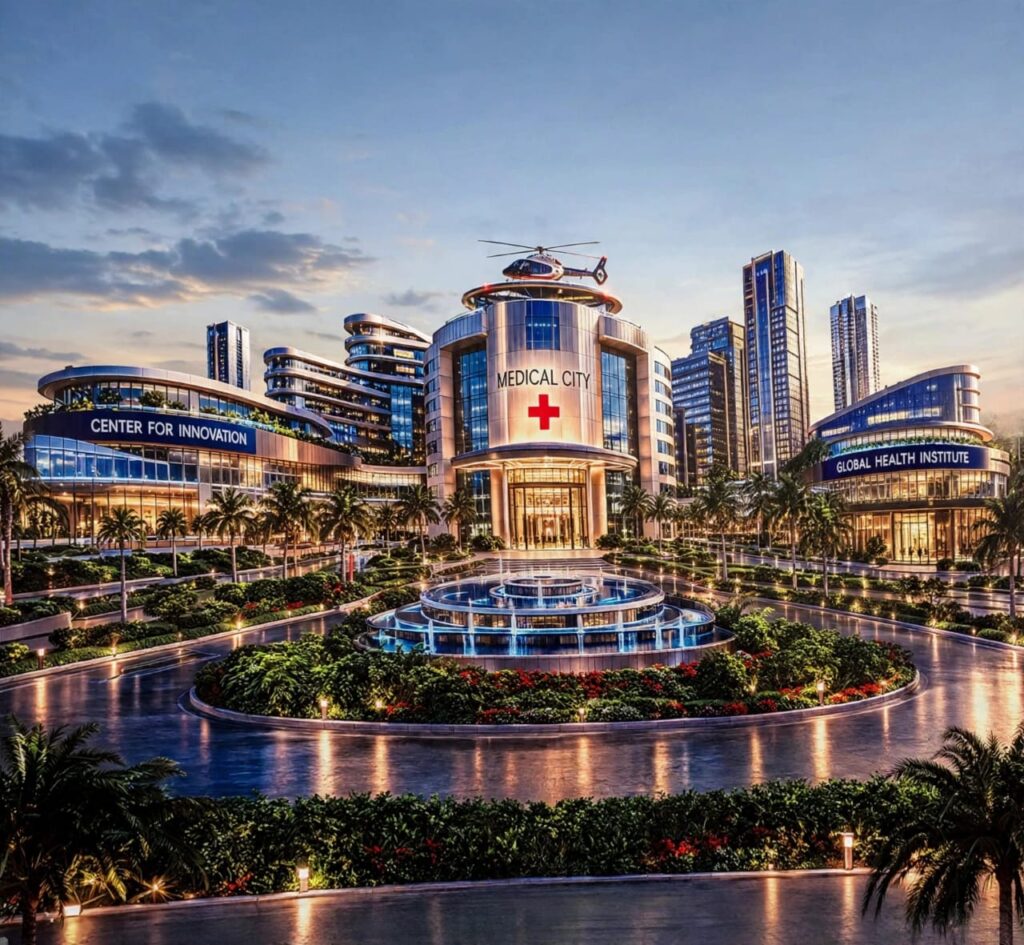
A medical destination of the scale envisaged would require supporting services beyond clinical care, including accommodation for patients and accompanying relatives, transport, food services, destination management, technology and financial services. The movement of international specialists, researchers and investors would also create additional demand for aviation and hospitality.
The opportunity is therefore not limited to companies that directly provide healthcare. It extends to businesses capable of servicing a specialized visitor economy and the wider workforce and investment activity that a medical cluster can generate.
The immediate focus is on financing the first phase, finalizing funding commitments, developing partnerships and moving the project through its planned stages. The first building is expected within three to five years, while the wider Medical City will be developed progressively.
The project’s long-term proposition will depend on whether it can convert its considerable land, healthcare ambition and investment interest into functioning institutions, businesses and specialist services.
For Ghana, the opportunity extends beyond building hospitals in Ada. The more consequential proposition is whether healthcare can serve as the anchor for a new economic cluster, bringing together African capital and expertise with research, technology, real estate, tourism and specialized services, while retaining a greater share of the value generated by healthcare within the continent.