
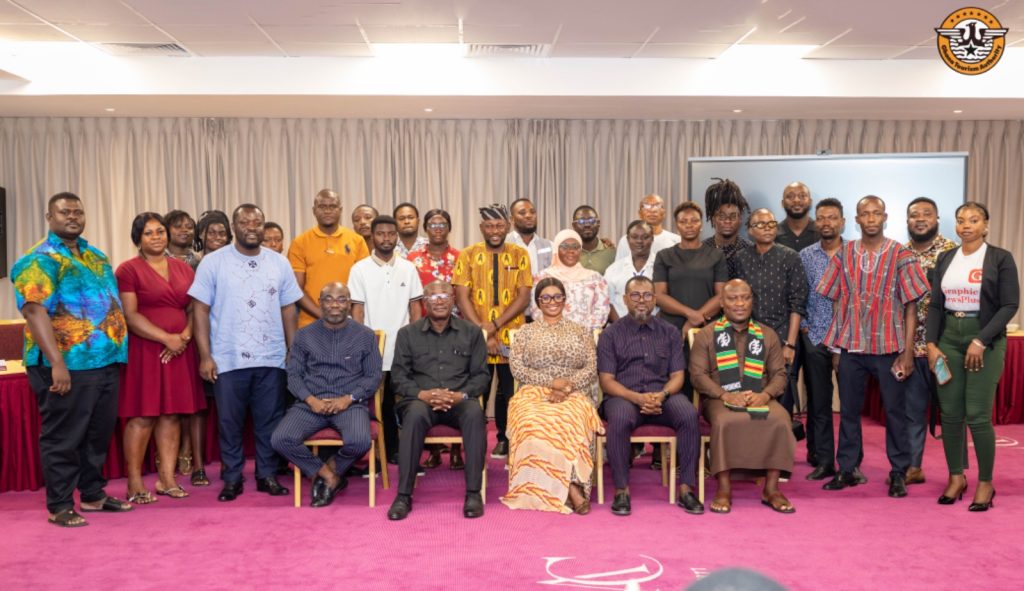
The Ghana Tourism Authority, GTA, on 13 January 2026, held a high-level media engagement at the Accra City Hotel, bringing together senior leadership of the Authority and key media stakeholders to outline a renewed strategic direction for Ghana’s tourism sector under the Reset Tourism, Black Star Experience framework.
The engagement highlighted tourism’s evolving role as a pillar of national development, extending beyond visitor numbers to include identity, investment, employment and Ghana’s global positioning as Africa’s gateway.
Opening the engagement, Deputy Chief Executive Officer in charge of Operations, Ekow Sampson, acknowledged the media’s influence in shaping Ghana’s tourism narrative, describing journalism as central to projecting the country’s image locally and internationally. He noted that while tourism continues to contribute significantly to GDP and employment, its wider value lies in promoting Ghana’s cultural heritage, creative industries and national identity.
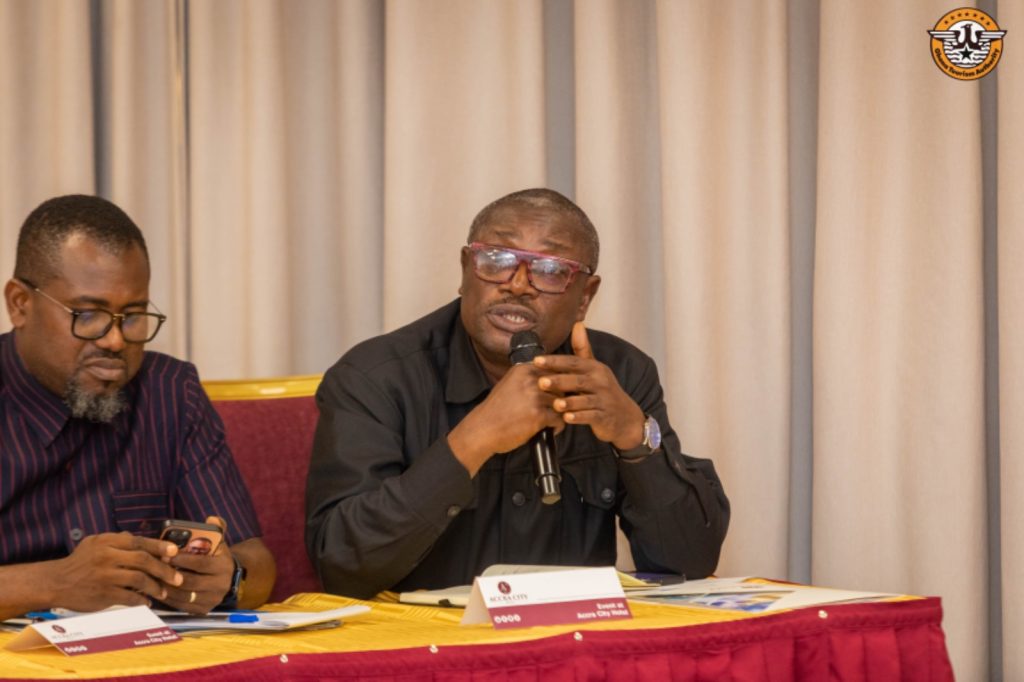
“As the industry evolves, it has become necessary to reset our approach, to move from fragmented promotion to a more coordinated, experience-driven and globally competitive tourism offering,” Sampson said.
He explained that the Black Star Experience serves as a unified national destination brand, bringing together culture, heritage, festivals, gastronomy, creative industries and lifestyle into a coherent, year-round tourism proposition. According to him, the initiative is designed to deepen visitor engagement, extend length of stay and create sustainable value across the tourism value chain.
Sampson described 2026 as a significant milestone in the implementation of the vision championed by President John Dramani Mahama, adding that GTA’s programme for the year will focus on destination branding, expanded marketing, research and service excellence. He outlined plans for a structured rollout across domestic, regional and international markets, supported by targeted media campaigns, digital platforms, strengthened partnerships and content-driven storytelling.
He further indicated that major tourism campaigns, including December in Ghana, would be consolidated and promoted as anchor experiences within a year-round tourism calendar, alongside intensified efforts to stimulate domestic tourism and improve regulation, quality assurance and stakeholder engagement.
Looking ahead to the first half of 2026, the Authority outlined a calendar of experiences aimed at sustaining momentum and deepening engagement across the country. February will be marked by the celebration of Chocolate Day, spotlighting Ghana’s cocoa heritage, while March has been designated Ghana Month, with nationwide activities showcasing the country’s culture, history and identity. April will once again feature the iconic Kwahu Easter Paragliding Festival, reinforcing adventure tourism, and June will see coordinated sports tourism watch parties across all 16 regions as part of efforts to position Ghana as a hub for sport-led destination experiences during the World Cup.
In his address, Deputy Chief Executive Officer for Marketing and Special Duties, Gilbert Abeiku Aggrey urged media practitioners to develop deeper expertise in tourism reporting, stressing that the sector thrives on storytelling and perception.

“Tourism today has moved away from brochures and flyers to what people hear. What you hear shapes your decision about a destination,” he said.
Drawing from his own journey from media practice into tourism leadership, Aggrey challenged journalists to identify niches, build authority and help shape national conversations that support destination growth. He described tourism as a uniquely interconnected sector, linking aviation, transport, agriculture, telecommunications and creative industries, and called on the media to amplify accurate, balanced and verified narratives.
He cautioned against the spread of unverified information that could undermine destination confidence, noting that the media remains a critical gatekeeper in protecting Ghana’s image. “You are not just reporters, you are also ambassadors of the nation,” he said, urging fairness, accuracy and discernment in tourism reporting.
The engagement culminated with remarks from the Chief Executive Officer of the Ghana Tourism Authority, Maame Efua Houadjeto, who commended the media for their role in amplifying December in Ghana during 2025, describing the initiative as having achieved unprecedented visibility and global reach.
“Because of you, December in Ghana was not just a season, it became a statement. It became the place to be,” she said.
Houadjeto described the media engagement as her first formal interaction with journalists in 2026 and made it clear that the year would mark a departure from previous approaches. She stressed that tourism is no longer limited to festivals and events but is central to jobs, investment, national pride and Ghana’s competitiveness in an increasingly crowded global market.
“In that equation, you are not only observers, you are our partners,” she said.
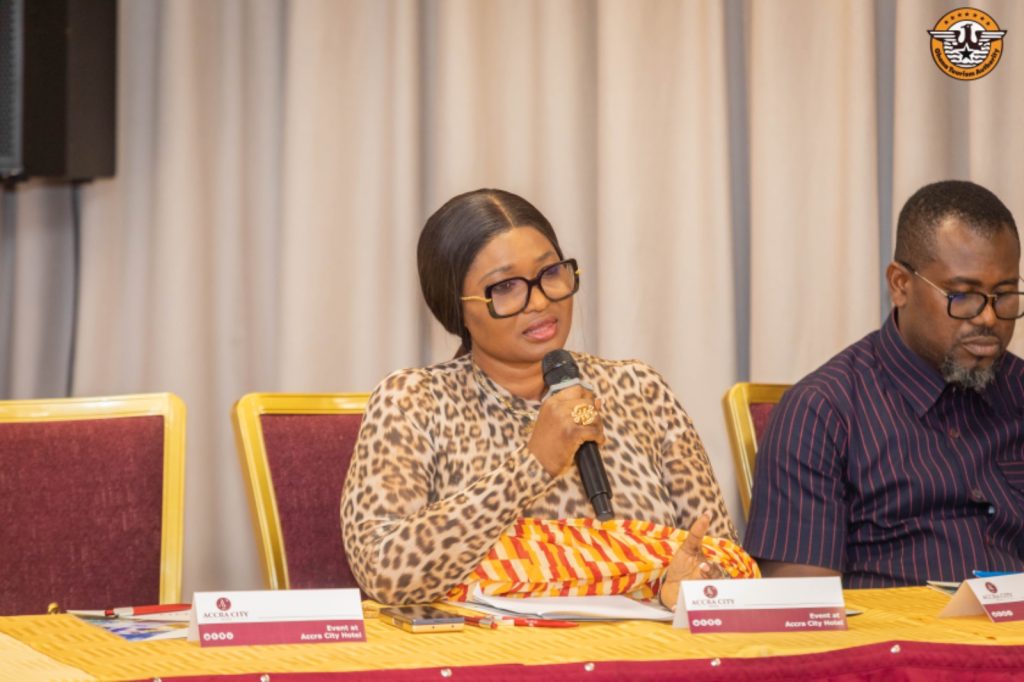
Outlining GTA’s outlook for 2026, Houadjeto highlighted a strong focus on quality, consistency and credibility, supported by increased investment in industry training to raise service standards across hospitality, tour operations and destination experiences. She noted that while infrastructure and policy reforms are important, progress must be communicated effectively for impact to be felt.
“If the story is not told well, the progress will not be felt,” she said, calling on the media to help shape perception, spotlight excellence and set the agenda for Ghana tourism.
A major pillar of the 2026 agenda is the integration of technology to enhance destination promotion and visitor experience. Houadjeto revealed plans to deploy digital tools, including augmented reality and virtual reality applications, to offer virtual tours of destinations before physical visits. She also announced that GTA is preparing to launch tourism-focused mobile applications aimed at improving access to information and enhancing engagement.
On investment, she disclosed that the ban affecting the Marine Drive project would soon be lifted, paving the way for renewed development activity along the corridor. She described the project as a critical component of Accra’s tourism and urban regeneration strategy.
Addressing regulation and compliance, the CEO indicated that stricter measures would be implemented to ensure effective collection of the one percent tourism levy, particularly from nightlife operators such as restaurants and clubs. She further announced a clampdown on unlicensed hospitality establishments, emphasizing that regulation is essential to maintaining standards and visitor confidence.
Houadjeto also touched on one of the sector’s longstanding challenges, poor road access to tourist sites. She revealed that construction works on roads leading to key attractions have commenced and expressed confidence that significant improvements would be completed by the end of September 2026.
Throughout her address, she reiterated the importance of responsible reporting and deliberate tourism promotion, urging media practitioners to remain intentional in telling Ghana’s story.
“We have natural tourism assets that many destinations can only try to recreate artificially,” she said, drawing comparisons with global tourism hubs that have successfully branded themselves through vision and storytelling. “Together, we must tell the world what Ghana has been given naturally.”
She assured media partners of stronger engagement, improved access to timely information and a more collaborative working relationship, noting that growth requires honesty and continuous dialogue.