
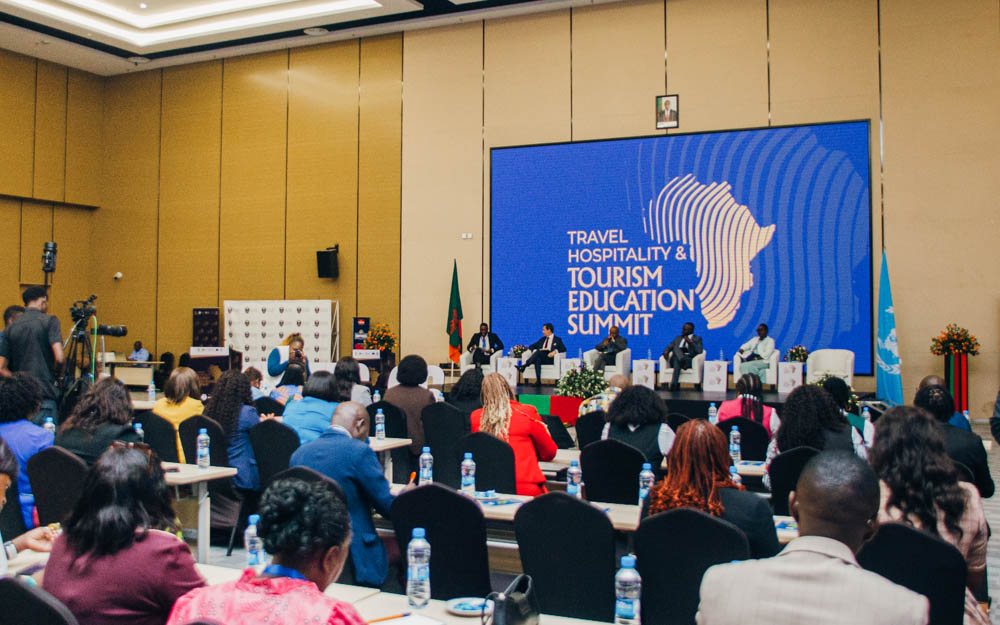
The Travel, Hospitality and Tourism Education Summit continued in Lusaka, Zambia, from 14th to 16th April, with Day 3 shifting the focus from industry exposure and scholarship delivery to the structural systems that underpin tourism education, research, and sector competitiveness.
Organized by the Zambia Institute for Tourism and Hospitality Studies (ZITH) in collaboration with the Ministry of Tourism, Zambia, the summit brought together policymakers, academics, regulators, and industry practitioners to examine how evidence based policy, MICE education, STEM integration, and curriculum reform are shaping the future of tourism development.
Plenary Session 4, themed The Science of Tourism, focused on tourism as a data driven discipline anchored in research, innovation, and evidence based policy formulation. The session was moderated by Marshal Mulanda, Communications Lead at STEM Zambia, who guided discussions on the application of scientific thinking within tourism planning and destination systems. The panel included Mr. Antonio Lopez De Avila, Director of Innovation, Education and Investment at UN Tourism, Prof. Kariuki, Senior Lecturer at Kenyatta University, Mr. Robert Simushi Jr, Head of Policy, Planning and Information at the Zambia Tourism Agency, and Ms. Prisca Musonda, Senior Curriculum Specialist at the Curriculum Development Centre.
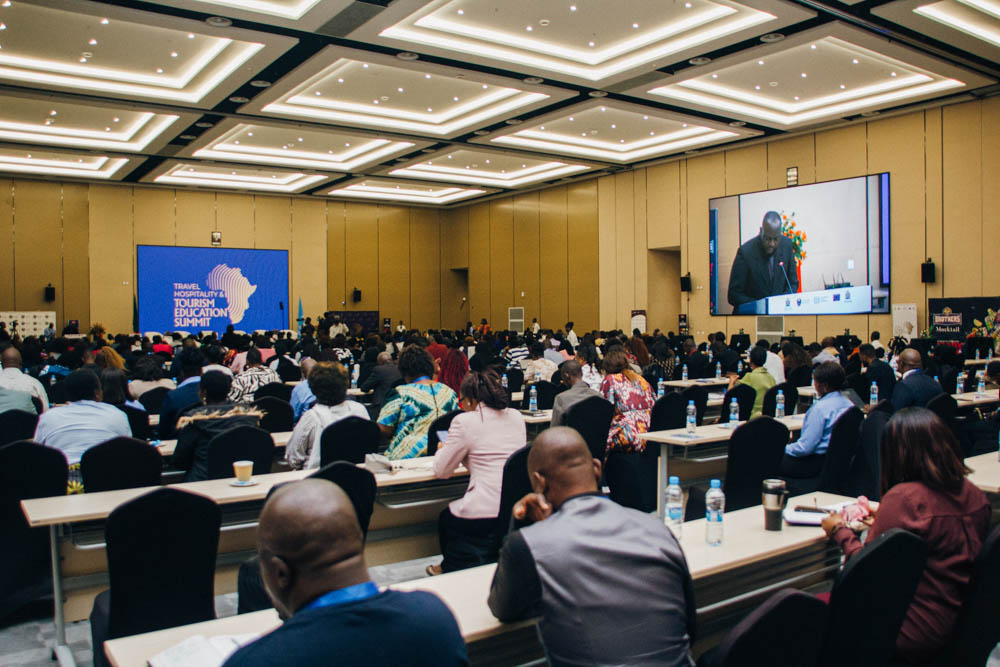
The discussion repositioned tourism as a structured knowledge system rather than a purely service based industry, with emphasis on research, data interpretation, and policy alignment. Mr. Antonio Lopez De Avila emphasized the need for innovation driven education systems that connect academic training with industry realities, framing tourism as a knowledge driven sector. Prof. Kariuki stressed the importance of applied research that directly informs tourism policy and operational decision making, rather than remaining within academic boundaries.
Mr. Robert Simushi Jr highlighted the importance of embedding evidence into tourism planning, budgeting, and competitiveness strategies within national development frameworks. Ms. Prisca Musonda focused on early stage education reform, stressing that research literacy and analytical thinking must be introduced at foundational levels of learning to avoid skills mismatches at industry entry level. Marshal Mulanda reinforced the integration of science, technology, engineering, and mathematics into tourism systems, particularly in visitor flow management, destination carrying capacity, and digital tourism platforms.
The session concluded that while tourism data systems exist, stronger coordination is required between data producing institutions, policy structures, and curriculum development frameworks to ensure evidence based decision making is fully operationalized within the sector.
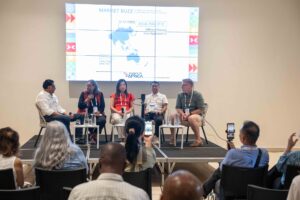
Plenary Session 5 focused on MICE Education, positioning Meetings, Incentives, Conferences, and Exhibitions as a strategic pillar for economic diversification and destination competitiveness. The session was moderated by Ms. Kezia Mukiri, Africa MICE Summit, and featured Mr. Jack Kaale, Lecturer and Researcher in Tourism at Copperbelt University, Prof. Nellie Swart, Director of Executive Education at the University of South Africa (UNISA) Graduate School of Business Leadership, and Mr. Frank Murangwa, Regional Director for Africa at the International Congress and Convention Association.
The session examined MICE as a structured economic system that links tourism with trade, aviation, technology, security, and knowledge exchange networks. Mr. Jack Kaale highlighted curriculum limitations at tertiary level, particularly the absence of structured training in areas such as bidding processes, convention planning, and international association engagement.
Prof. Nellie Swart emphasized the need for structured executive education and leadership development pathways within the MICE sector, noting that professional capacity building is essential for sector sustainability and growth.
Mr. Frank Murangwa emphasized the importance of institutionalizing MICE development through Convention Bureau structures, referencing Rwanda as a working model where structured governance frameworks have enabled destinations to compete effectively in international conferencing markets. He stressed that without such institutional mechanisms, destinations remain excluded from the global MICE ecosystem.
A key highlight of the day was the certification of trainers and tutors who participated in the summit. The certification marked a structured effort to strengthen teaching capacity within tourism and hospitality education, reinforcing the link between educator development and improved learning outcomes across institutions.
The Educator Masterclass, facilitated by Ms. Paula De Blas Gonzalez, Senior Education Specialist at UN Tourism, focused on effective teaching strategies in travel and tourism education. The session emphasized STEM integration within tourism curricula, positioning tourism as an interdisciplinary field where mathematics, science, and technology underpin operational systems. Revenue management was linked to mathematics, destination systems to science, and digital platforms to technology, reinforcing the need for integrated curriculum design. She further emphasized structured lesson planning, with clear learning outcomes, active learning approaches, and embedded assessment as core principles of effective teaching delivery.
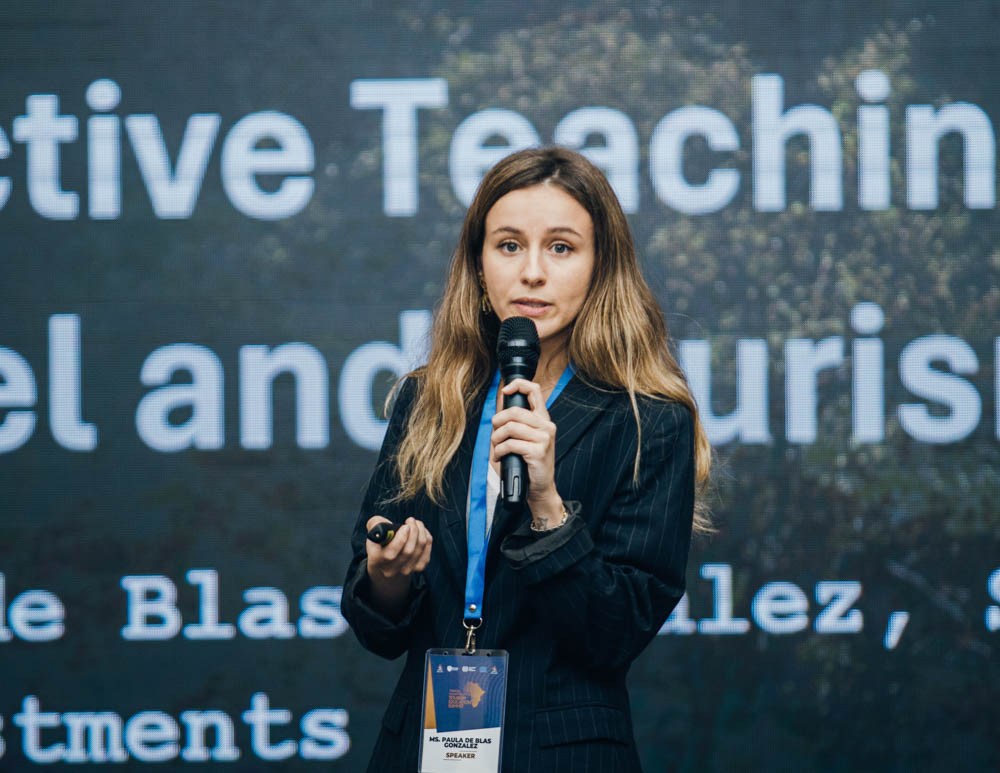
Paula De Blas Gonzalez
In addition, Mr. Gebert Janssen of Event Architect Group presented a conference paper titled MICE Development in Zambia, An Integrated Framework for Economic Value, Education and Cross Sector Collaboration. The paper highlighted MICE as a high value segment of tourism characterized by strong expenditure patterns and knowledge exchange benefits. It further emphasized the need for structured education pathways and coordinated governance across tourism, trade, foreign affairs, aviation, and local authorities to support sector growth.
The day’s discussions reinforced the connection between education reform and sector performance, particularly in relation to the 100 UN Tourism scholarships awarded on Day 2. The emphasis remained on aligning scholarships with curriculum reform, institutional strengthening, and industry systems that can absorb trained graduates.
Day 3 concluded with a clear focus on three interlinked priorities, evidence based tourism policy, institutionalized MICE development supported by Convention Bureau frameworks, and STEM integrated education systems aligned to the operational realities of a modern tourism economy.