
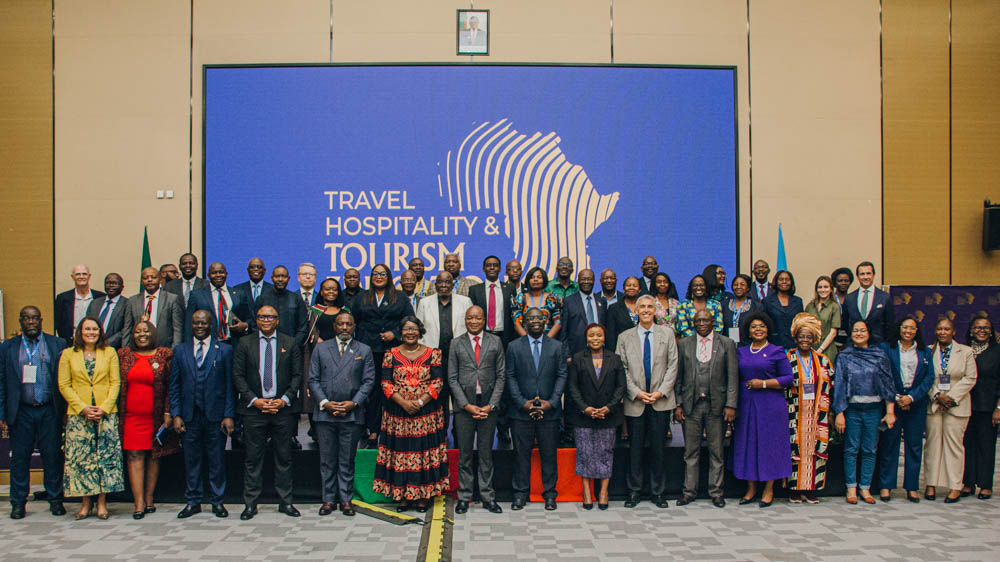
The fourth edition of the Travel, Hospitality and Tourism Education Summit (THTES) officially opened at the Mulungushi International Conference Centre, bringing together government, education leaders, development partners and industry stakeholders to strengthen human capital development within Zambia’s tourism sector and across Africa.
Organized by the Zambia Institute for Tourism and Hospitality Studies (ZITHS), the summit has evolved since its inception in 2023 into a regional platform focused on aligning education systems with labour market needs, tourism policy and sectoral growth priorities.
Opening the summit on behalf of the President of the Republic of Zambia, Minister of Education, Hon. Douglas Syakalima, underscored the integration of education into tourism development as a national priority.
He stated that, “the collaboration between the Ministry of Education and the Ministry of Tourism reflects a deliberate effort to ensure education plays a central role in developing relevant skills, creating jobs, and generating income.”
He highlighted the 2023 integration of Travel and Tourism into the Zambia Education Curriculum Framework (2023–2033), describing it as a key reform that equips learners with industry knowledge and positions them as ambassadors of Zambia’s cultural heritage.
He further emphasized that the government has introduced tourism education clubs in schools and strengthened teacher training through institutional partnerships, noting that these measures are intended to enhance curriculum delivery and build innovation and entrepreneurship among learners.
The Minister added that the summit serves as a platform to align education, industry and policy, stating that such alignment is essential for sustainable growth and job creation in the sector.
Minister of Tourism, Hon. Rodney Sikumba, reaffirmed that Zambia’s tourism development agenda is anchored on human capital and cross-sector collaboration.
He stated that the summit is a results oriented platform designed to foster dialogue between policymakers, educators and industry players, within the framework of the Eighth National Development Plan.
He noted that the tourism sector currently supports over 159,000 direct jobs across transport, hospitality and related services, with continued growth expected as the sector expands.
He also highlighted progress in infrastructure development and international arrivals, and emphasized a shift from regional competition to continental collaboration among African destinations.
Among key policy milestones presented were the integration of tourism into the national curriculum, the development of the Tourism Sector Skills Advisory Framework (2026), and the introduction of Tourism Skills Week.
A major announcement from the Minister was the completion of the conveyancing process for 160 hectares of land designated for the development of the ZITH International Academy for Tourism and Hospitality Studies, to be established in partnership with UN Tourism.
He stated that the academy will be the first of its kind on the African continent and called on industry stakeholders and educators to support its implementation.
UN Tourism Regional Director for Africa, Elcia Grandcourt, described the summit as a growing regional benchmark since its establishment in 2023, noting its expanding influence across Africa.
She stated that tourism remains a critical driver of socio economic development and employment creation, but stressed that structural challenges persist.
She highlighted that Africa has over 72 million young people unemployed, despite the continent’s demographic advantage, and noted that women represent 69 percent of the tourism workforce, yet remain concentrated in lower skilled and lower paid roles with limited leadership representation.
She emphasized the importance of democratizing access to quality education, stating that Zambia provides a strong example of aligning national curricula with UN Tourism Education Guidelines.
Grandcourt further noted that Zambia has introduced tourism as a subject from early education levels, enabling learners to understand industry pathways at an early stage.
She confirmed the allocation of 100 scholarships through the UN Tourism Online Academy, aimed at strengthening training capacity, improving learning delivery, and supporting educators and professionals with industry relevant skills.
She added that the initiative, communicated under the leadership of UN Tourism Secretary General, Her Excellency Shaikha Alnuwais, is designed to strengthen global standards in tourism education and workforce development.
The scholarships were formally presented during the summit as part of the opening proceedings.
A central feature of the opening day was the High Level Ministerial Roundtable on, “Synergized Governance, A Review of the Multi Sectoral Approach to Tourism Human Capital Development.”
The session was chaired by ZITHS Executive Director, Mrs. Anne Kaoma Sibanda, and included:
• Hon. Rodney Sikumba, Minister of Tourism
• Hon. Brenda Tambatamba, Minister of Labour and Social Services
• Hon. Chipoka Mulenga, Minister of Commerce, Trade and Industry
• Hon. Douglas Syakalima, Minister of Education
The roundtable focused on aligning education, labour and tourism policies to improve productivity, skills development and employment outcomes.
Key outcomes included agreement on the integration of travel and tourism into national education systems, the establishment of a National Apprenticeship Programme, and the streamlining of tourism licensing through a single integrated system to ease investment processes.
The Ministry of Labour emphasized the role of the Skills Advisory Committee in improving employability, while the Ministry of Commerce highlighted interventions to support SMEs through financing, registration systems and branding support.
The Ministry of Tourism underscored the importance of private sector participation in policy implementation, while the Ministry of Education reaffirmed its commitment to strengthening teacher capacity and curriculum delivery.
Action points adopted included:
• Dissemination of labour market skills assessment findings across relevant ministries
• Launch of a single license system for tourism enterprises to streamline operations and investment processes
A defining moment of the opening day was the joint signing of the Lusaka Communiqué on Tourism and Human Capital Development by the four ministers.
The communiqué formalized a unified commitment to strengthen inter-ministerial coordination, institutionalize a multi sector approach to tourism workforce development, and align education, skills and industry needs to support national development goals.
The summit also featured plenary sessions addressing critical areas of tourism workforce development, including:
1. Vocational training and the role of TEVET systems in addressing youth unemployment and job creation
2. Indigenous knowledge systems and the integration of cultural heritage into tourism education frameworks
3. Workforce readiness through internships, apprenticeships and structured work based learning models
The summit reaffirmed Zambia’s collaboration with international partners including UN Tourism and the European Union, particularly in advancing tourism education frameworks and supporting the Tourism Master Plan 2018–2028.
Stakeholders noted that the summit has contributed to the integration of tourism education into national curricula, strengthened industry education partnerships, and positioned Zambia as a regional hub for tourism policy dialogue.
The opening day of the Travel, Hospitality and Tourism Education Summit underscored a coordinated policy shift toward human capital development as the foundation of tourism growth.
Through ministerial alignment, international partnerships, scholarship programmes and the signing of the Lusaka Communiqué, stakeholders reaffirmed a collective commitment to strengthening education systems, improving workforce readiness and advancing inclusive tourism development across Zambia and the continent.