
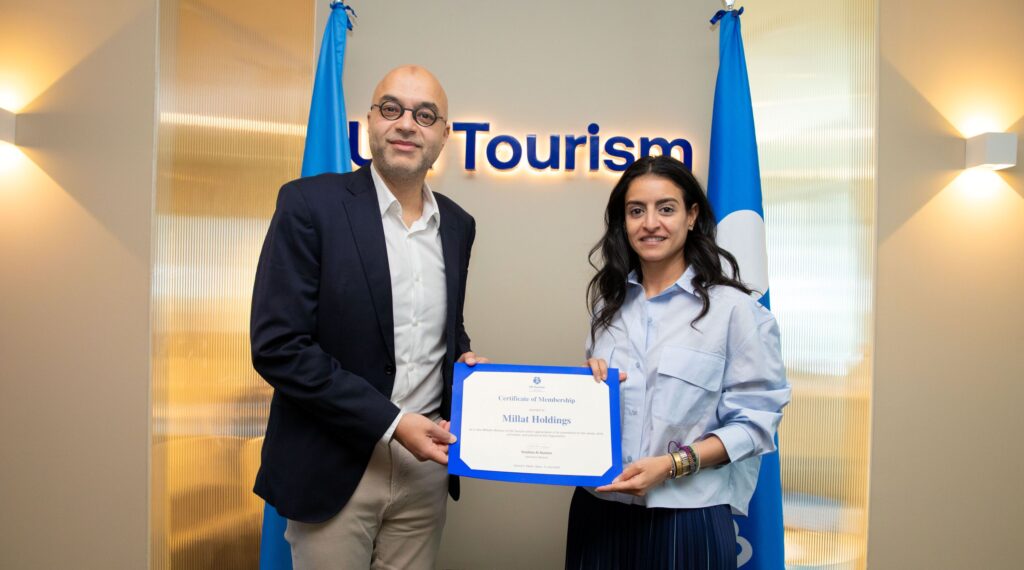
The Millat Group has been formally recognised as an Affiliate Member of UN Tourism, marking a significant step in the Group’s growing role as an African private-sector voice in global tourism investment, hospitality development, and sustainable destination growth.
Millat is a diversified South African investment group focused on hospitality, property, food services, and lifestyle brands, with a strong emphasis on tourism-led growth and bringing global brands into local markets.
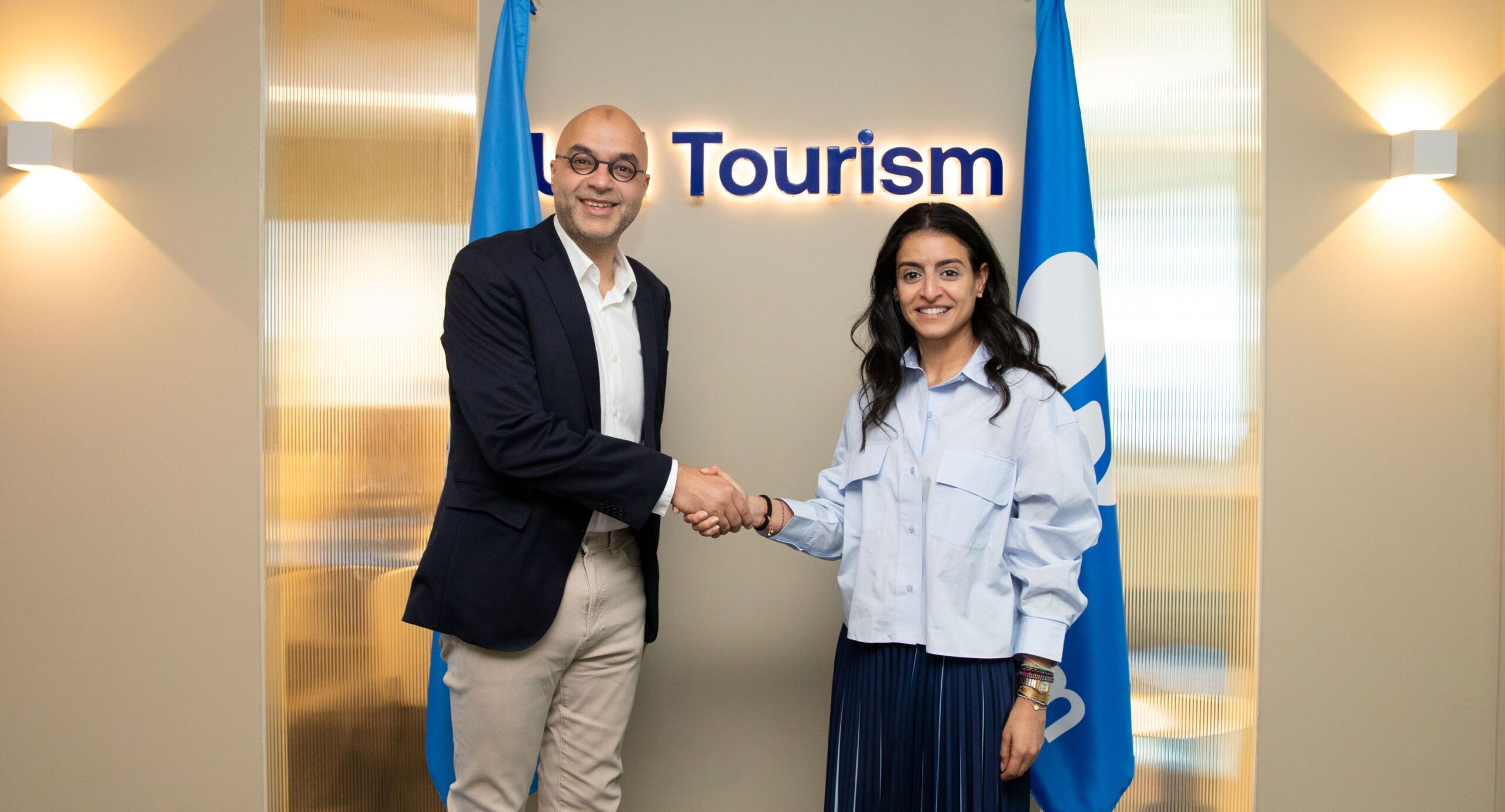
The recognition was marked in Madrid at the UN Tourism’s Executive Council this week and was followed by a meeting between Millat Group Founder and CEO Hamza Farooqui and UN Tourism Secretary-General, Her Excellency Shaikha Al Nowais.
The meeting followed the formal confirmation of Millat Group’s Affiliate Membership credentials and focused on how African tourism can move from potential to execution through stronger investment frameworks, better data, deeper institutional capital, skills development, sustainability, and practical public-private collaboration.
Farooqui said the recognition gives Millat Group an important platform to contribute to the next phase of African tourism growth.
“Affiliate Membership is not about profile. It is about usefulness,” said Farooqui. “Africa does not lack tourism potential. What the continent needs is the investment ecosystem, operating capability, data infrastructure, and institutional capital to convert that potential into scalable economic infrastructure. Millat Group wants to help close that gap.”
UN Tourism Affiliate Members form part of a global network of private-sector organisations, academic institutions, destination bodies, and other entities that contribute to the work of UN Tourism and support the development of a more competitive, sustainable, and inclusive global tourism sector.
For Millat, the recognition comes at an important moment. The Group has been expanding its hospitality and food services interests while positioning itself as a serious African participant in global tourism investment discussions. It also follows Farooqui’s appointment to the World Travel & Tourism Council Executive Committee, giving the Group a further international platform from which to advocate for Africa’s tourism economy.
Farooqui said Millat Group’s contribution would be practical and commercially grounded. “Tourism should be understood as productive economic infrastructure,” he said. “It creates jobs, develops skills, supports local supply chains, strengthens destinations, and attracts capital. But to do that at scale, Africa needs investment-ready projects, proven operators, policy alignment, and investor-grade data. That is where we believe Millat Group can make a meaningful contribution.”
The discussion also covered sustainability, human capital development, and the role of technology in strengthening African tourism competitiveness. Farooqui said Millat Group’s hospitality operations demonstrate how tourism businesses can combine commercial performance with local employment, skills development, community benefit, and responsible operating practices.
“Hospitality, done properly, is development infrastructure,” he said. “It can create careers, strengthen communities, improve destination capability, and support sustainable growth. The opportunity now is to systematise and scale that approach across African tourism.”
Farooqui said Millat Group would also explore ways to support conversations around artificial intelligence, digital transformation, and tourism competitiveness in Africa.
“Africa cannot be left behind in the digital transformation of tourism,” he said. “AI, data, and technology are already changing how destinations compete, how operators perform and how travellers make decisions. The question is how Africa uses those tools in a way that supports investment, skills development, and inclusive growth.”
The Millat Group said its Affiliate Membership recognition strengthens its commitment to working with global tourism institutions, governments, investors, and operators to advance tourism-led growth across Africa.
“This is a proud moment for us but more importantly it is a working moment,” said Farooqui. “We want to be an active, constructive, and credible African private-sector partner. Our focus is on helping shift the African tourism conversation from promotion to investability, from aspiration to execution, and from isolated projects to connected corridors of growth.”